
 Bitaigen Research
 The Bitaigen editorial team believes this article systematically explains CHIA’s mining economic model, including its issuance mechanism, inflation trajectory, and reward distribution principles, helping readers grasp the long‑term supply‑demand logic and assess the value of investing or participating. Through clear, stage‑by‑stage explanations, the piece provides a complete framework for users who want to understand or join the Chia ecosystem and is worth a careful read.

Understanding the CHIA Mining Economic Model in One Article
The mining economic model of the Chia network determines the issuance rate of XCH, its inflation rate, and the reward distribution mechanism.
The CHIA mining economic model reduces inflation gradually by halving farming rewards in stages, and after roughly 21 years the total rewards will align with the size of the network’s strategic reserve.
Overview of Farming Rewards
- Farming rewards generate new XCH each time a block is updated, with a design directly inspired by Bitcoin’s reward mechanism.
- The actual issuance timing can vary slightly due to fluctuations in network space capacity and Timelord speed.
- To approach the ideal issuance schedule, a time‑adjustment factor may be introduced, making the reward curve converge more closely to the target.
Idealized Reward Schedule
| Year Range | Reward per 10 Minutes |
|---|---|
| Years 0‑3 after mainnet launch | **64 XCH** |
| Years 4‑6 | **32 XCH** |
| Years 7‑9 | **16 XCH** |
| Years 10‑12 | **8 XCH** |
| After Year 12 | **4 XCH** (per 10 minutes) |
Note: The figures above represent rewards under ideal conditions; actual payouts may be adjusted slightly based on network circumstances.
Total Supply and Inflation Characteristics
- The cumulative supply from farming rewards has no hard cap.
- By the end of year 6, cumulative farming rewards are expected to represent roughly 42 % of the total XCH supply at that time.
- As the tail‑end emission slows starting in year 13, it is projected that around 21 years after launch the total farming rewards will match the network’s strategic reserve size.
- After year 12, the fixed issuance rate of 4 XCH / 10 minutes causes the inflation rate to keep declining, with the inflation expected to fall below 0.5 % by year 25.
Security Advantages of the Release Schedule
- Unlike blockchains with a capped supply, Chia’s release schedule provides ongoing farming rewards that offer long‑term incentives, reducing miners’ reliance solely on transaction fees.
- When transaction fees drop to near zero during nighttime hours (midnight to 4 AM Pacific Time), the fixed rewards continue to sustain network security.
- A moderate reward level strongly encourages farmers to join the network without prompting them to chase only historical blocks.
Halving Plan
Halving Schedule for the First 12 Years of Mainnet
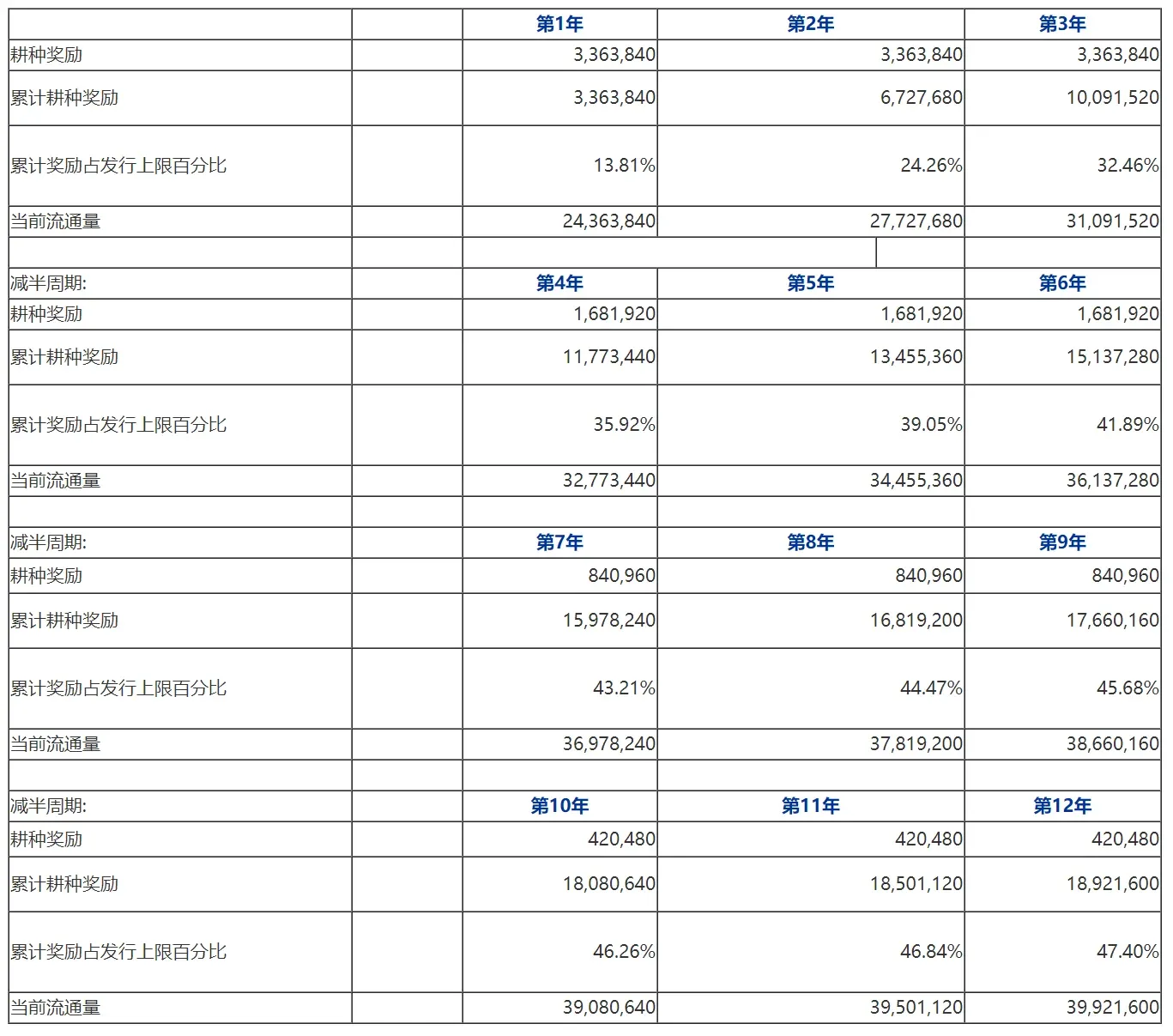
Halving Schedule After Year 13
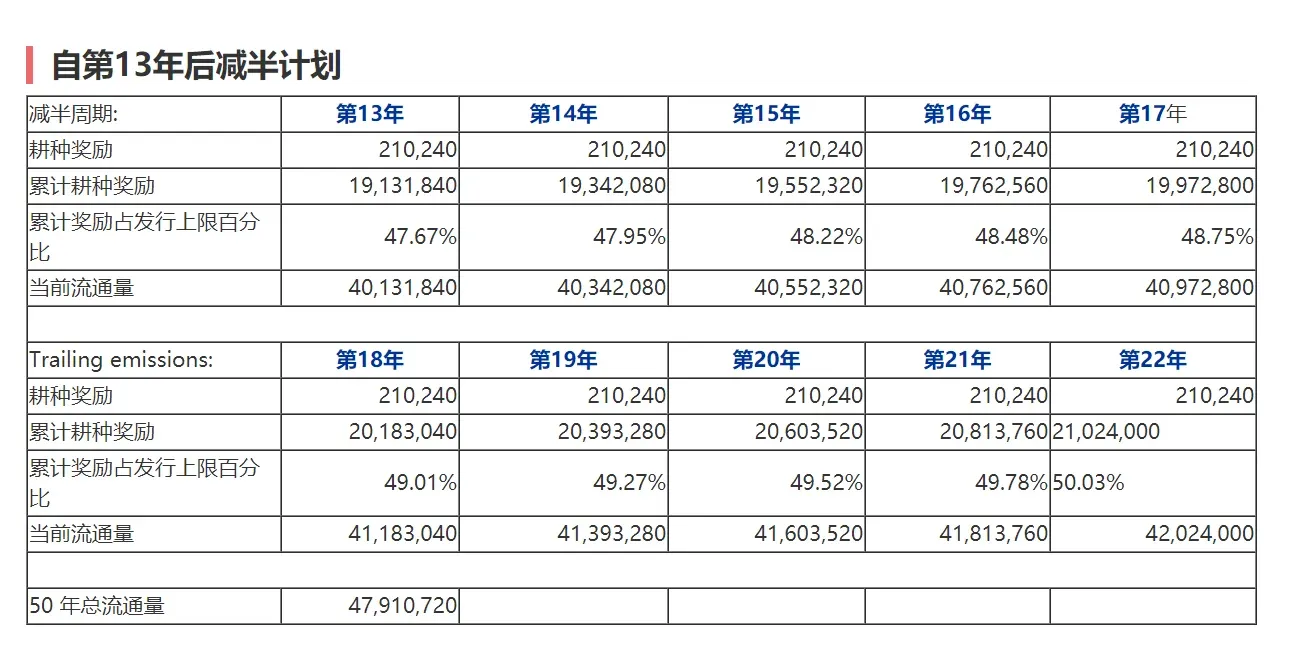
- This plan draws inspiration from Bitcoin’s halving model but has been specially adjusted for Chia’s 4,608 reward opportunities per day and a faster halving cadence.
Comparison with Bitcoin’s Output
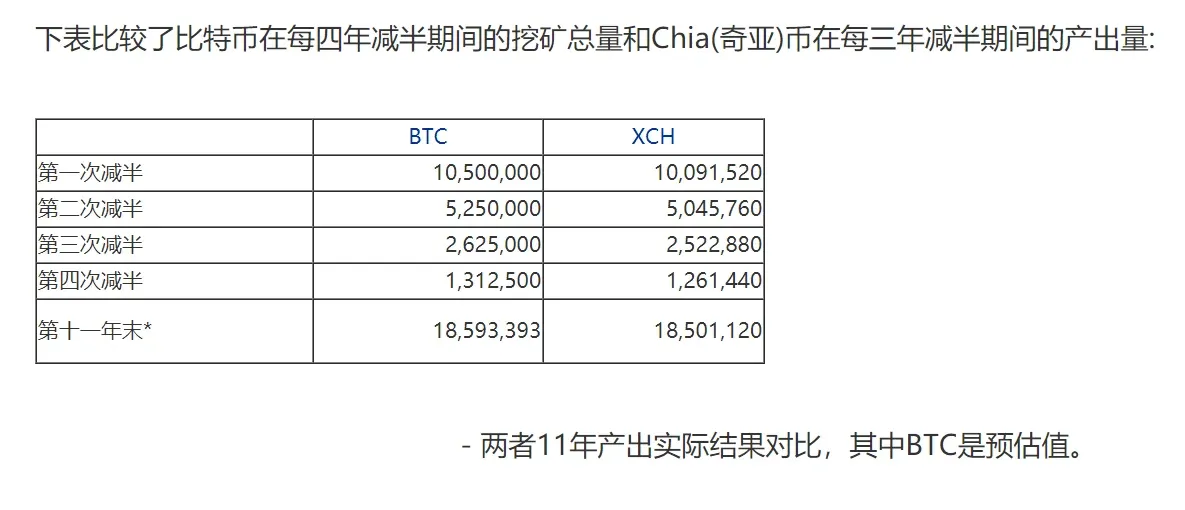
- The table illustrates a cumulative production comparison over an 11‑year span between Bitcoin’s four‑year halving cycle and Chia’s three‑year halving cycle (BTC figures are estimates).
---
This concludes the comprehensive analysis of the CHIA mining economic model. For more information on CHIA mining, please follow other articles published by Bitaigen.
Related Reading
- Liquidity Mining vs Traditional Crypto Mining: Key Differences Explained
- Chia: Scam or Green Mining Opportunity 2024?
- Consensys Linea Layer-2: Features, Tokenomics & Airdrop
💡 Register on Binance with referral code B2345 for the maximum trading fee discount. See Binance complete guide.



