
 Bitaigen Research
 Since September 2022, when Ethereum completed the Merge, the world’s second‑largest blockchain has operated entirely on a Proof‑of‑Stake (PoS) consensus mechanism. Unlike the traditional Proof‑of‑Work model, PoS replaces power‑hungry mining rigs with a “staking” process, allowing the network to achieve a better balance between security and energy efficiency.

For the average token holder, this technical upgrade also opens the door to passive income – ETH staking. The following sections systematically explain how it works, where the rewards come from, the potential risks, and practical steps, helping you make a more considered decision after understanding the full picture.
We examine the core principles and operational points of Ethereum staking from three angles – technology, returns, and risk – so that holders can more clearly see passive‑income opportunities after the Merge and spot potential pitfalls early. The full analysis is worth a careful read. Follow our step‑by‑step breakdown to deepen your understanding.
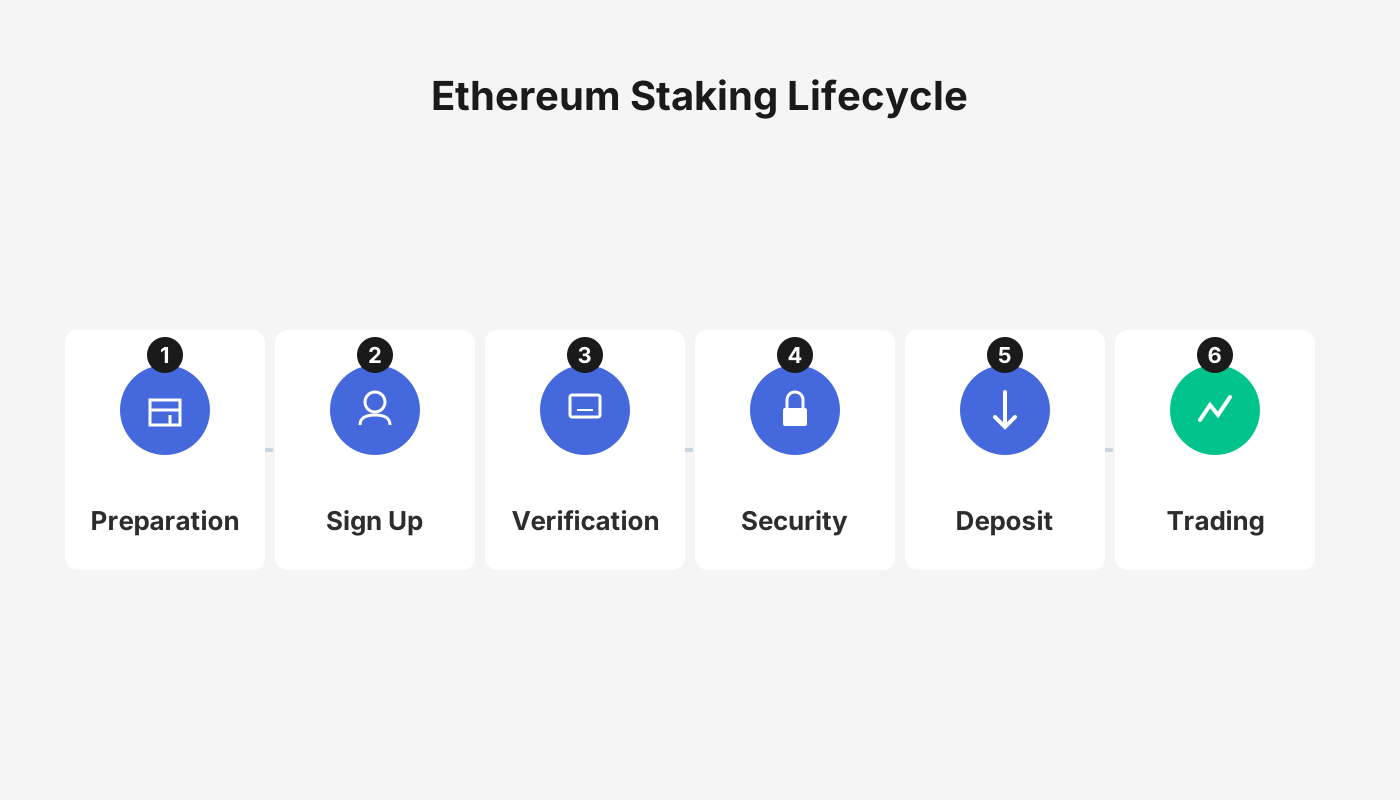
What Direct Benefits Can Staking ETH Provide?
- Passive income: Once ETH is locked, you receive regular rewards distributed by the network without the need for frequent trades or additional actions – a classic “set‑and‑forget” model.
- Enhanced network security: Every stake adds capital support to Ethereum’s consensus layer; the larger the total amount staked, the higher the cost for an attacker trying to compromise the chain.
- Low‑carbon footprint: Compared with Bitcoin and other PoW projects, PoS consumes negligible electricity, making ETH staking a more sustainable investment approach.
Where Do the Rewards Come From?
ETH staking returns consist of two main components:
- Block rewards: When the protocol randomly selects your validator node to propose a new block, newly minted ETH is issued and paid directly to you. This is the core source of earnings.
- Transaction‑fee sharing: Every transaction on the network generates a fee; a portion of these fees is allocated to active validators according to the protocol rules.
Hot News
Before the Shanghai (Shapella) upgrade, staked ETH was locked and could not be withdrawn, limiting user flexibility. After the upgrade enabled withdrawals, liquidity improved dramatically, prompting a rapid rise in total staked ETH and underscoring market confidence in PoS.
Key Factors That Determine the Reward Level
- Staking volume: The more ETH is staked across the whole network, the more a single validator’s share is diluted; conversely, a larger personal stake can generate a higher absolute return.
- Validator performance: Staying online and correctly processing transactions is a prerequisite for earning rewards; downtime or misbehaviour reduces earnings and can trigger penalties.
- Market conditions: Rewards are denominated in ETH, so sharp price movements affect the fiat‑value of your returns.
- Slashing mechanisms: Misbehaviour such as double‑signing or prolonged offline periods activates slashing, which directly deducts a portion of the staked assets.
- Activation and exit queues: New validators must enter an activation queue limited by the “churn limit.” During periods of network congestion, activation may be delayed, affecting the start date of earnings.
How the Ethereum PoS System Works
- Fundamental difference between PoS and PoW: PoW relies on computational competition to solve mathematical puzzles, consuming massive energy. PoS selects block proposers based on the amount of cryptocurrency they lock up, requiring minimal computation and dramatically lowering operating costs while improving environmental friendliness.
- Validator responsibilities: In Ethereum’s PoS network, validators verify transactions, assemble blocks, and write them to the chain. To become a validator, you must lock 32 ETH as a security deposit in the official staking contract.
- Entry threshold: The minimum amount to run a validator node directly is 32 ETH, plus the technical know‑how and a reliable internet connection to keep the node online 24/7 and avoid penalties for downtime.
What Is ETH Staking and Why Is It Important?
Think of ETH staking as a high‑yield “network bank” account. By depositing ETH into a designated wallet or platform, you become a validator; your assets act as “capital” that aligns your incentives with the network’s health. Its importance lies in:
- Foundation of network security: The more ETH is staked, the higher the cost for an adversary to gain control, thereby strengthening security.
- From high energy consumption to efficiency: PoS frees Ethereum from the energy‑intensive mining model, delivering a greener consensus method.
- Open to anyone: No expensive ASICs or specialized hardware are required; any ETH holder can earn rewards simply by staking.
How Should Beginners Safely Stake ETH?
Option 1: Centralized Exchange (CEX) Staking
- Advantages: Lowest barrier to entry – just deposit ETH on the exchange and click “Stake.” Major platforms such as Binance, Coinbase, and KuCoin (U.S. residents should use Binance.US instead of the global Binance) handle all technical details and assume most of the slashing risk.
- Disadvantages: Custody is transferred to a third party, introducing centralization risk; exchanges also charge a service fee, which slightly reduces net returns.
- Suitable for: Complete newcomers who are not comfortable with blockchain operations and want a one‑click solution.
Option 2: Liquid Staking Protocols
- Advantages: Assets stay in your own wallet, preserving decentralization. The protocol issues an equivalent liquid staking token (LST) – for example, Lido’s stETH – which can be used or traded within the DeFi ecosystem, improving capital efficiency.
- Disadvantages: You assume smart‑contract risk and must pay on‑chain transaction fees; a moderate level of blockchain proficiency is required.
- Suitable for: Users with some on‑chain experience who wish to keep their staked assets liquid.
Essential Risks Associated With ETH Staking

- Slashing risk: If a validator goes offline for a long period, double‑signs, or otherwise violates protocol rules, the system can confiscate part or all of the staked ETH. Early‑stage network incidents caused by server failures have been widely reported.
- Liquidity risk: Although the Shanghai upgrade enables withdrawals, high‑demand periods can create queues, meaning you may have to wait before retrieving your ETH.
- Smart‑contract risk: When using third‑party protocols, your funds are held in a contract; bugs or attacks on the contract could result in loss of assets.
- Price‑volatility risk: Rewards are paid in ETH; a sharp decline in ETH’s market price can erode the fiat value of earnings, potentially turning a nominal gain into a nominal loss.
Additional Considerations
- Technical and operational risk: Running a validator node requires reliable hardware and internet connectivity. Hardware failures or network interruptions trigger penalties and slash earnings. It is advisable to have backup systems and a regular maintenance schedule.
- Economic impact of ETH price swings: The fiat value of rewards is tightly linked to ETH market price. If the price drops significantly during the staking period, total returns may fall short of expectations, so consider hedging strategies or diversification.
- Importance of thorough research: Before committing, review each platform’s security audit reports, community reputation, and regulatory environment to ensure the chosen channel is trustworthy.
Tax note: In many jurisdictions, gains from staking (both the newly minted ETH and any fees received) are treated as taxable income or capital gains. Users should consult local tax advisors to understand their obligations.
Conclusion and Outlook

ETH staking represents a key innovation that lets ordinary token holders directly participate in securing the Web 3 ecosystem. It can deliver relatively stable passive income while exposing participants to technical, market, and contract‑level risks.
Future hot topics: One area receiving growing attention is centralization risk, especially the dominant market share of large liquid‑staking providers such as Lido, which raises decentralization concerns. At the same time, the rapid expansion of Layer‑2 solutions like Arbitrum and Optimism creates new opportunities for integrating ETH staking with scaling ecosystems—an issue that will likely dominate the next development phase.
For newcomers, the first step is to fully understand the pros and cons of each staking method, match them against personal risk tolerance, technical comfort, and asset size, and then select the most appropriate avenue. Only after a clear grasp of both risk and reward can one truly benefit from the long‑term, relatively stable yields that ETH staking can provide.
That concludes the “Comprehensive Guide to Ethereum (ETH) Staking: Mechanism, Revenue Sources, and Risks.” For further analysis, search for previous Bitaigen (比特根) articles or continue reading the recommended links below. Thank you for your continued interest and support!
Related Reading
- Ethereum EIP‑1559 Upgrade: How It Solves Network Congestion
- Solana Token Launchpad Comparison 2024: Features, Fees & Launch Dates
- Ethereum: From PoW to PoS – Ethash, Casper & Migration
💡 Register on Binance with referral code B2345 for the maximum trading fee discount. See Binance complete guide.



