
 Bitaigen Research
 When performing an on‑chain transfer, the most critical rule is that the network selected by the sender must exactly match the network provided by the receiver. For example, if the recipient supplies a TRC20 address, the transfer must be executed on the TRC20 network; otherwise the assets are very likely to end up in an unrecoverable state.
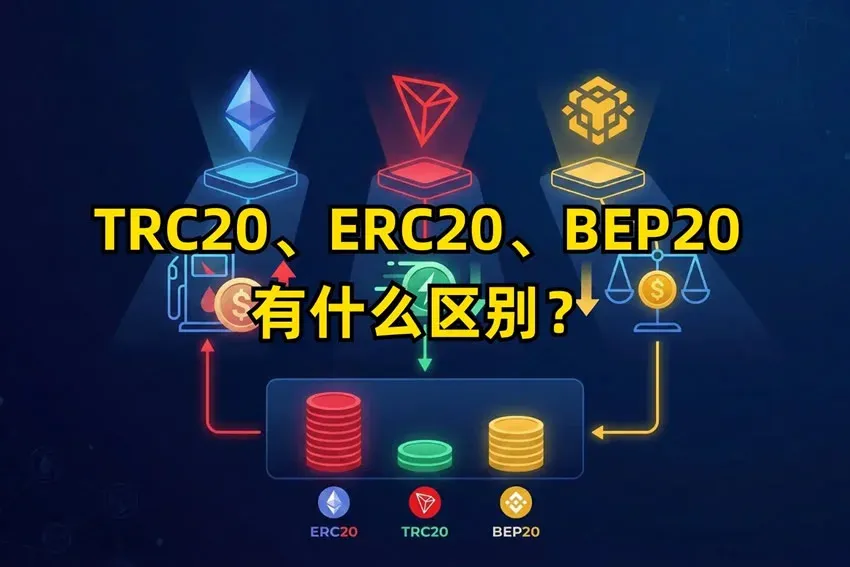
In this article we systematically review the technical principles, asset‑security considerations, and fee structures of the three dominant token standards—TRC20, ERC20 and BEP20—so that newcomers can avoid common mistakes when choosing a blockchain for transfers and quickly determine which chain best fits their needs.
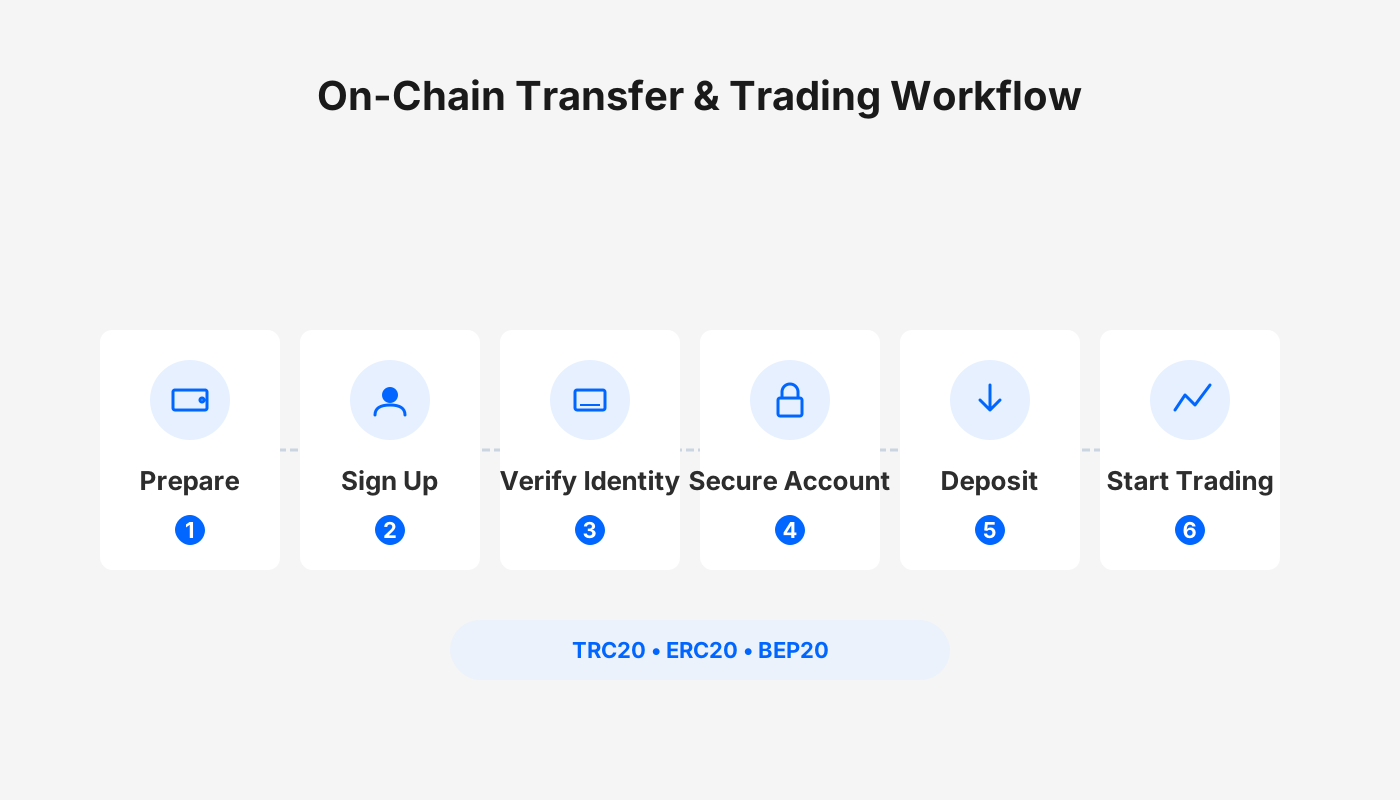
5. Frequently Asked Questions (FAQ)
Q1: I mistakenly sent an ERC20 token to a BEP20 address. Can I recover it?
Because both address formats start with 0x, if you still control the corresponding private key (for example, stored in MetaMask), you can switch the network in your wallet and attempt a recovery. If the funds were sent to an exchange address that does not support BEP20, you will need to contact the exchange’s support team; usually a substantial service fee is required for a manual retrieval.
Q2: Why are some TRC20 transfers fee‑free?
The TRON network uses a dual‑layer “Energy” and “Bandwidth” pricing model. Users who stake TRX in their wallet receive a certain amount of free bandwidth and energy, allowing them to execute transactions at zero cost under specific conditions. When withdrawing from an exchange, however, a handling fee of about 1‑2 USDT is typically charged.
Q3: Are “miner fees” and “transaction fees” the same thing?
Broadly speaking, both refer to the compensation paid to blockchain nodes for providing computational power. Exchanges bundle this cost into a fixed “withdrawal fee” that is displayed to the user.
Q4: My ERC20 transfer has been pending for half an hour. What should I do?
This usually indicates network congestion or that the Gas price you set is too low. Miners prioritize transactions that offer higher fees. You can check the status of the transaction by looking up the TxID on a blockchain explorer; if it shows Pending, try using your wallet’s “speed‑up” function or increase the Gas price appropriately.
Q5: What happens if I send USDT to a BTC address?
Bitcoin’s address algorithm is fundamentally different from that of ERC20/TRC20. The blockchain will treat the destination as an invalid or “black hole” address, making the assets virtually unrecoverable—effectively a permanent loss.
Tax note: In many jurisdictions, gains from cryptocurrency transactions may be subject to taxation. Users should consult local tax regulations or a professional advisor to ensure compliance.
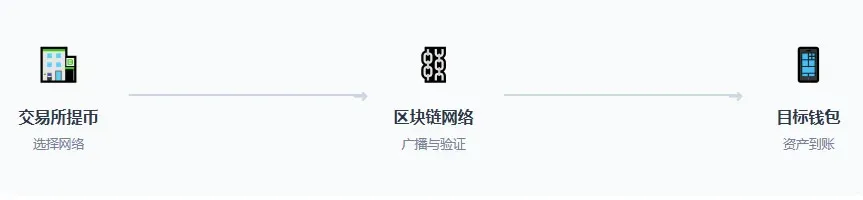
3. Diagram of How a Transfer Happens
The schematic below illustrates the full process of “withdrawing from an exchange to a personal wallet.” Note that the exchange acts as a multi‑chain orchestrator in this workflow.
Expert tip: Although BEP20 generally offers the lowest fees, not every platform accepts that network. Always verify that the counterparty supports the chosen protocol before depositing; a low fee does not justify using an unsupported chain.
2. Comprehensive Comparison of Core Metrics
| Metric | ERC20 (Ethereum) | TRC20 (TRON) | BEP20 (BSC) |
|---|---|---|---|
| **Fee** | High (≈ $5‑$50+) | Low (≈ $1‑$2) | Extremely low (< $0.5) |
| **Confirmation speed** | Medium (5‑15 minutes) | Fast (1‑3 minutes) | Ultra‑fast (≈ 1 minute) |
| **Address prefix** | 0x… | T… | 0x… |
| **Best use case** | Large‑value, long‑term storage | Everyday high‑frequency USDT transfers | Binance ecosystem / low‑cost transfers |
4. Transfer Strategy Recommendations for Beginners
- Standard USDT transfers: Prefer TRC20; the fee is roughly 1 USDT and virtually all exchanges and wallets support it.
- Large‑value assets (e.g., six‑figure amounts): Lean toward ERC20. Although the fee is higher, Ethereum’s decentralisation and security are still regarded as industry‑leading.
- Operations within the Binance ecosystem or BSC projects: Use BEP20, where fees are practically negligible.
- Important reminder: Do not force a transfer on a wallet or exchange that does not support the relevant protocol. For instance, attempting to send a TRC20 address from a traditional Bitcoin client will result in loss of funds.
Regional note for U.S. users: When using Binance services, residents of the United States must access Binance.US rather than the global Binance platform, as the latter is not available to U.S. customers.
1. In‑Depth Analysis of the Three Major Transfer Protocols
1. ERC20: The Universal Standard on Ethereum
ERC20 originated on the Ethereum blockchain and remains the most widely adopted token protocol; almost every major DeFi project is built on it.
- Security: Backed by thousands of Ethereum nodes, offering very high security.
- Drawbacks: The network frequently experiences congestion, and Gas fees can spike to tens of dollars during periods of high demand.
- Address format: Begins with 0x.
2. TRC20: High‑Efficiency Implementation on TRON
TRC20 runs on the TRON chain and is currently the most popular protocol for transferring USDT worldwide, emphasizing speed and low cost.
- Advantages: Fees are usually between 1‑2 USDT, and in some cases the transaction can be free; transfers typically complete within about 2 minutes.
- Typical scenarios: Peer‑to‑peer transfers, exchange deposits/withdrawals, online payments.
- Address format: Starts with an uppercase T.
3. BEP20: Compatibility Layer on BNB Smart Chain
BEP20 mirrors the ERC20 standard but operates on BNB Smart Chain, providing higher throughput and lower fees.
- Advantages: A single transaction often costs less than $0.5, making it the default entry point for all DeFi projects on BSC.
- Address format: Also begins with 0x, which can be confused with ERC20 addresses.
The content above systematically explains the distinctions among TRC20, ERC20, and BEP20, and guides newcomers on selecting the most appropriate chain for various scenarios. For deeper analyses, stay tuned to Bitaigen’s upcoming专题 articles.
Related Reading
- Transfer TokenPocket Funds to OKX (OKEx) Safely
- OKX Review 2024: Fees, Features & Fiat Options
- OKX Pay: Simplifying Crypto Payments for Web3 Newcomers
💡 Register on Binance with referral code B2345 for the maximum trading fee discount. See Binance complete guide.



