
 Bitaigen Research
 In this article we systematically review the Taproot Assets mainnet recently launched by Lightning Labs, deeply analyze the core mechanisms that enable multi‑asset issuance and management on Bitcoin, and discuss the potential impact of this technology on the DeFi ecosystem and Bitcoin’s path toward mainstream adoption, helping developers get up to speed quickly.
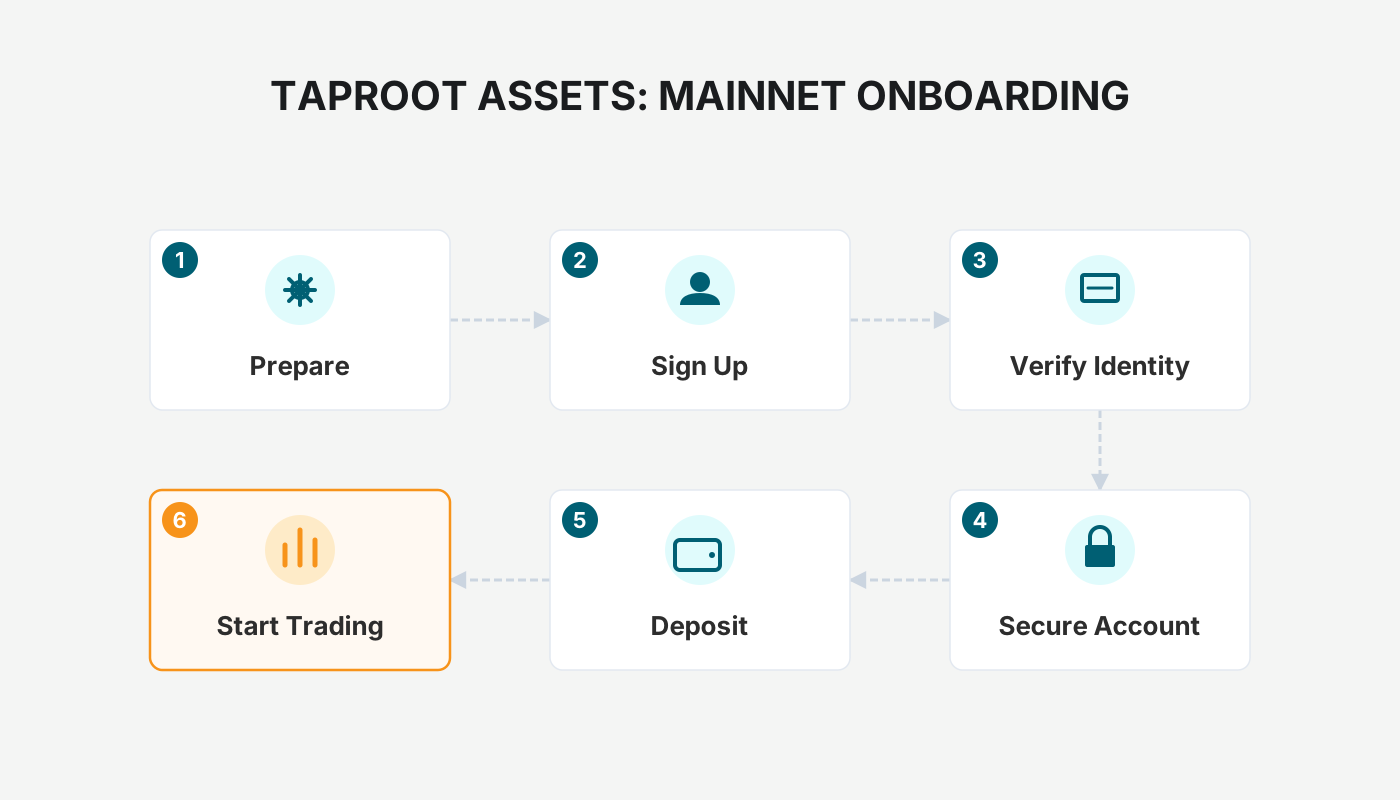
Lightning Labs has officially released Taproot Assets on the Bitcoin mainnet, enabling the issuance, management, and exploration of multiple assets directly on Bitcoin.
Lightning Labs Director of Development Ryan Gentry notes in his post that Taproot Assets supplies developers with *all the tools needed to turn Bitcoin into a multi‑asset network* while preserving Bitcoin’s core value proposition in a scalable manner.
Lightning Labs CEO Elizabeth Stark states that this launch marks a new era for Bitcoin, further solidifying its important role within the global financial system. Leveraging Bitcoin’s security and decentralization, it aims to become a foundational layer for financial assets.
The Taproot Assets protocol was originally called Taro; after a naming‑conflict controversy last year that temporarily halted development, the project underwent a rebranding in May 2024 and returned to public attention.
Key features of the protocol include:
- Issuing assets on both the Bitcoin blockchain and the Lightning Network
- Providing scalable on‑chain asset‑management tools
- Supporting the construction of a richer DeFi ecosystem
- Advancing Bitcoin’s further mainstream adoption
The latest v0.3 release supplies developers with a complete toolchain for issuing, managing, and exploring on‑chain mainnet assets.
The above constitutes the full announcement from Lightning Labs, the developer behind the Lightning Network, regarding the Taproot Assets mainnet launch. For more details on Bitcoin on‑chain token issuance, please follow additional articles from Bitaigen (比特根).
*Note: When dealing with fiat conversions, USD is the standard reference currency, and cross‑border transfers typically use SEPA (for Euro‑zone) or SWIFT networks. U.S. residents should use Binance.US rather than the global Binance platform. Crypto gains may be subject to taxation according to local jurisdictional rules.*
Related Reading
- Bitcoin Lightning Network: Instant Low‑Fee Payments
- Ark Bitcoin Layer 2: Liquid‑Free Alternative to Lightning Network
- Bitcoin Mnemonic Phrase Explained: Recovery & Security
💡 Register on Binance with referral code B2345 for the maximum trading fee discount. See Binance complete guide.



