
 Bitaigen Research
 In the cryptocurrency world, Bitcoin addresses serve a role similar to “bank account numbers” or “mailing addresses.” They are the fundamental element for any on‑chain transfer. With the rise of the Ordinals protocol and recent upgrades to the Bitcoin network, new address formats such as “bc1p” have started to appear more frequently. This article provides an in‑depth analysis of what a Bitcoin address is and outlines the four most common address formats.
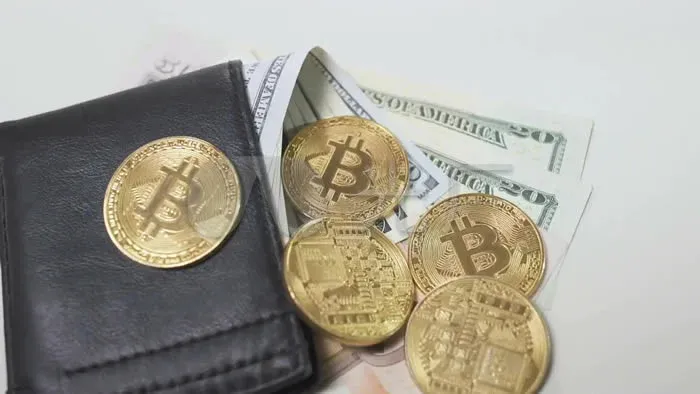
As the Ordinals protocol and technical upgrades progress, the Bitcoin network is undergoing an unprecedented paradigm shift. We find that understanding the diversity of address formats has become essential for secure interaction and for reducing transaction costs. This guide will dissect the evolution of Bitcoin addresses, compare the core differences among the main formats in terms of privacy, compatibility, and efficiency, and aim to give you a clearer on‑chain perspective for a more professional exploration of the Bitcoin ecosystem.
What Is a Bitcoin Address?
A Bitcoin address is a string of letters and numbers that primarily identifies ownership of Bitcoin and acts as the unique identifier for receiving and sending assets. At present, there are four mainstream Bitcoin address formats: the “1‑” prefixed Legacy (P2PKH), the “3‑” prefixed P2SH, the “bc1q‑” prefixed SegWit (Bech32), and the “bc1p‑” prefixed Taproot address. Each format differs in transaction fees, compatibility, and privacy characteristics.
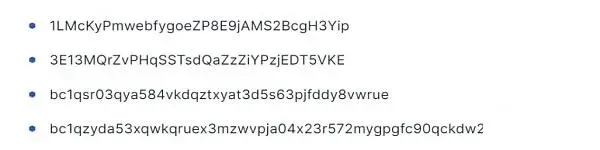
A Bitcoin address functions much like a bank account number in traditional finance. Anyone who knows your address can send you Bitcoin, and you can use your wallet to transfer Bitcoin to other addresses. If the Bitcoin network were likened to an email system, Bitcoin itself would be the message content, the Bitcoin address the email account, and the Bitcoin wallet the client software that manages those accounts.
It is important to note that an address does not correspond to a single independent user. An address may be jointly controlled by multiple parties (e.g., a multi‑signature setup), and a single user may generate countless distinct Bitcoin addresses for privacy purposes.
The Four Main Types of Bitcoin Addresses
All Bitcoin addresses start with a specific character or set of characters (such as 1, 3, or bc1), indicating the underlying technical standard they follow. Below is a breakdown of the four dominant formats in use today:
1. Legacy Address (Legacy / P2PKH)
The Legacy address is the original Bitcoin address format, technically known as P2PKH (Pay‑to‑PubKey‑Hash). It has been in use since Bitcoin’s inception in 2009 and is derived from the hash of a public key.
- Identification: The address always begins with the numeral “1.”
- Pros and Cons: This format enjoys the broadest compatibility—every wallet and exchange supports it. However, because the transaction data size is relatively large, the miner fees (often expressed in USD equivalents) are typically the highest among all address types.
- Example: `15f12gEh2DFcHyhSyu7v3Bji5T3CJa9Smn`
2. Nested SegWit Address (P2SH)
P2SH (Pay‑to‑Script‑Hash) addresses can embed not only a public‑key hash but also more complex script hashes. They are commonly used for multi‑signature (Multi‑Sig) accounts or to wrap SegWit scripts for better backward compatibility.
- Identification: The address always starts with the numeral “3.”
- Pros and Cons: Transactions sent to a P2SH address are roughly 26 % cheaper than those sent to a legacy address. Functionally, P2SH offers richer capabilities than Legacy and retains better compatibility with older hardware and software compared with native SegWit.
- Example: `35PBEaofpUeH8VnnNSorM1QZsadrZoQp4N`
3. Native SegWit Address (Native SegWit / Bech32)
The Native SegWit address, also called a Bech32 address, moves signature and script data into a separate “witness” field, dramatically reducing the amount of block space a transaction consumes.
- Identification: The address always begins with “bc1q.”
- Pros and Cons: This is currently the most efficient and lowest‑cost mainstream format. Compared with P2SH, it can save about 16 % in fees, and compared with Legacy, it can save over 38 %. The vast majority of modern wallets and exchanges now support Bech32.
- Example: `bc1q42lja79elem0anu8q8s3h2n687re9jax556pcc`
4. Taproot Address (Taproot)
The Taproot address was introduced after the 2021 Bitcoin network upgrade. Building on SegWit, it further optimizes storage efficiency for complex transactions and brings enhanced privacy and smart‑contract capabilities to Bitcoin.
- Identification: The address always starts with “bc1p.”
- Pros and Cons: Taproot provides the highest space efficiency, especially noticeable when handling sophisticated multi‑party transactions. Moreover, the currently popular Ordinals inscription protocol operates primarily on Taproot addresses.
- Example: `bc1pmzfrwwndsqmk5yh69yjr5lfgfg4ev8c0tsc06e`
Summary
Understanding the distinctions among Bitcoin address formats enables users to optimise transaction fees and improve overall efficiency. When selecting a wallet or exchange, it is advisable to prioritize services that support SegWit or Taproot addresses in order to benefit from the latest technological advantages.
*Note for users in the United States: when using a centralized exchange, ensure you access Binance.US rather than the global Binance platform.*
*General reminder: cryptocurrency gains may be subject to tax in your local jurisdiction; consult a tax professional for guidance.*
Related Reading
- Bitcoin Mining 2026: Capture Gains in Trillion‑Dollar Market
- BlackRock Owns 3% of Bitcoin: Strategic Institutional Analysis
- Bitcoin Evolution: From Niche Asset to Global Financial Pillar
💡 Register on Binance with referral code B2345 for the maximum trading fee discount. See Binance complete guide.



