
 Bitaigen Research
 Who Is Jihan Wu?
Jihan Wu is a Chinese‑born entrepreneur (born in 1986 in Chongqing) who has left a bold imprint on the global cryptocurrency landscape. In addition to being a co‑founder of Bitmain, he is recognized as one of China’s earliest Bitcoin evangelists for his early translation of *Bitcoin: A Peer‑to‑Peer Electronic Cash System*. Leveraging a sharp sense of blockchain technology and a comprehensive approach to the industry’s supply chain, Wu vaulted from a modest investment analyst to the so‑called “Bitcoin mining tycoon” within a few short years. Today he is based in Singapore and continues to deepen his involvement in cloud‑computing power and artificial‑intelligence (AI) infrastructure.
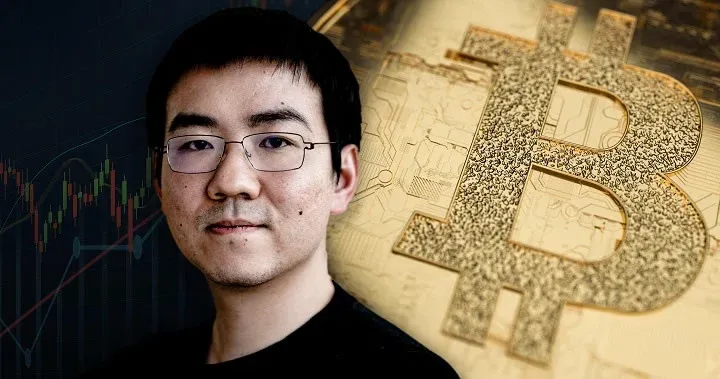
This article walks through Wu’s personal trajectory, the founding and growth of Bitmain, and his influence on the worldwide mining landscape. It helps readers understand the thinking and strategic moves behind an industry leader, and reveals how he transitioned from an early Bitcoin promoter to a pioneer of cloud‑computing power. Worth a read.
III. The Rise of Bitmain and Its Industry Dominance
In 2013, after an email exchange, Wu Jihan joined forces with chip specialist Micree Zhan (Zhan Ke‑tuan) to launch Bitmain. Wu handled market and commercial strategy, while Zhan focused on technology development. Using their home‑grown BM1380 ASIC chip, the duo quickly gained traction. The subsequent Antminer series of mining rigs, praised for high efficiency and relatively low cost, captured roughly 70 %‑80 % of the global ASIC miner market. Bitmain’s three mining pools—Antpool, BTC.com, and ConnectBTC—once together controlled nearly 50 % of the network’s total hash power, and the company’s valuation peaked at about USD 12 billion in 2017. During this period Wu also diversified the business, investing in projects such as Circle and beginning work on AI‑focused chip development.
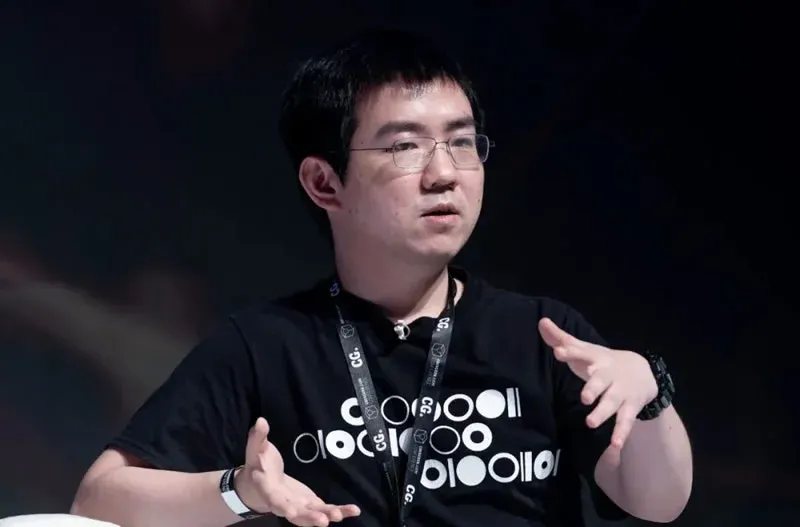
The image below displays Bitmain’s corporate logo, symbolising its leading status in the crypto sector:
V. Controversies and Internal Power Struggles
As mining power consolidated, Wu inevitably became embroiled in several industry disputes. In 2017 he backed a “large‑block” proposal that triggered a hard fork of the Bitcoin network, resulting in Bitcoin Cash (BCH). The move provoked a strong backlash from Western communities, with some labeling him a “villain.” A subsequent hash‑rate battle with “Bitcoin Australia” (often referred to as “Australian Satoshi”) in 2018 caused another BCH split, further fracturing the community.
Internal corporate battles were equally intense. In 2019 the partnership between Wu and Micree Zhan began to fray, leading to a fierce showdown over corporate governance. The conflict culminated in Wu voluntarily stepping down from his roles as CEO and chairman of Bitmain in 2021, reaching a settlement that spun off the mining pools and cloud‑mining services into a new platform called Bitdeer (literally “Bit Deer”).
IV. Wealth Trajectory of China’s First Bitcoin Billionaire
Wu’s fortune stems from two primary sources: Bitmain’s hardware sales and his early, low‑cost Bitcoin purchases. By selling the 900 BTC he accumulated at a price above USD 300 each in 2014, he secured his first substantial capital windfall. Bitmain’s annual revenue then repeatedly set new records, with models such as the Antminer S9 and S19 shipping millions of units and generating several billion‑dollar revenues.
In 2018, the Hurun Rich List placed Wu at CNY 16.5 billion (approximately USD 2.4 billion) in the 204th position, making him the wealthiest “post‑85” self‑made entrepreneur in China. That same year *Fortune* ranked him third among 40 under‑40 business leaders. Public data indicate he holds more than 110,000 BTC; estimates for his net worth in 2025 range between USD 1.7 billion and USD 2.39 billion.
*Note: Gains from the sale or exchange of cryptocurrencies may be subject to tax in the holder’s jurisdiction. Individuals should consult local tax regulations or a professional advisor.*
II. Early Education and Bitcoin Awakening
Wu grew up in a modest family in Chongqing, alongside his cousin Chen Shuyi. He attended Chongqing Nankai High School, then entered Peking University in 2005, majoring in economics and psychology, and graduated with a double degree in 2009. While at university he was influenced by liberal thought, idolised Warren Buffett, avidly read *Southern Weekly*, and developed distinctive viewpoints on current affairs. After graduation he joined a venture‑capital firm as an analyst and investment manager, gaining practical experience in finance.
In 2011 Wu encountered Bitcoin while in Canada. Within three days he read and fully translated Satoshi Nakamoto’s whitepaper into Chinese, becoming the first person to make the document available in Mandarin and earning the nicknames “Bitcoin evangelist” and “Satoshi disciple.” At that time Bitcoin traded at only a few dollars; Wu used personal savings and a CNY 100,000 loan from friends to purchase 900 BTC at roughly USD 10 each. He later sold them in 2014 for over USD 300, establishing the capital foundation for his future ventures.
On the Bitcointalk forum he acted as the moderator of the Chinese section under the handle “QQAgent,” and together with long‑time collaborator Chang Jia founded the Babit (Baba) website, further promoting Bitcoin in China. In 2012 his investment in the “KaoMao” mining farm produced about 40,000 BTC per month, worth several million CNY, providing crucial funding for later industry moves.
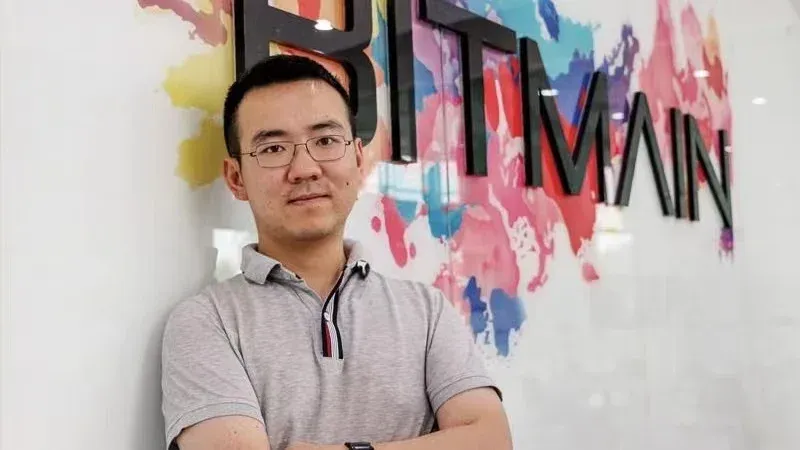
The portrait below shows Wu in his early entrepreneurial days:
VI. New Chapter After Leaving Bitmain
In 2021 Wu relocated to Singapore, formally exiting Bitmain’s day‑to‑day operations and founding Bitdeer, a group focused on cloud‑computing power and AI data centers, where he serves as chairman. Bitdeer successfully listed on Nasdaq in 2023 under the ticker BTDR, achieving a market capitalization of roughly USD 1.9 billion and reporting profitability by 2025. The company has since deployed data centers in the United States, Bhutan, and other locations.
Concurrently, Wu launched Matrixport in 2019, a crypto‑financial services platform that now manages assets exceeding USD 10 billion and has raised USD 129 million in funding, earning unicorn status. He consistently emphasises that Bitcoin and the broader crypto market have the potential to expand into a multi‑trillion‑dollar ecosystem.
I. Summarising Who Jihan Wu Is
In sum, Jihan Wu is a Chinese‑heritage entrepreneur who blends technical insight with commercial acumen. Leveraging his dual degree from Peking University, he first translated the Bitcoin whitepaper into Chinese in 2011, co‑founded Bitmain with Micree Zhan in 2013, and introduced the Antminer series that dominated the global ASIC miner market. He has repeatedly appeared on *Forbes*’ list of world billionaires and the *Hurun* rich list. After stepping down as Bitmain’s CEO and chairman in 2021, he shifted his focus to cloud‑computing power and AI, guiding Bitdeer to a Nasdaq listing and continuing to shape the digital‑asset space.
VII. Impact and Future Outlook
Wu’s journey mirrors Bitcoin’s evolution from a fringe technology to a fully industrialised sector. His success lies in seizing the blockchain “wave,” scaling ASIC chip production, and ushering Bitcoin mining into an industrial era. As one of Coindesk’s “Top 10 Influential Figures in Blockchain,” his role in shaping both China’s and the global crypto ecosystem is undeniable.
Looking ahead, with Bitcoin’s periodic halving events and the convergence of AI technologies, Wu’s business scope is likely to broaden further. Whether through cloud‑computing platforms or AI data centres, he is exploring new value‑chain configurations. His entrepreneurial path offers a vital reference for future founders: in an industry marked by uncertainty, steadfast vision combined with agile adaptation is essential to secure a foothold in a fiercely competitive market.
💡 Register on Binance with referral code B2345 for the maximum trading fee discount. See Binance complete guide.



