
 Bitaigen Research
 How to Look Up a Blockchain Contract Address
There are many ways to obtain a blockchain contract address. Besides blockchain explorers, official channels and wallet applications are also reliable sources. Below we first introduce several common acquisition methods, then demonstrate the detailed steps on the Ethereum explorer Etherscan, and finally supplement the core role of contract addresses in real‑world usage.
The Bitaigen editorial team reminds readers that a contract address is the foundation of on‑chain interaction. While there are numerous ways to obtain it, each carries its own risks. This article systematically outlines the query steps from official channels, wallet software to the Etherscan explorer, and explains the key functions of contract addresses in practice, helping you quickly verify authenticity and use them with confidence.
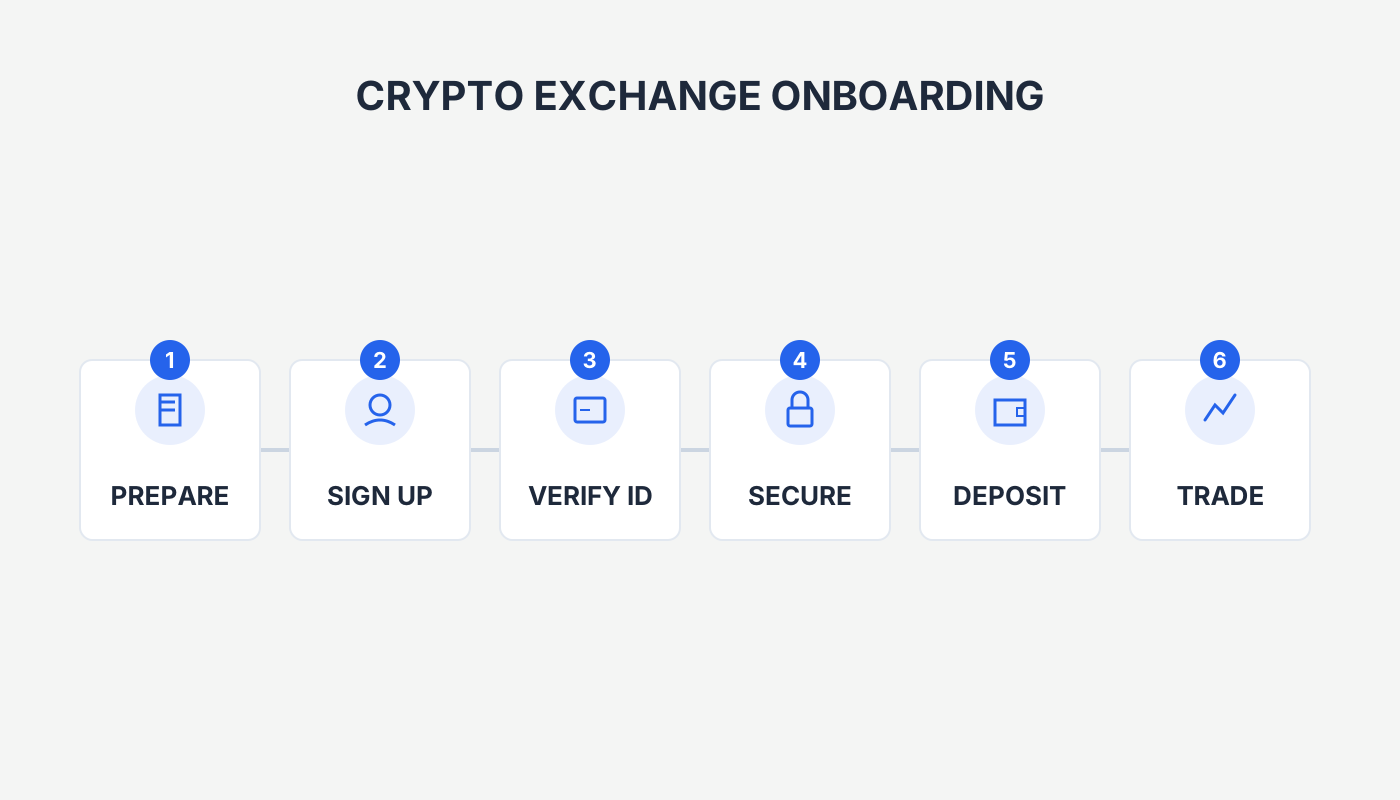
Overview of Blockchain Contract Address Lookup Methods
1. Obtaining from Official Channels
Most projects publish their contract addresses on their official website, social media, or formal announcements.
- Official website: The address is often displayed directly on the homepage, the “About Us” section, or a dedicated “Contract Address” page.
- Social platforms: Official accounts on Twitter, Telegram, Discord, etc., regularly post address updates.
- Announcements & news: Press releases or blog posts from the project team also contain the latest contract information.
Addresses obtained through these channels have the highest credibility and are best used when you are first encountering a project.
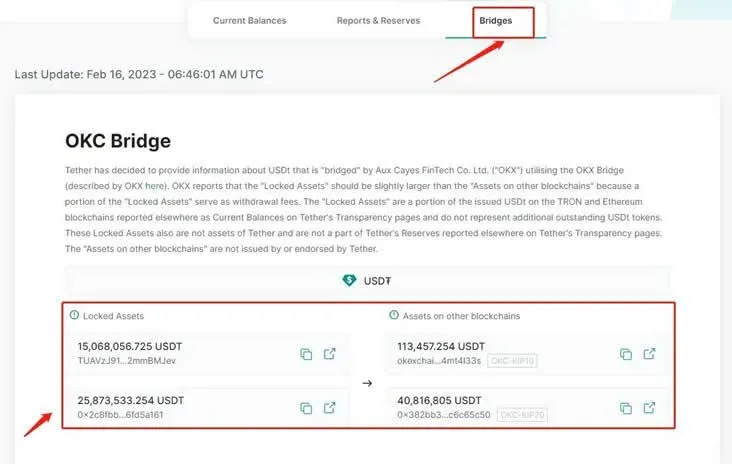
2. Querying via Wallet Applications
Some digital wallets embed a contract‑lookup feature. Using the TP Wallet as an example, the procedure is:
- Open the TP Wallet on your mobile device and log in.
- Locate the target token in your asset list and tap to open its detail page.
- The contract address appears on the page; tap the copy button to use it.
Before copying, double‑check the full string to avoid typographical errors that could lead to loss of assets.
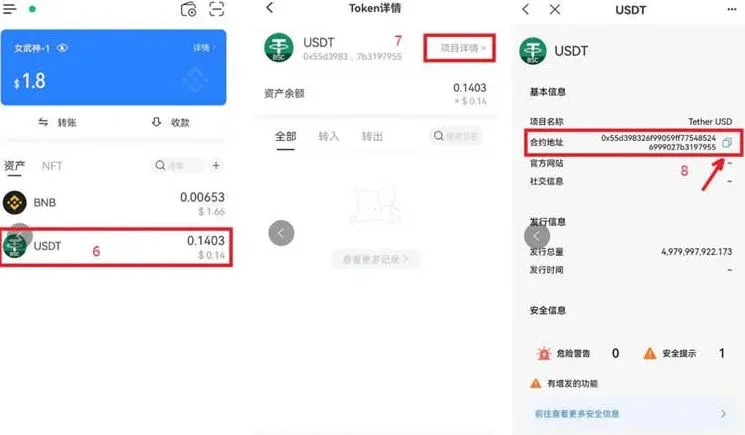
3. Using a Blockchain Explorer
A blockchain explorer provides the most visual way to retrieve contract information. Taking Etherscan as an example, it covers addresses, transactions, blocks, and smart contracts.
- Advantages: Real‑time data updates, user‑friendly interface, and deep information such as source code and holder distribution.
- Limitations: For massive data sets, non‑technical users may need a learning curve; some advanced features may require a paid subscription.
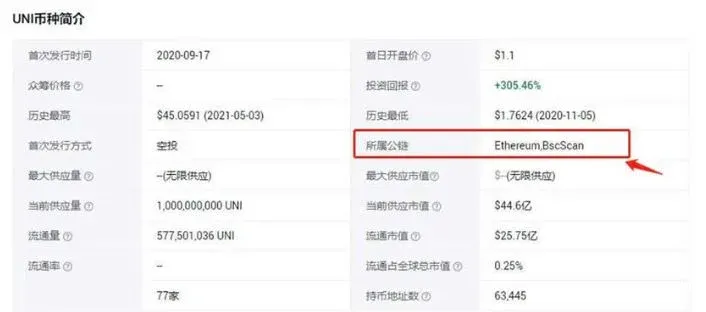
If you are unsure which chain a token belongs to, you can switch to similar explorers such as BscScan (Binance Smart Chain) or PolygonScan (Polygon network) to obtain contract details on the appropriate chain. *(U.S. users should use Binance.US for any Binance‑related services, not the global Binance platform.)*
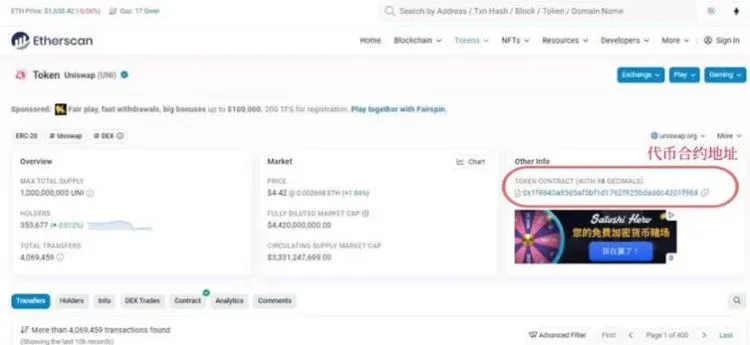
Step‑by‑Step Guide: How to Query a Blockchain Contract Address
The following demonstration uses Etherscan to illustrate the complete workflow from opening the site to confirming the contract.
1. Visit the Etherscan website
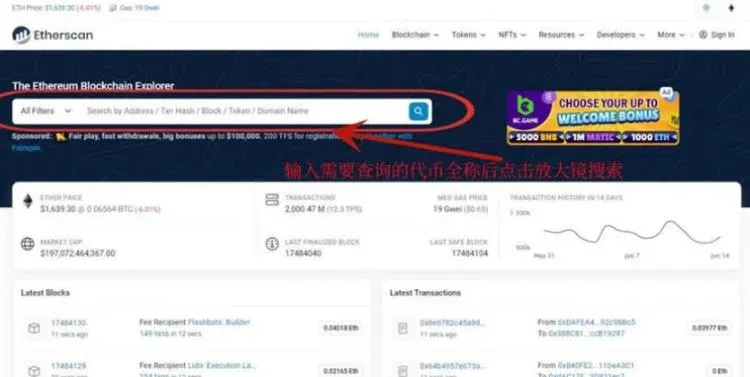
Enter `Etherscan.io` into your browser’s address bar and load the homepage. The layout is clean, allowing even beginners to navigate quickly.
2. Locate the search bar
The search bar at the top of the page serves as the entry point; it supports queries for addresses, transaction hashes, block numbers, and token names.
3. Enter the token name or contract address
Type the token’s ticker symbol (e.g., “UNI”) or paste a known contract address. The latter is useful when you already possess partial information.
4. Initiate the search
Click the magnifying‑glass icon or press Enter. The system will automatically match your input and return the relevant results.
5. Browse the results
If you searched by token name, multiple matches may appear. Usually the first entry corresponds to the token you are looking for; click its contract address to open the detail page.
6. Review the contract details
On the contract page you can view the source code, transaction history, holder distribution, total token supply, and other key metrics.
7. Verify address accuracy
Cross‑check the logo, name, symbol, and decimal precision displayed on the contract page against the token you intend to interact with. You can also perform a secondary search under the “Contracts” tab for additional confirmation.
8. Switch to another explorer if needed
To confirm information on a different blockchain, simply navigate to BscScan, PolygonScan, or the appropriate explorer; the workflow remains identical.
Extended Knowledge: Functions of a Blockchain Contract Address
- Token transfers: The contract address is the essential parameter that designates which token is being sent or received, ensuring assets reach the correct destination.
- Balance inquiries: By pairing a wallet address with a contract address, you can quickly retrieve any account’s token balance via an explorer.
- Smart‑contract interaction: Users can call predefined functions in the contract to perform actions such as buying or selling on Uniswap.
- Minting & burning: Creation, additional issuance, or redemption of tokens must go through the corresponding contract address to keep supply under control.
- Legitimacy verification: Examining the contract source code and address information helps determine whether a token is officially issued, reducing fraud risk.
- Transaction history tracking: The contract address logs the entire on‑chain chronology from creation to every subsequent transfer, aiding fund‑flow analysis.
- Cross‑chain bridging: In multi‑chain interoperability scenarios, the contract address serves as the identifier for bridged assets, enabling secure transfers across networks.
- Auditing & security: Audit firms assess the contract’s code and transaction records via its address to spot potential vulnerabilities and recommend improvements.
Safety Tips
- Obtain contract addresses only from official channels or trusted explorers.
- When copying and pasting, verify each character to avoid mis‑placements that could cause loss of funds.
- Keep your private keys and personal information secure; avoid performing operations on untrusted networks.
- Regularly monitor project announcements for any updates to contract addresses.
Tax Note: Cryptocurrency gains may be taxable in your jurisdiction. Consult a local tax professional to understand your obligations.
The various methods for locating a blockchain contract address are both diverse and user‑friendly, providing solid technical support for managing and transacting digital assets. Always verify the reliability of your information source and stay informed about project developments to maximize the security of your holdings.
This concludes the comprehensive guide “How to Look Up a Blockchain Contract Address? Methods for Querying Blockchain Contract Addresses.” For more related content, follow Bitaigen and its upcoming articles.

Related Reading
- Token Contract Addresses on Ethereum: Verify & Use
- Contract Address Basics: Blockchain Analysis & KYC
- 5 DeFi Trends & 14 Projects to Watch in 2024
💡 Register on Binance with referral code B2345 for the maximum trading fee discount. See Binance complete guide.



