
 Bitaigen Research
 We systematically explain the core concept of ROI and its precise calculation method in this article, compare the applicable scenarios of ROA and ROE, and help readers quickly look up and interpret their investment return rates on the Binance platform. By improving the objectivity and practicality of profit assessment, readers can manage digital assets more scientifically once they master the key techniques.
What Is ROI?
ROI (Return on Investment) measures the proportion of profit generated relative to the amount of capital invested. It provides a quick snapshot of how an overall portfolio performs compared to the initial principal. Many people mistakenly equate a high profit figure with strong investment skill, overlooking the influence of capital size. An extreme illustration: earning 1 million USD with a 10,000 USD initial outlay is far more impressive than earning the same amount with a 10 million USD outlay, because the former achieves a much higher profit multiple. ROI is the tool that lets us evaluate such differences objectively.

How to Calculate ROI
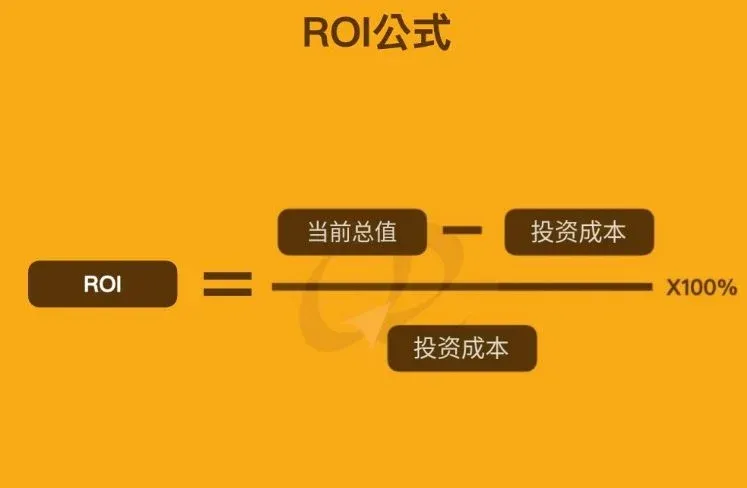
The calculation formula is:
\[
\text{ROI} = \frac{\text{Current Value} - \text{Investment Cost}}{\text{Investment Cost}} \times 100\%
\]
In other words, divide net profit by the original outlay and multiply by 100 to obtain a readable percentage.
Example Calculation
Assume you purchase a cryptocurrency with 1,000 USD (denominated in USDT). The price rises 20 %, and you sell, realizing a 200 USD profit. You then reinvest the total 1,200 USD into another coin and later earn an additional 300 USD. The overall ROI for the whole period is:
\[
\frac{1,500 - 1,000}{1,000} \times 100\% = 50\%
\]
If you look only at the first trade, the ROI is:
\[
\frac{200}{1,000} \times 100\% = 20\%
\]
Limitations and Blind Spots of ROI
Although ROI gives an immediate sense of profit proportion, several commonly overlooked factors should be considered when using it in practice.
Time Factor
The formula itself does not incorporate the holding period. A 10 % ROI achieved in six months is clearly superior to a 10 % ROI that takes ten years, because the annualized return of the former is far higher. Without a time dimension, a raw ROI figure cannot reliably indicate which investment is more advantageous.
Risk Consideration
A high ROI does not guarantee safety. A project that promises 1,000 % returns may also carry the risk of total capital loss. Therefore, while monitoring ROI, you must also assess the associated risk level and ensure the exposure fits within your personal risk tolerance.
Fees and Other Costs
Many investors mistakenly equate price appreciation with net profit, ignoring transaction fees that erode returns. In the crypto space, typical taker fees are about 0.1 % on both buy and sell, meaning a 0.2 % fee must be deducted before calculating ROI. If you trade leveraged contracts, the fee is multiplied by the leverage factor, further increasing cost. Beyond explicit fees, futures contracts may incur funding rates and other hidden charges that can accumulate rapidly during volatile market conditions.
For a deeper dive into cryptocurrency fee structures, refer to the article “What Fees Exist for Virtual Currencies?”.
Differences Between ROI, ROA, and ROE
| Metric | Calculation | Focus | Typical User |
|--------|-------------|-------|--------------|
| ROI | Net profit ÷ Investment cost | Return of an investment portfolio | Individual investors |
| ROA | Net profit ÷ Total assets | Efficiency of asset utilization | Company management |
| ROE | Net profit ÷ Shareholders’ equity | Return generated for shareholders | Shareholders |
All three metrics divide net profit by a specific asset base; the distinction lies in what asset base is used. No single metric is universally superior—choice depends on the analytical context and the questions you aim to answer.
Viewing ROI on the Binance Platform
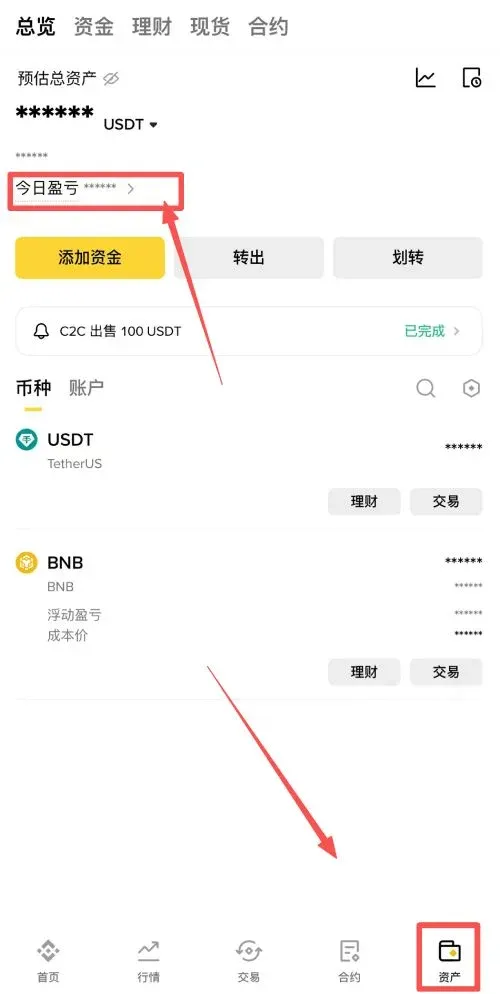
Some exchanges display ROI directly on the account dashboard, allowing users to see overall profit or loss for a selected time window at a glance. Binance’s “Wallet” (or “Assets”) page shows the current day’s ROI and lets you switch to 7‑day, 30‑day, 90‑day, etc., intervals for more detailed data.
Note for U.S. residents: Use Binance.US instead of the global Binance website, as the latter is not available to U.S. customers.
Steps to Check ROI on Binance
- Register / Log In to Binance: If you do not yet have an account, you can register via the link below and download the official app.
- Binance Global Registration (for non‑U.S. users)
- Binance.US Registration (for U.S. users)
- Android App Download
- Navigate to the “Wallet” (or “Assets”) page; the top of the screen displays the ROI for the current day. Clicking the figure expands a chart covering longer periods, such as a 90‑day ROI line graph, which visualizes the fluctuation of total account value over time.
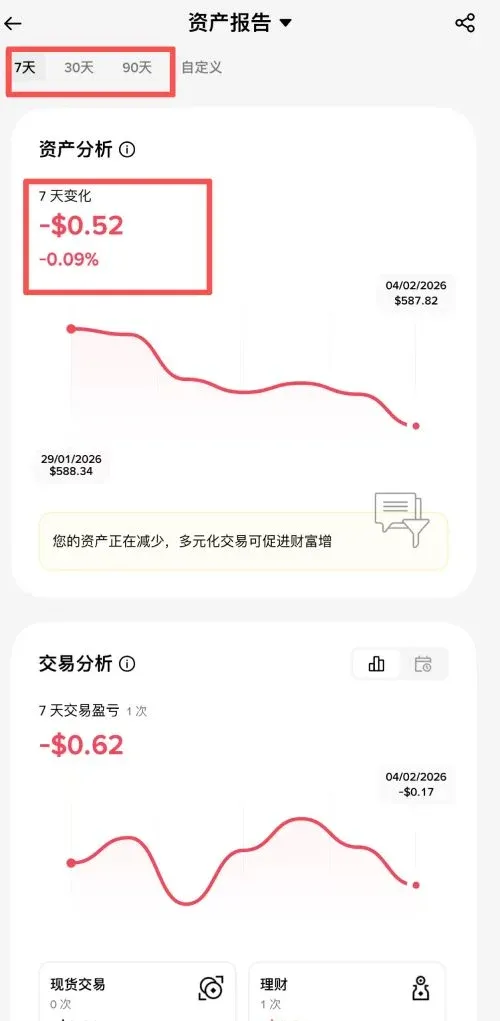
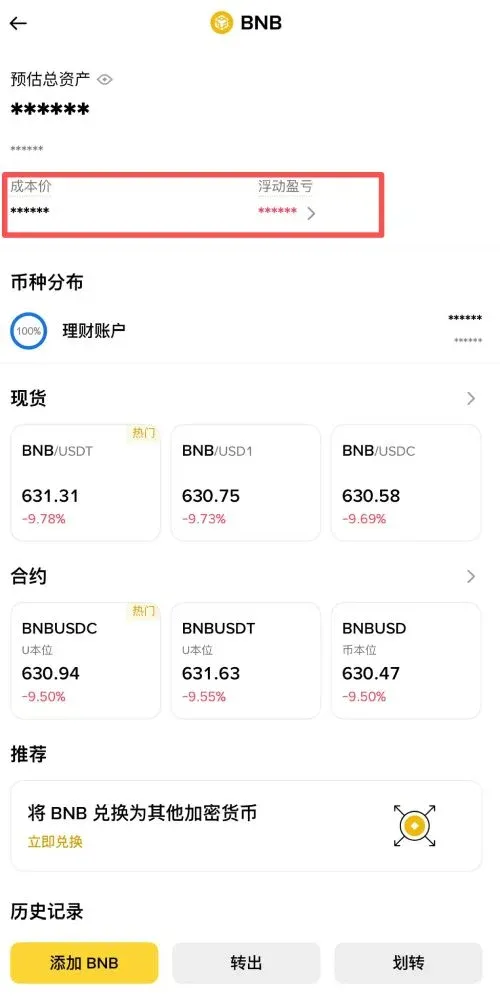
Keep in mind that deposits and withdrawals affect the total asset balance, and Binance includes these cash flows when calculating ROI, which can introduce distortions. To view the ROI of a single cryptocurrency, click the coin to see its “Cost Basis” and compute ROI manually, or inspect the “Unrealized P&L” details. When you move assets into Binance Earn or other financial products, the accumulated profit and loss are re‑recorded, and the original ROI figure no longer reflects the full history.
Frequently Asked Questions
What constitutes a “reasonable” ROI?
A reasonable ROI is typically benchmarked against risk‑free rates (e.g., a fixed‑deposit yield) or the overall market performance. Only when ROI exceeds those baselines by a sensible margin can it be considered relatively attractive.
What are the main uses of ROI?
Beyond evaluating investment projects, ROI is widely employed in advertising, marketing, and other business functions to assess the efficiency of resource allocation.
Key Takeaways
- ROI measures the profit level of an investment portfolio relative to the capital deployed.
- The formula is: (Current Value – Investment Cost) / Investment Cost × 100 %.
- ROI does not embed a time component; when comparing different ROIs, consider the holding period.
- Risk exposure, transaction fees, and other costs are often omitted from a raw ROI figure and should be factored in during interpretation.
- Binance provides an intuitive ROI view, enabling users to quickly gauge overall account performance.
This article offers a comprehensive overview of “What is ROI in the crypto space? How to calculate it? How does it differ from ROA and ROE? And how to view ROI on Binance?” For more related content, search for Bitaigen or continue browsing other articles on this site. Wishing you a steady and informed journey in cryptocurrency investing!
*Please note that cryptocurrency gains may be subject to taxation in your local jurisdiction; consult a tax professional to understand your obligations.*
💡 Register on Binance with referral code B2345 for the maximum trading fee discount. See Binance complete guide.



