
 Bitaigen Research
 In the digital asset space, stablecoins have gradually become the mainstream tool for earning fixed returns on‑chain. For investors seeking asset appreciation under controlled risk, understanding how USDC yields are generated, the differences among various strategies, and how to efficiently manage USDC across multiple chains is essential for building a long‑term passive income stream. This article explores these core topics, helping you construct a USDC earnings system that balances liquidity, transparency, and security before 2026 arrives.

In this piece we systematically outline the mechanics behind USDC yield generation and compare the risk and liquidity profiles of dominant approaches such as multi‑chain lending and liquidity mining. The goal is to help investors build sustainable passive income while keeping assets safe. With a clear strategic framework, you can quickly decide which channels suit your capital allocation—read on for actionable details.
Key Takeaways
- Choosing the right USDC yield strategy requires a holistic view of income sources, liquidity architecture, and risk exposure.
- The actual USDC yield fluctuates with borrowing demand, market sentiment, and the broader macro‑interest‑rate environment.
- Sustainable rate levels, rather than short‑term promotions, better protect long‑term capital efficiency.
- The security of smart contracts and the efficiency of capital utilization directly determine the net return.
The Essence of USDC Yield and Best Practices
When funds are deployed into lending protocols, liquidity pools, or structured stablecoin yield models, they generate corresponding USDC earnings. The optimal USDC yield strategy hinges on balancing the continuity of returns, flexible fund deployment, and reasonable risk control.
Primary Sources of Yield
- Institution‑driven Lending Rates
Hedge funds, crypto‑native companies, and other institutional actors frequently borrow USDC to execute arbitrage, market‑making, or other liquidity‑intensive activities. This institutional demand pushes up borrowing rates on both centralized and decentralized platforms. Recognizing the cyclical nature of institutional activity helps you allocate USDC during upward‑rate periods for more robust returns.
- Platform‑Provided Liquidity Incentives
Many DeFi projects sprinkle additional rewards—often in the form of native tokens—on top of base lending interest to lure liquidity providers. While such incentives can dramatically boost headline APY, you should evaluate their long‑term sustainability and any associated lock‑up periods before committing capital.
- Real‑Asset Exposure Returns
Certain yield products channel USDC into short‑term corporate loans, trade‑finance facilities, or tokenized securities—i.e., real‑world assets (RWA). Compared with pure lending, these channels typically offer lower yields but are more predictable, making them suitable for investors who favor conservative returns. Tools like Bitget Wallet aggregate these opportunities and present a unified monitoring interface.
By diversifying prudently across the above avenues, investors can maximize USDC earnings while mitigating smart‑contract and liquidity risks.
Why Do USDC Yields Vary Widely Among Similar Products?
- Utilization Rate: The higher the proportion of capital actually used in a lending or liquidity pool, the more fees borrowers pay, and the higher the depositors’ yields.
- Risk Pricing: Different platforms assess credit risk, governance robustness, and contract security in distinct ways, leading to yield disparities.
- Incentive Emission: Token rewards or liquidity‑mining bonuses are often temporary; their persistence depends on the platform’s token‑omics.
- Liquidity Depth: Deep pools can absorb large withdrawals without noticeably affecting yields, whereas shallow pools may experience pronounced yield swings under pressure.
Stablecoin Earn Plus: A Simplified Gateway to USDC Yield
After clarifying the sources of earnings and the influencing factors, investors need an infrastructure that simultaneously offers capital efficiency, smart‑contract safety, and liquidity flexibility. Stablecoin Earn Plus, launched by the Bitget wallet, is a non‑custodial yield platform built precisely for that purpose.

Main Highlights
- Competitive USDC Yield: The platform aggregates the market’s top‑performing USDC yield models, delivering sustainable returns rather than fleeting promotional rates.
- Instant Withdrawals, No Lock‑up: Funds can be redeemed or reallocated at any time, preserving high liquidity during market turbulence.
- Cross‑Chain Asset Management: Supports USDC transfers across multiple blockchains, boosting capital utilization and diversifying single‑chain risk.
Matching Strategies to Risk Appetite: Which USDC Yield Approach Suits You?
Investors differ in liquidity needs, tolerance for smart‑contract risk, and passive‑income expectations. The three strategy families below serve as reference points and can be combined to fit personal circumstances.
1. Flexible Lending (High Liquidity)
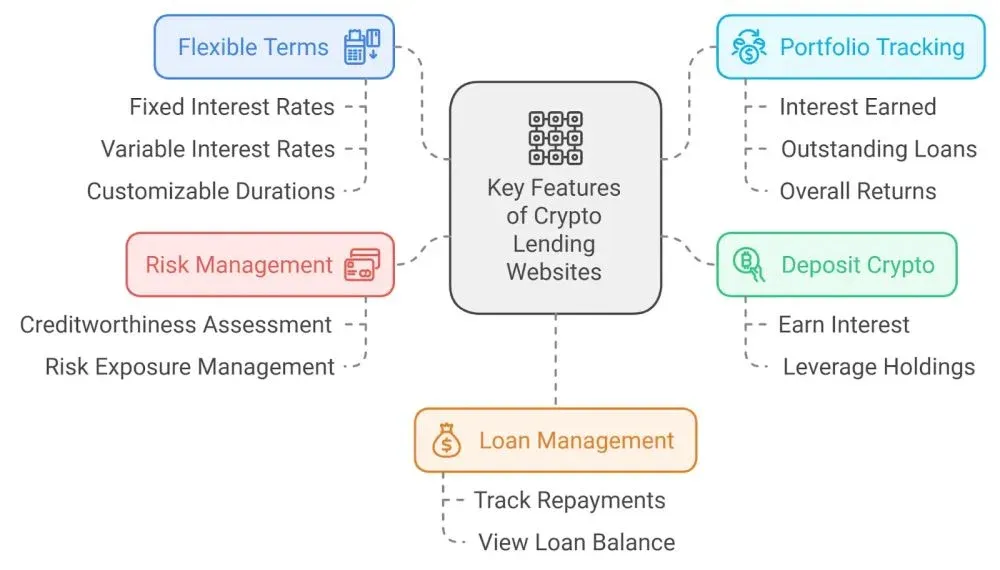
Designed for conservative investors who want their capital readily available. Depositing USDC into a lending protocol yields interest that fluctuates with market demand and utilization, producing a variable return.
Core Characteristics
- Floating‑Rate Model: Returns rise and fall with borrowing demand, offering a balance between yield and stability.
- Instant Redemption: Most platforms allow you to pull out funds at any moment, without lengthy lock‑up periods.
- Low Lock‑up Risk: Compared with staking or certain liquidity pools, flexible lending emphasizes capital accessibility.
2. Staking Yield (Medium Lock‑up)
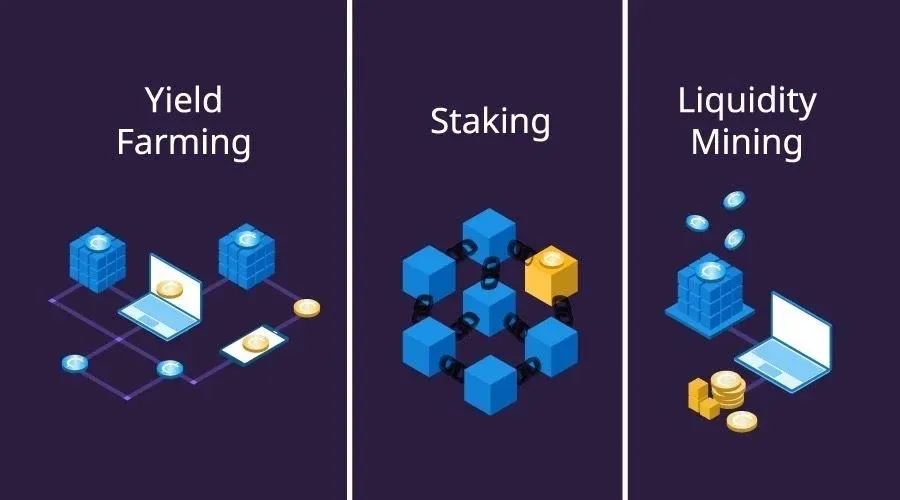
By locking USDC into a specific protocol, investors can earn native protocol tokens or additional USDC rewards. This approach tends to provide higher yields, but it also carries greater contract risk and a defined lock‑up horizon.
Core Characteristics
- Reward Mechanism: Stakers receive USDC or protocol tokens, boosting the overall APY.
- Contract Risk: Scrutinize audit reports and governance structures; favor projects with strong security track records.
- Yield‑Risk Balance: Staking generally outperforms flexible lending in raw returns, but liquidity is constrained, requiring a personal risk‑reward assessment.
3. Liquidity Provision (High Yield – High Risk)
Supplying USDC alongside another asset to a decentralized exchange (DEX) or automated market maker (AMM) pool earns trading fees and incentive tokens. This strategy offers the highest potential upside but exposes participants to impermanent loss and more complex contract risk.
Core Characteristics
- Trading Fees + Incentive Tokens: Multiple revenue streams can surpass pure lending or staking returns.
- Impermanent Loss: Sharp price movements between paired assets can erode nominal gains.
- Capital Efficiency: Layered incentives and pool management techniques can partially mitigate risk and enhance returns.
Step‑by‑Step Framework for Realizing USDC Yield
Step 1: Identify the Yield Source
- Borrower‑Driven: Interest generated from genuine lending demand—generally more sustainable.
- Incentive‑Driven: Extra token rewards or liquidity‑mining payouts that can boost APY in the short term but require careful assessment of long‑term viability.
Step 2: Compare Rate Structures
- Fixed Rate: Guarantees a set return over a specified period, appealing to investors prioritizing steady income.
- Floating Rate: Varies with utilization and market demand, offering potentially higher upside at the cost of volatility.
Step 3: Assess Liquidity Arrangements
- Verify whether lock‑up periods, redemption fees, or withdrawal queues exist.
- Confirm that the pool’s depth can accommodate sizable withdrawals without eroding yields.
Step 4: Review Smart‑Contract Security
- Has the contract undergone reputable third‑party audits? Are audit reports publicly accessible?
- Is governance centralized or decentralized? Are upgrade mechanisms transparent and secure?
- Have there been any historical security incidents or abnormal parameter changes?
Step 5: Ongoing Monitoring & Dynamic Rebalancing
- Keep tabs on borrowing demand, utilization rates, macro interest‑rate trends, and platform incentive policies.
- If inflows compress yields, reallocate assets promptly to preserve target returns.
Macro & Micro Factors Influencing USDC Yield
Lending Demand Cycles
During bullish market phases, leveraged trading spikes, driving up USDC borrowing demand, utilization, and consequently deposit yields. Conversely, a demand slowdown can depress yields and potentially strain liquidity.
Global Interest‑Rate Environment
Central‑bank benchmark rates affect on‑chain capital costs indirectly. When traditional finance rates rise, institutional capital often flows into on‑chain lending, lifting overall USDC yields; falling rates tend to pull yields downward in tandem.
Incentive Emission Timing
Token‑reward programs usually launch with lofty APYs to attract liquidity quickly. As emissions taper, actual returns revert to levels dictated by underlying borrowing demand. Investors should monitor the decay curve of incentives to avoid chasing fleeting high yields.
Risk Assessment: Critical Considerations Before Selecting a Strategy
Smart‑Contract Risk
- Code Vulnerabilities: May lead to fund theft or malfunctioning contract behavior.
- Governance Changes: Parameter adjustments or upgrades can alter returns or risk exposure.
- Audit Credibility: Even audited contracts require scrutiny of the auditor’s reputation and the completeness of the report.
Liquidity Risk
- Lock‑up Mechanisms: Some high‑yield products mandate capital lock‑up, limiting redemption flexibility.
- Utilization Peaks: During periods of high utilization, withdrawals may be throttled or queued.
- Redemption Delays: Structured or RWA‑linked strategies might process withdrawals in batches, extending settlement times.
Counterparty Risk
- Institutional Default: Borrowing enterprises or projects that default can cause partial principal loss.
- Extreme Market Volatility: Sharp price swings may trigger cascade liquidations, impacting liquidity pools.
Note for U.S. users: When moving fiat (USD) in or out of crypto platforms, use Binance.US rather than the global Binance site to remain compliant with U.S. regulations. For European users, SEPA/SWIFT transfers are the standard fiat on‑ramps/off‑ramps.
Tax reminder: Crypto‑derived gains, including USDC yield, may be taxable in your jurisdiction. Consult a tax professional to ensure proper reporting.
Conclusion
The hallmark of the best USDC yield strategy is not the pursuit of the highest advertised annual percentage yield (APY) but the sustainability of returns, liquidity elasticity, and rigorous risk controls. By leveraging non‑custodial tools within the Bitget wallet ecosystem, investors retain full sovereignty over their assets while benefiting from cross‑chain management, transparent rate monitoring, and audited contract security—ultimately achieving a stable USDC passive income stream.
As 2026 approaches, stablecoins will occupy an increasingly pivotal role in on‑chain fixed‑income architectures. Participants who have done their homework on capital efficiency, liquidity resilience, and risk assessment are far more likely to secure long‑term, reliable USDC yields across varying market cycles.
Frequently Asked Questions
1. What kind of yield can I expect from USDC?
Yield fluctuates according to market demand, pool utilization, and the specific strategy you select. Lending models typically see rates move with utilization, while incentive‑driven approaches may offer higher short‑term returns that taper over time.
2. Can I earn interest on USDC itself?
Yes. Supplying USDC to lending protocols, structured products, or liquidity pools generates earnings derived from borrower interest or platform rewards.
3. Is staking USDC more profitable than lending it?
Staking often comes with token incentives that can make headline yields appear higher, but it also carries greater contract risk and possible liquidity constraints. Lending returns are more closely tied to genuine borrowing demand and tend to be more sustainable over the long run.
4. How can I safely earn USDC yield?
- Use non‑custodial wallets or platforms.
- Review contract audit reports and governance frameworks.
- Compare utilization rates and liquidity terms across protocols.
- Avoid chasing overly‑promoted APYs without due diligence.
5. What factors influence USDC yield rates?
- Borrowing demand and leverage cycles.
- Utilization level of lending pools.
- Global interest‑rate environment.
- Scale of liquidity supplied.
- Platform‑specific incentive emission policies.
6. Is it possible to lose money with a USDC yield strategy?
Yes. Contract bugs, liquidity shortages, or counterparty defaults can all lead to principal loss. Comprehensive risk assessment is essential before allocating capital.
7. Can USDC passive income be maintained over the long term?
Provided the income source stems from genuine borrowing demand and the underlying infrastructure offers robust security and liquidity management, USDC passive income can remain sustainable for extended periods. Crafting a strategy centered on risk control and capital efficiency is the key to achieving stable, long‑term returns.
For deeper analysis of USDC yield strategies, stay tuned to upcoming Bitaigen (比特根) feature articles.
💡 Register on Binance with referral code B2345 for the maximum trading fee discount. See Binance complete guide.



