
 Bitaigen Research
 As blockchain applications mature, real‑world assets are also making their way onto the chain. RWA (Real‑World Asset) is the key bridge that connects the two realms.
Tokenizing RWA physical assets means converting real‑world assets into blockchain tokens, enabling low entry barriers and enhanced liquidity. Common types include USD‑pegged stablecoins, precious metals, U.S. Treasury bonds, etc., and they can be purchased and redeemed on Binance using USDT and similar tokens.
In this article we systematically outline the core concepts of RWA physical‑asset tokenization, the main categories, and the operational path on Binance. By dissecting the technical principles and business scenarios, readers can quickly grasp how to use on‑chain tokens to achieve low‑threshold investment and liquidity improvement for traditional assets. Subsequent sections will provide hands‑on guidance, so a thorough read is recommended.
What is RWA
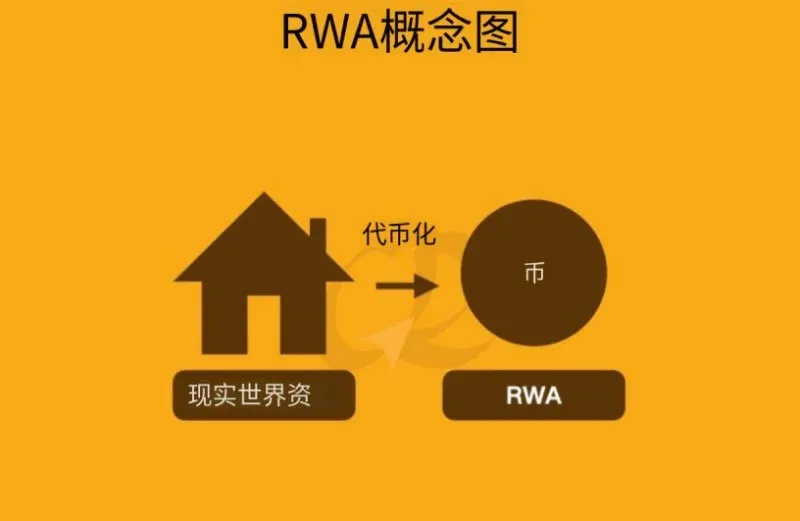
Concept diagram
RWA stands for Real‑World Asset. It refers either to a real‑world asset that has already been tokenized on a blockchain, or to the project team that performs the tokenization. RWA acts as a bridge between tangible assets and the crypto ecosystem, allowing the asset to be traded in cryptocurrency form while inheriting blockchain transparency and the potential for derivative applications.
For traditionally illiquid assets with cumbersome trading processes, this innovation is especially significant. Take real estate as an example: historically it is considered a non‑liquid asset, and selling a building can take months and involve high intermediary fees. If the building is split into 10,000 tokens, each holder can sell any amount just like Bitcoin, with settlement occurring in seconds.
Likewise, traditional financial giants such as BlackRock have begun to explore RWA, using tokenization to make investment markets more convenient.
Features of RWA
Lower entry threshold
After tokenization, an asset can be divided into extremely small units for trading, similar to buying 0.0001 BTC. This enables investors with limited capital to participate in markets that previously required large minimum investments.
Enhanced liquidity
Cryptocurrency trading and transfer are highly convenient; users only need a mobile device with internet access to buy or sell, dramatically reducing the liquidity bottlenecks of traditional assets.
Improved transparency
All transactions on a blockchain are publicly auditable, allowing anyone to view the status of each trade in real time. Tokenized physical assets benefit from the same property, achieving more transparent and instantaneous data disclosure.
Easier trend analysis
Because tokenized assets generate on‑chain transaction data that is easy to aggregate and categorize, investors can quickly obtain price trends by time, region, or other dimensions, aiding asset‑valuation assessments.
Cross‑border, cross‑language
Cryptocurrencies are not limited by geography or language; anyone with a wallet can trade global assets. Even without detailed knowledge of the issuer, a purchase can be completed within seconds.
Reduced transaction costs
Traditional asset transfers often require repeated verification of ownership and authenticity, which is time‑consuming and expensive. RWA typically requires a one‑time verification at issuance or during periodic audits; subsequent trades do not incur additional verification fees.
Risks and scams associated with RWA
Regulatory uncertainty
Regulatory attitudes toward RWA vary widely across jurisdictions. Some regions are actively exploring it (e.g., Taiwan has established an RWA tokenization task force), while others adopt a cautious or even prohibitive stance. Regulations may evolve over time, potentially forcing tokens to be delisted or causing abrupt price drops due to compliance issues.
Trustworthiness of third‑party audits
Tokenization projects rely on third‑party auditors to confirm that “the number of tokens equals the underlying physical asset.” If an audit report is inaccurate or the issuer does not actually hold the claimed assets, the tokens lose their backing, and holders may suffer total loss.
Implicit fee allocation
Operational costs such as audit fees and custodial expenses are usually borne by the project and reflected in the token’s value. For example, a U.S. Treasury‑bond token might deduct a small percentage of the bond’s yield to cover fees, resulting in a net return that is lower than the raw bond yield.
Fraudulent schemes masquerading as RWA
Because RWA is a hot topic, scammers often promote “high‑yield RWA” opportunities to lure investors. Even if a small return is paid in the first month, the scheme typically disappears afterward. Investors should verify the issuer’s credentials and audit reports before committing funds.
Types of RWA and common tokens
USD‑pegged stablecoins
Stablecoins such as USDT and USDC are essentially RWA, because each token is backed by an equivalent amount of U.S. dollars held in reserve. They serve as bridges between fiat and crypto, helping users in inflationary economies preserve value and acting as common trading pairs for other digital assets.
Precious‑metal RWA
Gold, silver and other precious metals can be tokenized. For instance, PAXG represents one gram of physical gold; holders can even redeem a certain amount of tokens for actual bullion.
U.S. Treasury RWA
Traditional U.S. Treasury bond investments usually require high capital. Tokenization allows participation with tiny amounts (e.g., as low as $1), while still delivering the bond’s yield. Common products are listed below:
| Product name | Deposit / redemption currency | Subscription / redemption fee | Other uses |
|---|---|---|---|
| BGUSD | USDT, USDC / USDC | 0% | Collateral borrowing, futures margin, Launchpool, liquidity pool |
| XRWUSD | USDT / USDC | 0 ~ 0.1% | VIP borrowing |
| USDTBUSDT | USDC, USDe / USDT, USDC, USDe | 0.04% / 0.04% | Variable miner fee, collateral borrowing, DeFi, futures margin |
U.S. equity RWA
Some projects tokenize U.S. stocks, enabling 24/7 trading like cryptocurrencies and eliminating the high fees and settlement delays associated with traditional brokerages.
Project‑issued native tokens
Certain issuers launch their own ecosystem tokens alongside the tokenized physical asset. These native tokens also fall under the RWA umbrella and can be evaluated similarly to corporate stock based on the project’s prospects.
How to purchase RWA
Create an account on the Binance platform (global version) – official registration link and official app download – deposit USDT, and you can trade or redeem various RWA tokens.
U.S. residents must use Binance.US instead of the global Binance platform.
If you are not yet registered, use the links below and the app download address, then follow the video tutorial to complete registration.
- Binance official registration (global) – copy the link into your browser
- Binance Android app download
In the Binance app, go to the Trade page, tap the “Section” button in the upper‑left corner, and select RWA to view the curated list of RWA tokens.
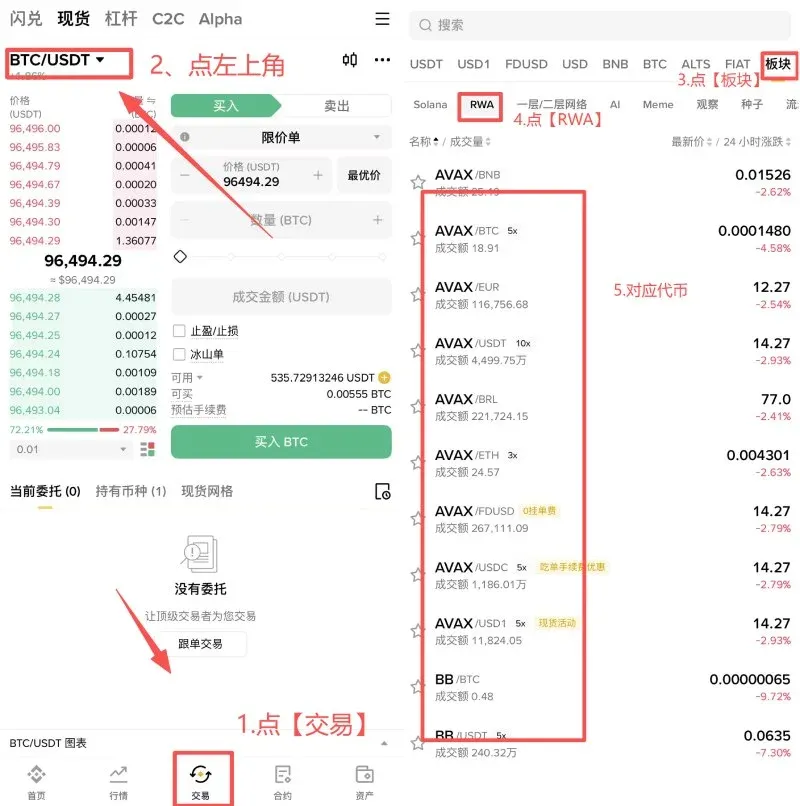
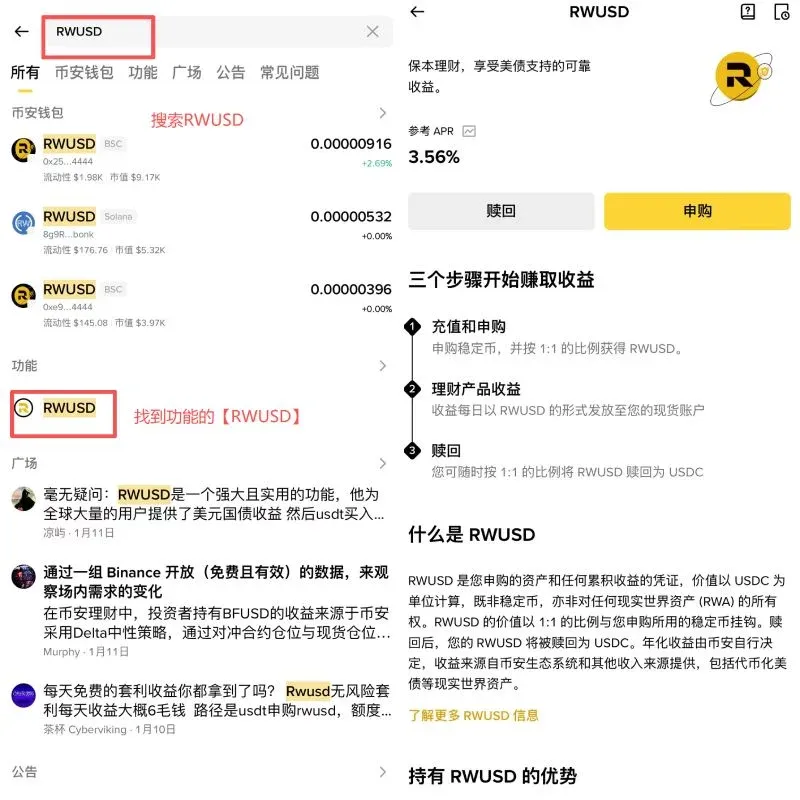
To hold a token such as the Treasury‑bond‑linked RWUSD, simply search “RWUSD” in the Binance app and follow the on‑screen prompts to subscribe or redeem.
Frequently asked questions
Which tokens are considered RWA?
Common RWA tokens include USDT, USDC, PAXG, TRU, USDtb and others.
Do RWA token prices always match the underlying real‑world asset?
Not necessarily. Because supply and demand differ across exchanges, an RWA token’s market price can deviate from the value of the physical asset it represents, and may even experience sharp volatility. Assess the risk of price deviation before investing.
---
This article has systematically covered the concept, features, risks, categories, and Binance purchase method for RWA physical‑asset tokenization. For more related material, you can search the Bitaigen (比特根) archive or continue reading the recommended articles below.
*Note: Crypto transactions, including gains from RWA tokens, may be subject to tax in your jurisdiction. Please consult a tax professional or local regulations to ensure compliance.*
---
*All fiat references in this translation use USD; for cross‑border transfers, SEPA (Euro) or SWIFT (global) channels are typically employed.*
Related Reading
- Stablecoin Asset Management, Money‑Market Links & SEC Risks
- RWA 2026 Guide: Mechanisms, Top Projects & Risk Analysis
- USDC Regulatory Outlook: Can It Avoid BUSD & BNB Fate?
💡 Register on Binance with referral code B2345 for the maximum trading fee discount. See Binance complete guide.



