
 Bitaigen Research
In this article we systematically outline the basic concepts of futures contracts and, using the OKX platform as a case study, demonstrate the complete process from entering the perpetual contract interface to placing and closing an order. Illustrated step‑by‑step guidance helps beginners quickly master the core points of high‑leverage trading; later sections will delve deeper into risk‑management techniques, making it worth a careful read.
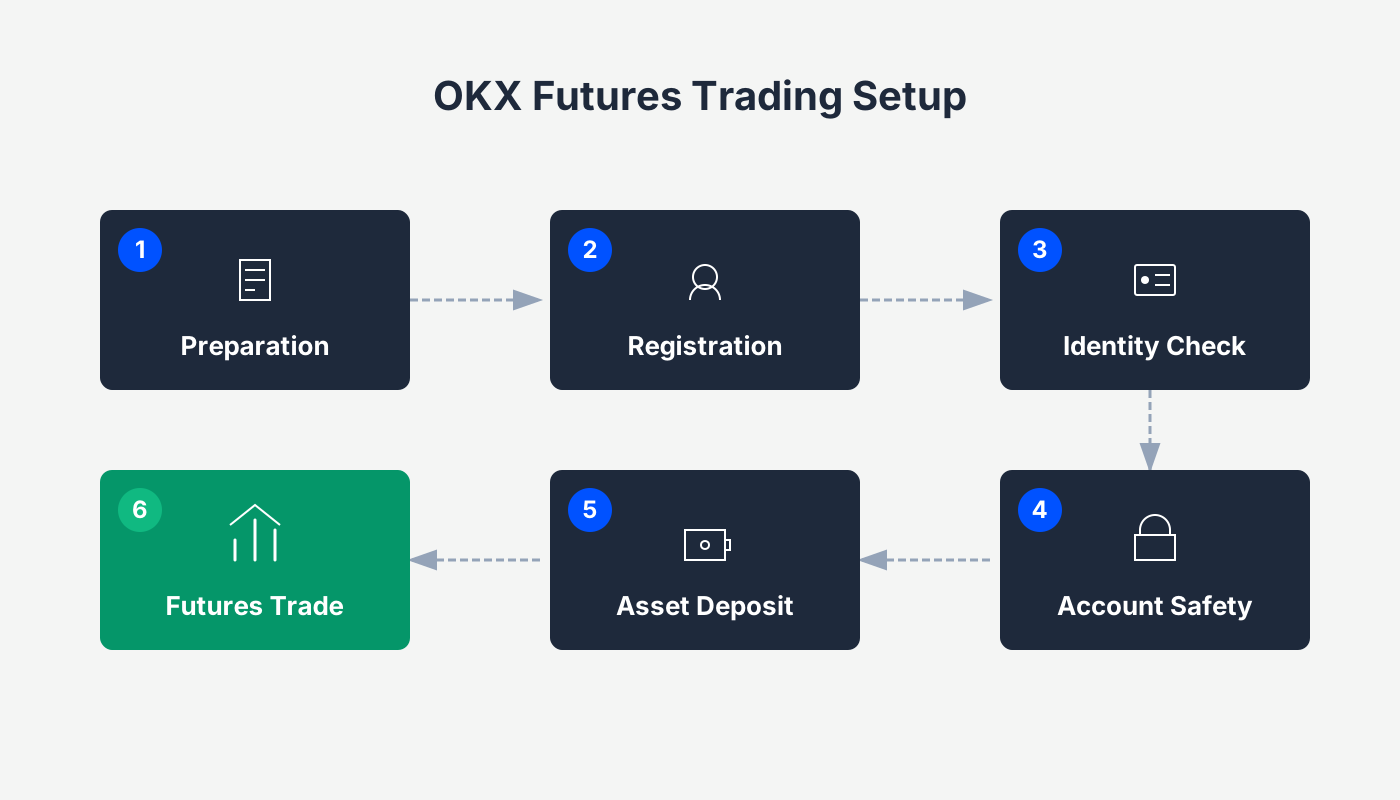
OKX Contract Trading Practical Guide
On most trading platforms the workflow for contract trading is largely the same. Here we use OKX (formerly known as OKEx) as an example to show the full steps from opening the perpetual contract page to placing and closing a position.
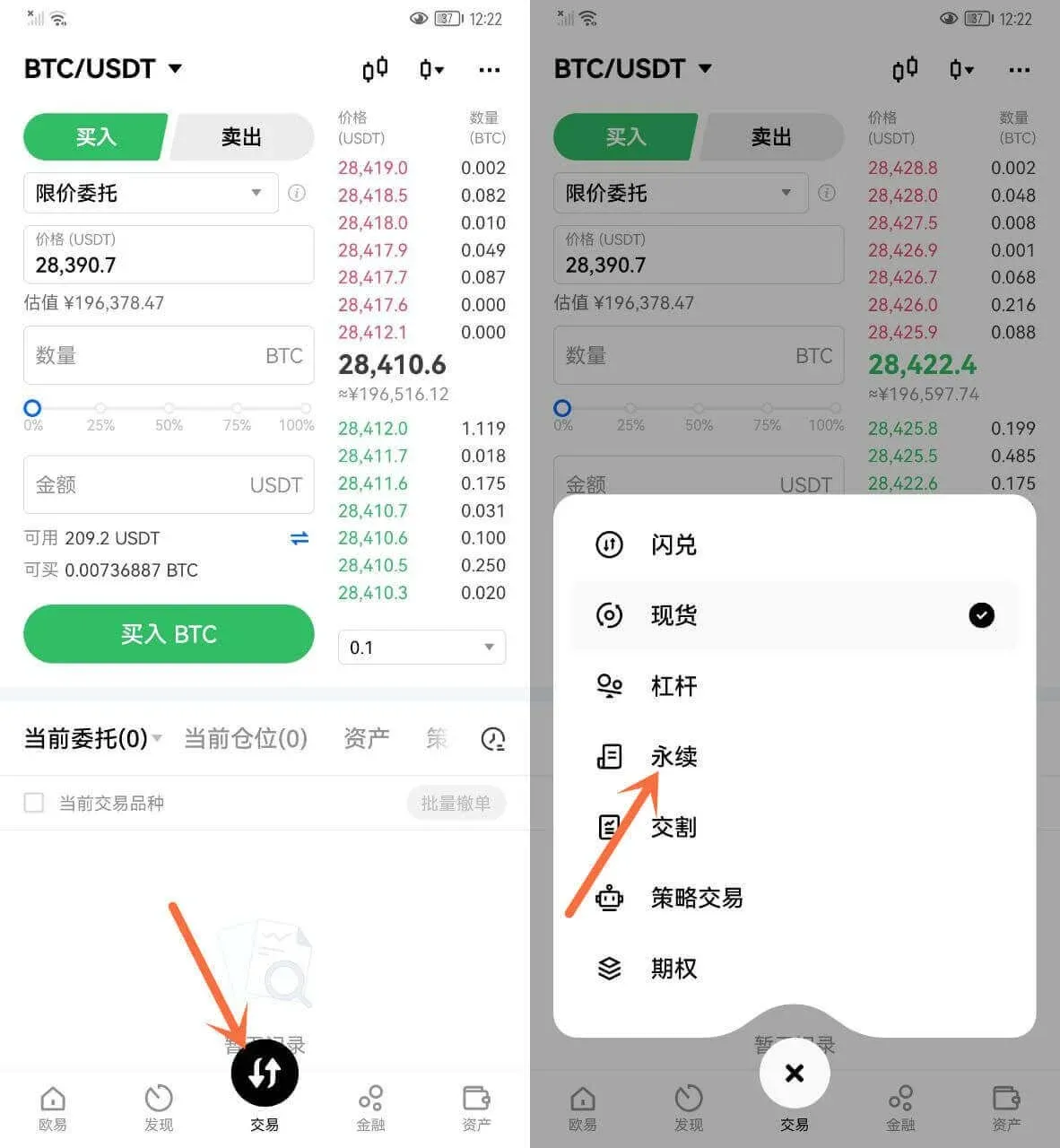
- Switch to the Perpetual Contract Page
- The first click on “Trade” opens the spot market by default; you need to click the Trade button again and select “Perpetual” to enter the contract trading interface.
- Select the Underlying Asset and Leverage
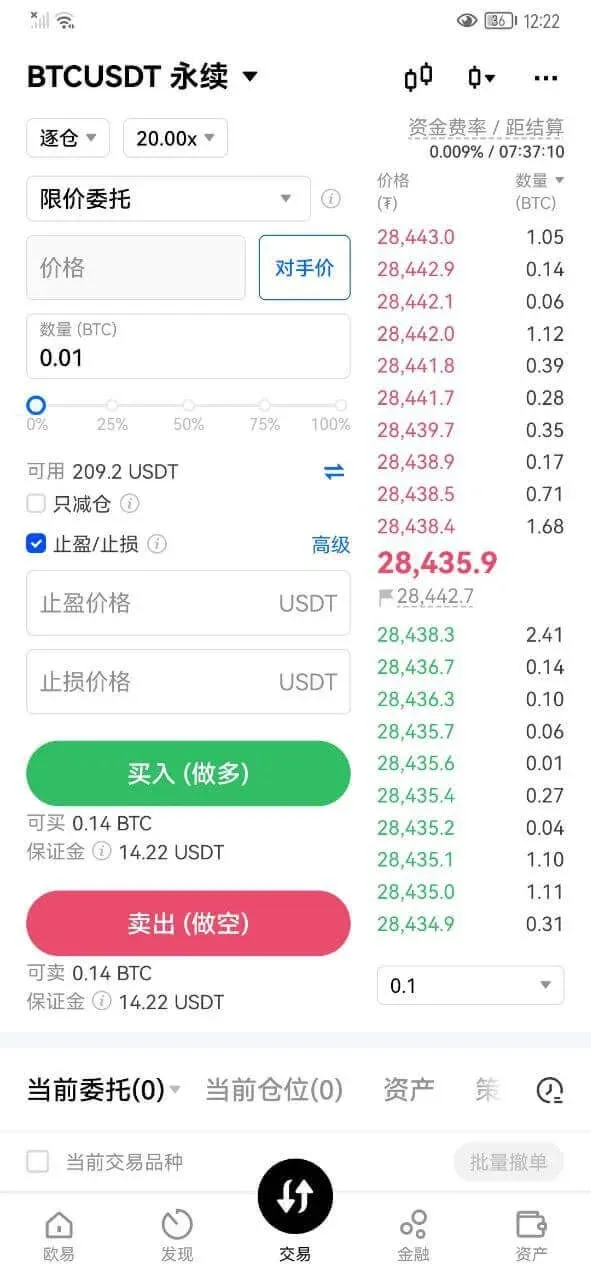
- After entering the perpetual page you will see contracts such as BTC/USDT Perpetual (USD‑denominated) and BTC/USD Perpetual (crypto‑denominated). This guide uses BTC/USDT Perpetual as an example to demonstrate a 20× leveraged long of 0.01 BTC.
- Set the Order Type
- The default view is a limit order; the current market price is 28,435 USD. If you want to buy when the price drops to 28,000 USD, enter that price in the limit box and submit; you can cancel the order at any time before it is filled.
- Selecting “Counterparty price” makes the system execute the trade instantly at the counterparty’s quoted price, which is close to the current market price. After choosing limit you can switch to advanced limit, market, take‑profit/take‑loss and other modes; click the exclamation‑mark icon next to them for details.
- Order Example
- In this example we use Limit‑Counterparty price, Isolated margin mode, 20× leverage, opening 0.01 BTC, requiring a margin of 14.21 USD. If Bitcoin rises 5 % the account’s equity would roughly double; a 5 % decline would trigger liquidation (fees not included).
- Closing the Position
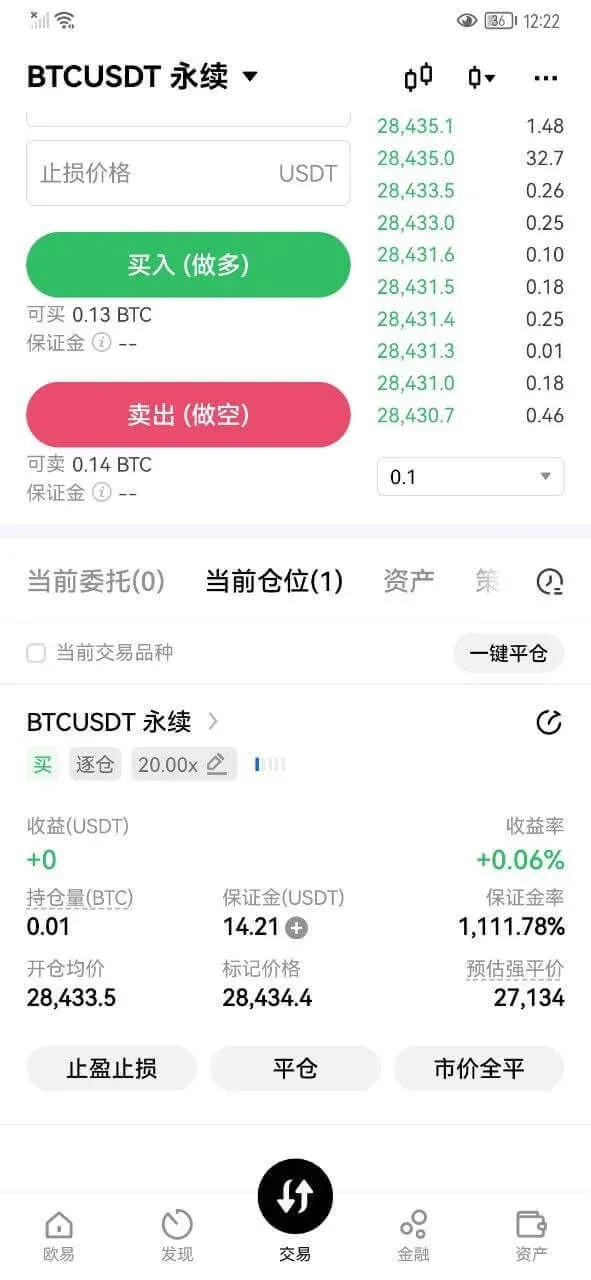
- After opening a position you can close it at any time, regardless of profit or loss. The platform offers three quick methods:
- One‑click close: suitable when you hold multiple contracts (e.g., BTC and ETH); closes all at market price in one action.
- Market close: immediately closes the current position at the prevailing market price.
- Limit close: closes only when the market reaches a preset price.
---
The Essence of Futures Contracts in Crypto
A futures contract is a legally binding agreement that specifies the purchase or sale of an underlying asset at a predetermined price on a future date. In the cryptocurrency world, traders can speculate on or hedge the price movement of Bitcoin, Ethereum, and other digital assets without actually holding the underlying coins.
- Hedging and Diversification: Institutions and retail investors often use futures to reduce the volatility risk of spot holdings, or to add contracts of different maturities to a portfolio for asset‑allocation purposes.
- Leverage Effect: Contract trading allows a small amount of margin to control a larger notional position, amplifying potential gains—and also amplifying potential losses.
---
Key Elements of Contract Operation
1. Future Trade Agreement
The contract itself is a legal document that settles on a future date. For example, if you are bullish on Bitcoin’s outlook, you can agree to buy at today’s agreed price at a later date, thereby creating a long position.
2. Leverage Mechanism
The leverage ratio determines the proportion between the margin you commit and the notional value of the position. A 10× leverage means 1,000 USD of margin lets you control a 10,000 USD contract. The higher the leverage, the larger the amplified profit or loss relative to price movements of the underlying.
3. Settlement Method
- Physical delivery: At expiry the corresponding amount of cryptocurrency is actually transferred.
- Cash settlement: Only the price difference between the contract and the market price is settled, avoiding the need to move assets.
4. Expiry Date and Closing
Each contract has a clear expiry date. Traders can close the position voluntarily before expiry to lock in profit or limit loss.
---
Advantages of Futures Contracts
| Advantage | Description |
|---|---|
| **Hedge volatility** | Miners or token holders can lock in a future price to avoid losses from market downturns. |
| **Leverage amplification** | With high leverage, a 2 % rise in the underlying price can generate more than 100 % return on margin (the same multiplier applies to losses). |
| **Speculative flexibility** | Long positions capture upside, short positions profit from downside, providing two‑way trading opportunities. |
| **High liquidity** | Large trading volume in futures markets ensures quick entry and exit, and prices rapidly incorporate new information. |
---
Overview of Potential Risks
- Amplified risk from high leverage
- If the market moves opposite to your position, losses are magnified by the leverage factor. For instance, using 50× leverage means a 1 % drop in the underlying could wipe out 50 % of your margin.
- Extreme volatility
- The crypto market’s sharp swings can trigger forced liquidation within minutes, rapidly erasing margin.
- Operational complexity
- Futures involve margin management, mark‑to‑market, funding rates, etc. Newcomers without systematic study may misjudge the risk.
- Over‑trading tendency
- The allure of high leverage and quick profits can lead to frequent entries and exits, increasing the probability of cumulative losses.
---
Core Characteristics of Contract Trading
Margin Requirement
Before opening a position you must deposit an initial margin percentage as collateral against potential losses.
Daily Mark‑to‑Market (MTM)
Futures accounts settle profit and loss daily to ensure margin always covers the possible exposure.
Funding Rate
Perpetual contracts have no fixed expiry; the funding rate aligns the perpetual price with the spot price. Depending on market long‑short imbalance, traders may either pay or receive this fee.
---
Cross‑Domain Use of Contracts in Blockchain Gaming
As blockchain technology spreads into gaming, contract trading is being employed to manage the value of novel assets. Some game platforms tokenize in‑game rewards, and those tokens can later be traded on futures markets, allowing players to hedge price swings or speculate on future value.
A noteworthy project, KGeN, has completed multiple funding rounds and reports over 6.5 million monthly active wallets. Its “Proof of Gamer” engine gathers player attributes and behavior data to deliver customized token rewards and gameplay experiences, creating assets that can circulate in contract markets.
---
Conclusion: Are Futures Contracts Right for You?
Cryptocurrency futures give market participants tools for hedging, leverage, and two‑way speculation, but they also carry high volatility and leverage‑related risk. Inexperienced investors should fully understand contract mechanics, margin rules, and risk‑control measures before deciding to participate.
As blockchain continues to merge with DeFi, gaming, and other emerging ecosystems, the use cases for futures contracts are likely to expand. Whether you are a seasoned trader or a newcomer to crypto, mastering the fundamentals of futures contracts is a prerequisite for navigating this fast‑evolving market responsibly.
For more information on crypto futures, you can search past articles from Bitaigen or continue reading the recommended content below. Thank you for your continued interest and support!
Related Reading
- Earn USDT on OKX: Registration, Trading & Savings Tutorial
- Register on OKX, Buy USDT Fast & Get Deposit Address
- OKX China 2026: Register, Download App, Buy USDT, Trade
💡 Register on Binance with referral code B2345 for the maximum trading fee discount. See Binance complete guide.



