
 Bitaigen Research
 Binance’s advanced wealth‑management tools include On‑chain Earn, Smart‑Arbitrage, Dual Investment and Discount‑Buy. When choosing, you should assess them according to your risk tolerance, trading experience and liquidity needs.
In this article we systematically review Binance’s four advanced wealth‑management tools, helping investors quickly identify the products that match their risk preference, operational experience and liquidity requirements. We also provide practical guidance so you can make a more rational choice in today’s complex crypto‑wealth environment. Please continue reading for the full details.
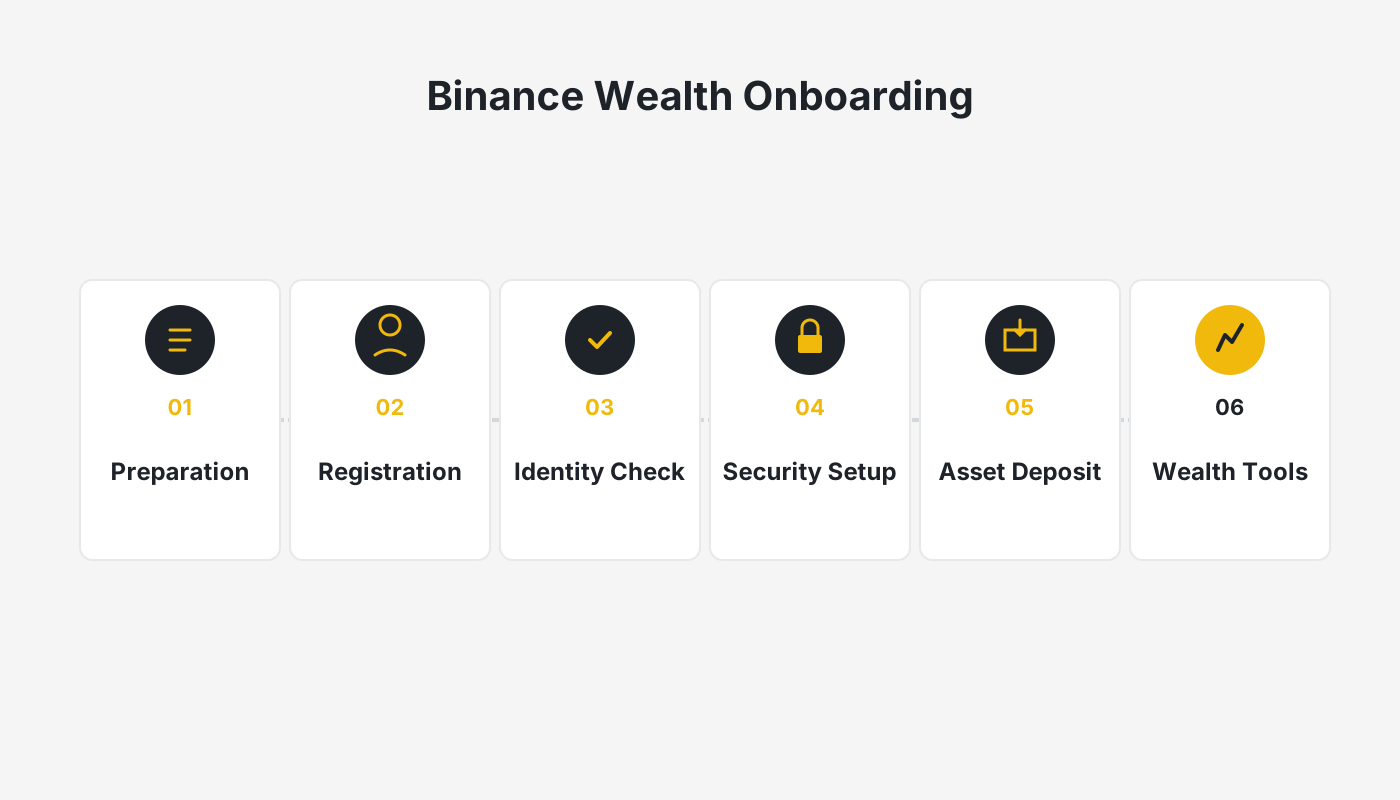
Prerequisite: Register a Binance Account
Brief introduction to Binance
Binance is the world’s largest cryptocurrency exchange by trading volume. By 2025 the platform had surpassed 300 million registered users and supports more than 100 digital assets. Users who have not yet created an account can register via the links below and download the official app.
- Official Binance registration link (copy into your browser)
- Binance Android app download
Further reading: Complete guide to Binance deposits, withdrawals, fees and security
Overview of Advanced Wealth‑Management Tools
| Tool | Suitable for | Advantages | Disadvantages |
|---|---|---|---|
| **On‑chain Earn** | DeFi beginners | Low entry barrier, simple operation, can enter/exit at any time | Rewards are not guaranteed, smart‑contract risk, price‑volatility risk |
| **Smart‑Arbitrage** | Futures‑trading beginners | One‑click position opening, fully automatic, isolated account | Funding‑rate fluctuations, forced liquidation, spot‑futures price‑gap risk, modest returns |
| **Dual Investment** | Users with basic options knowledge and an existing trading plan | Stable yield, flexible operation | Hard to assess reward fairness, cannot redeem early, possible principal loss |
| **Discount‑Buy** | Users familiar with options who want to buy on dips while earning yield | Discounted purchase, premium earned if order does not fill, improves capital efficiency | Low capital flexibility, may miss better entry points, higher operational complexity |
Risk Warning: All advanced tools carry price‑volatility risk. When returns are quoted in crypto‑terms, a decline in the underlying asset’s price can reduce the actual USD value of the profit.
Redemption and Fee Considerations
- Rewards may not be paid (could be 0 or even result in principal loss): On‑chain Earn, Smart‑Arbitrage, Dual Investment
- Partial early redemption allowed: On‑chain Earn (rewards are calculated based on holding time)
- Redemption fee: Smart‑Arbitrage
The following sections dive deeper into each tool.
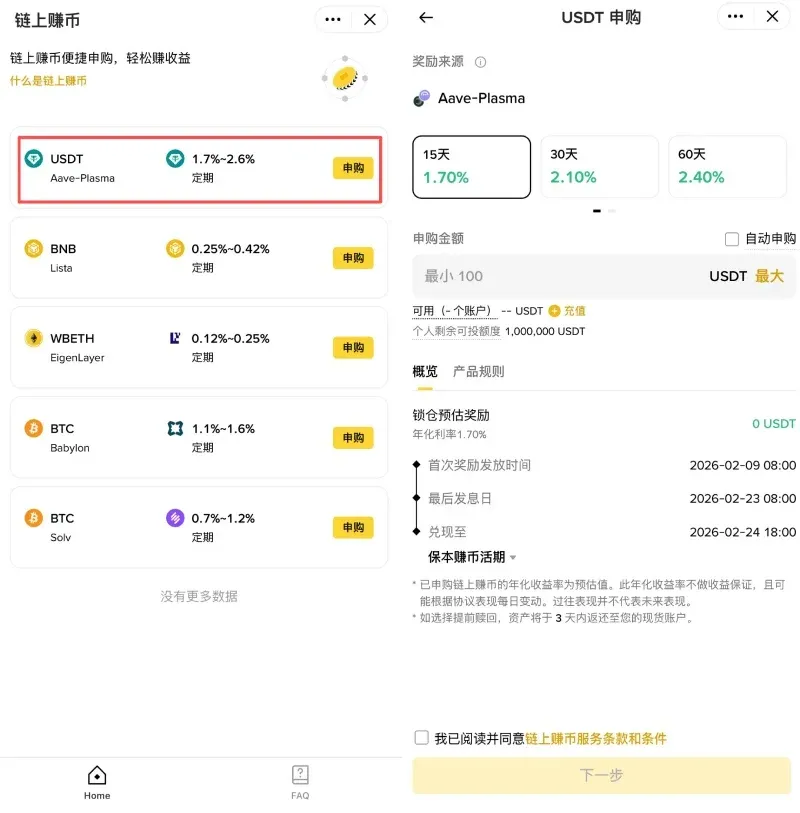
On‑chain Earn: Low‑Barrier Access to DeFi Protocols
Core summary: On‑chain Earn lets users connect their Binance account directly to a curated list of DeFi projects, achieving “one‑click staking and automatic harvesting.”
- Pros: Low technical barrier, simple UI, can enter/exit at any time
- Cons: Rewards may be reduced, smart‑contract vulnerabilities, staked‑token price decline
Binance handles all back‑end tasks—including protocol integration, contract execution and reward distribution—so users only need to deposit the chosen token and select a project. Nevertheless, you should keep the following points in mind:
- Rewards are not guaranteed – If a project ends or its rules change, the expected reward may drop.
- Smart‑contract risk – Bugs or exploits in the contract could lead to loss of assets.
- Price‑volatility risk – A drop in the value of the staked token will affect both the earned yield and the principal.
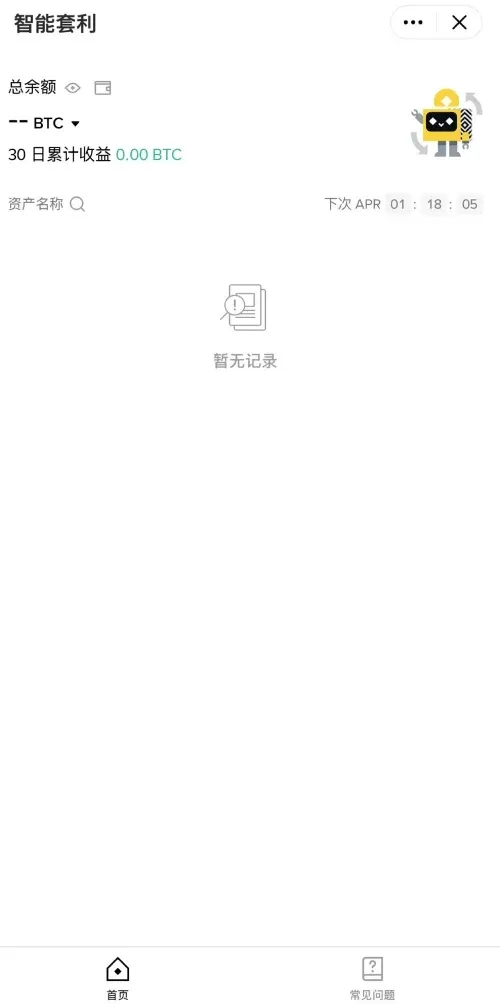
Smart‑Arbitrage: Automated Spot‑Futures Arbitrage to Capture Funding‑Rate Differentials
Core summary: Smart‑Arbitrage exploits the funding‑rate gap between perpetual futures and the spot market, delivering a delta‑neutral hedge that lets users earn funding income without manual intervention.
- Pros: One‑click position opening, fully automated, isolated account that does not affect other positions
- Cons: Funding‑rate volatility, forced liquidation, spot‑futures price‑gap risk, transaction costs
Key Mechanism
- Positive funding rate – Most of the time the rate is positive, allowing users to collect fees.
- Negative funding rate – During short‑seller periods users must pay fees, which can generate a loss.
Operational Tips
- Forced liquidation – In extreme market moves, insufficient margin may trigger automatic liquidation of the position.
- Spot‑futures price‑gap risk – The spread between spot and futures can widen or narrow; closing the strategy at an unfavorable spread may cause a loss.
- Transaction costs – Every open or close action incurs a fee; frequent trading can erode profits.
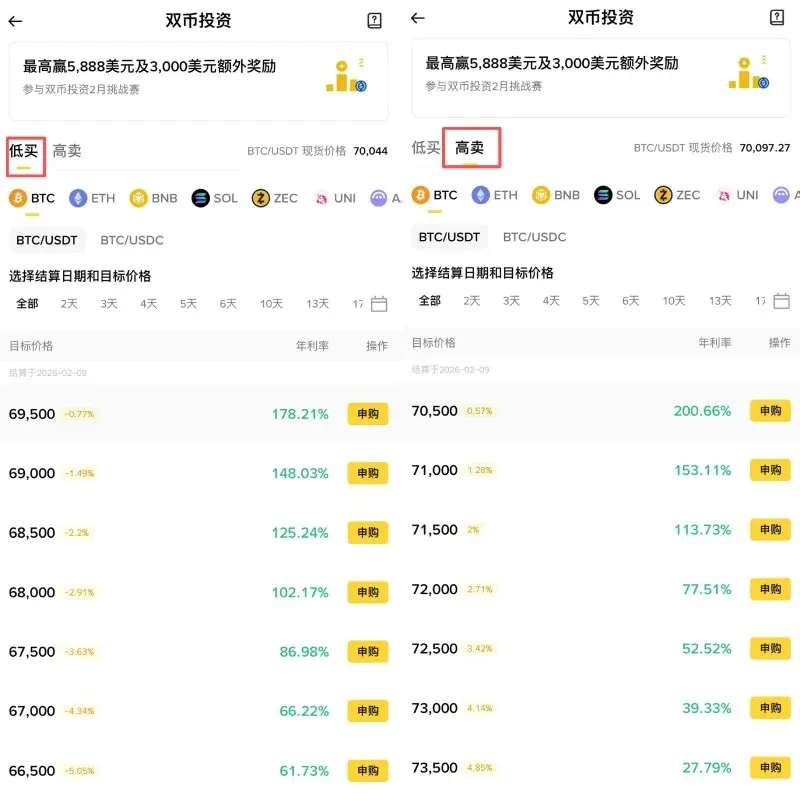
Dual Investment: Earn Yield by Assuming Currency‑Conversion Risk
Core summary: Dual Investment is essentially a sell‑side options wrapper. At contract expiry the user may be converted into another cryptocurrency at a pre‑agreed price, or simply receive a fixed reward.
- Pros: Fixed‑rate return, flexible operation, indirect way to execute a sell‑option strategy
- Cons: Hard to evaluate reward fairness, no early redemption, possible principal loss
Detailed Risk Breakdown
| Risk Point | Explanation |
|---|---|
| **Pricing difficulty** | A high APR does not guarantee a reasonable actual return; hidden variables such as implied volatility affect the outcome. |
| **No early redemption** | Funds are locked until contract maturity, causing missed market opportunities. |
| **High purchase price** | If the contract forces a buy and the price continues to fall, the principal may be eroded. |
| **Low sale price** | If the contract forces a sell and the price keeps rising, you forfeit further upside. |
Advantages at a Glance
- Fixed reward – Regardless of market direction, the agreed‑upon return is paid at maturity.
- Sell‑option entry point – Retail users can obtain a payoff structure similar to writing a call option.
- Flexible outcome – If the conversion trigger is met, the token is bought/sold at the preset price; if not, the reward is paid directly.
Discount‑Buy: Purchase Assets Below Market Price with an Embedded Yield Component
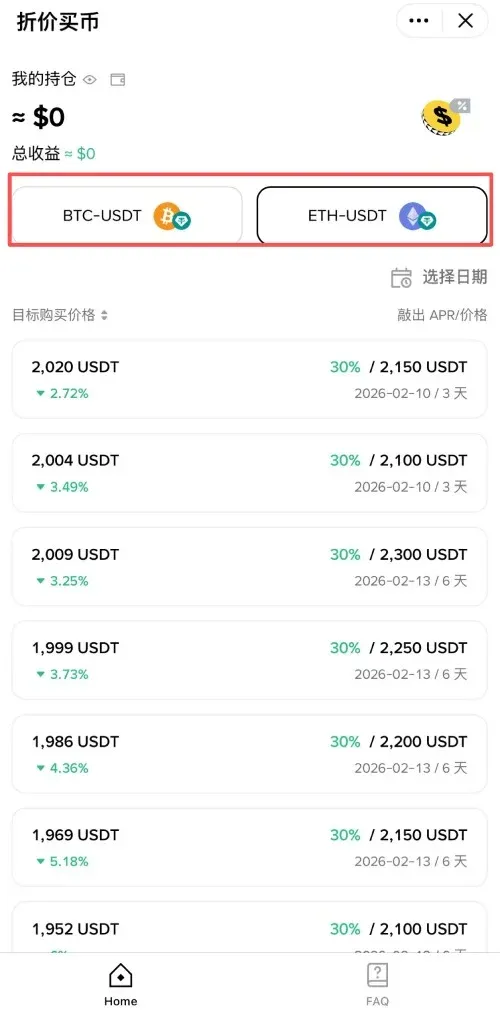
Core summary: Discount‑Buy merges a limit‑order purchase with a wealth‑management reward. The two possible outcomes are discounted purchase or principal return plus premium.
- Pros: Potential to buy below spot price, premium earned if the order does not fill, improves capital efficiency
- Cons: Capital is locked, may miss better entry points, higher operational complexity
Operational Mechanics
| Key Term | Description |
|---|---|
| **Settlement price** | The market price on the contract’s expiry date |
| **Target price** | The user‑defined lower bound (discount price) for buying |
| **Cancel price** | The market level at which the order is automatically cancelled if the price rises above it |
- Scenario 1: Settlement price ≤ Target price → Full purchase at the target price (100 % of principal used).
- Scenario 2: Target price < Settlement price < Cancel price → Purchase 50 % at the target price; the remaining 50 % of principal is returned.
- Scenario 3: Settlement price ≥ Cancel price → No purchase; 100 % of principal is returned together with a premium (APR).
Risk Alerts
- Price risk – If the market never reaches the target price, you may miss an even lower entry point.
- Liquidity risk – Funds are locked for the contract’s duration and cannot be withdrawn early.
- Operational difficulty – Setting appropriate target and cancel prices requires a basic understanding of options or Dual Investment concepts.
How Advanced Tools Differ from Traditional Options
- Both Dual Investment and Discount‑Buy are variations of a sell‑side option: they feature a strike price, expiration date and a premium.
- Unlike genuine exchange‑listed options, you cannot close or adjust the position before expiry; the contract must be held to the end, exposing you to price risk for the entire period.
- Discount‑Buy adds a partial‑purchase (50 %) rule that standard options do not provide.
If you are accustomed to dynamically rebalancing before expiration, the rigid holding requirement of these two products may limit your strategic flexibility. Conversely, if you simply want to lock in a purchase or sale at a specific price with a lower technical barrier, they can be a convenient alternative.
---
At this point the Binance Advanced Wealth‑Management tutorial is fully presented: the mechanisms, advantages, risks and selection guidance for On‑chain Earn, Smart‑Arbitrage, Dual Investment and Discount‑Buy have been covered. For more hands‑on Binance wealth‑management techniques, search the historical articles of Bitaigen (比特根) or continue reading the related links below. Thank you for your attention, and may you navigate the world of digital assets with rationality and prudence.
Important notes for a global audience
- Fiat deposits and withdrawals are typically handled via USD wire (SEPA for EUR, SWIFT for other currencies).
- U.S. residents must use Binance.US rather than the global Binance platform.
- Crypto‑related gains may be subject to tax in your jurisdiction; consult a tax professional to understand your obligations.
Related Reading
- Top 10 Beginner‑Friendly Cryptocurrency Exchanges with Strong Security
- Binance Safety 2026: In‑Depth Review of Top Crypto Exchange
- Binance Registration Guide: Secure Crypto Trading Platform
💡 Register on Binance with referral code B2345 for the maximum trading fee discount. See Binance complete guide.



