
 Bitaigen Research
As of January 2026, the global stablecoin market capitalization has surpassed US$310 billion, with USDT accounting for roughly US$185 billion of that total, solidifying its position as the world’s third‑largest cryptocurrency after Bitcoin and Ethereum. Daily USDT trading volume typically ranges between US$140 billion and US$150 billion, consistently out‑pacing spot Bitcoin volume and underscoring its role as the primary liquidity vehicle in the crypto ecosystem.
In Taiwan, the most common ways to acquire USDT fall into four categories: local cryptocurrency exchanges, major international exchanges, peer‑to‑peer (P2P) over‑the‑counter (OTC) trades, and purchases via credit cards or third‑party payment platforms.
Within the broader crypto market, USDT’s core value lies not only in price stability but also in its function as the essential bridge between fiat systems and the blockchain world. By 2026, following the passage of the U.S. GENIUS Act stablecoin legislation, USDT’s role has evolved from a simple pricing unit to an intermediary asset that facilitates fund inflows/outflows and market liquidity. For Taiwanese users, mastering the process of buying and converting USDT represents the first step in “bringing New Taiwan Dollar (TWD) into the crypto ecosystem.” Deposit speed, actual cost, and usage flexibility will directly affect all subsequent trading and asset‑allocation activities.
In this market context, Taiwanese users should focus on how to convert TWD into USDT with reasonable cost, stable liquidity, and high efficiency.
We examine the main channels for Taiwanese users to obtain USDT from the perspectives of regulation, platform security, and fees, and we highlight exchanges that have performed well recently. This helps readers quickly assess the convenience and risks of each deposit method. Continue reading to discover which approach best fits your needs.
What is USDT the US‑Dollar‑pegged stablecoin?
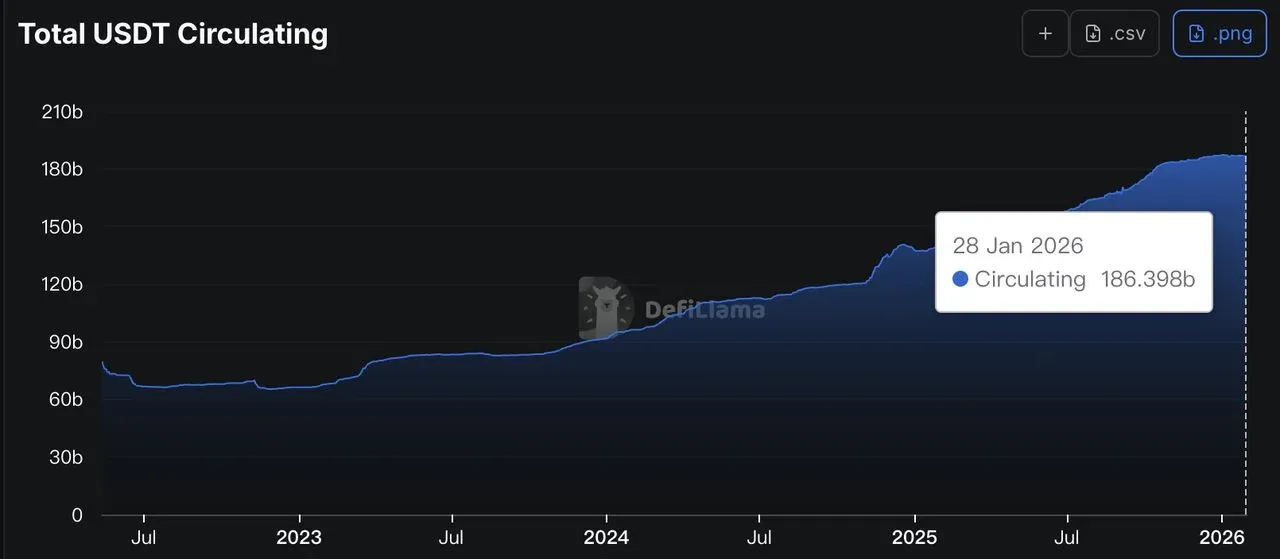
In 2026 USDT’s market cap has topped US$186 billion | Source: DefiLlama
USDT (Tether) is a stablecoin that is pegged 1:1 to the U.S. dollar, launched by Tether in 2014. Its design goal is to provide a “digital dollar” that remains relatively price‑stable and instantly transferable within the highly volatile cryptocurrency market. Unlike Bitcoin, Ethereum and other assets that swing dramatically with market sentiment, USDT does not derive its value from price appreciation. Instead, it delivers stability that underpins capital inflows/outflows, market settlement, and asset‑transfer functions, allowing participants to switch quickly between assets and strategies without exiting the crypto ecosystem.
As the market has expanded, USDT’s role has been amplified. Global crypto market cap grew from under US$300 billion during the 2020 pandemic to roughly US$4.31 trillion in 2025, driving heightened demand for “fund‑flow efficiency,” “liquidity management,” and “infrastructure stability.” Stablecoins have shifted from auxiliary tools to core components that support the entire market’s operation, with USDT being the most representative example. By January 2026, stablecoins collectively topped US$310 billion in market cap, and USDT alone held about US$185 billion—over 70 % of the stablecoin share—maintaining daily trading volumes above US$140 billion, often exceeding Bitcoin’s own volume. This demonstrates that USDT is no longer merely a pricing unit for trading pairs; it is a genuine intermediary asset that carries global capital flows, allocation, and temporary storage.
What are USDT’s uses and advantages?
In the overall architecture, USDT acts as a “middle layer” linking fiat currency with the crypto world. It enables dollar‑denominated value to move instantly on blockchain networks, making it the market’s most widely used settlement and transit asset. For most participants, USDT is not just a stablecoin option but the “base currency” of the crypto system, supporting trading, fund allocation, and risk‑management core activities.
In Taiwan’s practical workflow, the typical route for bringing TWD into crypto markets is:
TWD → USDT → Bitcoin (or other crypto assets)
First, convert TWD into USDT; then, when a suitable entry point appears for the target asset (e.g., Bitcoin), use USDT to purchase it.
Primary uses and advantages of USDT
- Hedging and price stability – 1:1 USD peg allows it to act as a value store during market turbulence or deleveraging phases while retaining liquidity.
- Post‑fiat fund‑transfer bridge – Serves as an intermediary after fiat deposit, enabling rapid reallocation across different crypto positions.
- Core pricing unit for trading and quoting – Most spot and derivatives markets quote and settle in USDT, creating a unified USD‑denominated framework.
- Cross‑platform and cross‑chain fund‑routing medium – Deployed on multiple major blockchains, facilitating fast transfers between chains and platforms.
- 24/7 settlement and cross‑border flow – Unlike traditional banks constrained by business hours and international processing times, USDT can be transferred and settled around the clock, increasing fund‑management flexibility.
As these use cases accumulate, USDT’s role has transitioned from “a price‑stable token” to a foundational asset that underpins daily crypto‑market operations, becoming a critical component that links fiat value with the blockchain ecosystem.
What are the common purchase channels for USDT in Taiwan?
For Taiwanese users, the choice of how to buy USDT depends on the source of funds, cost sensitivity, and subsequent trading needs. The mainstream approaches can be grouped into the following categories, each suited to different usage scenarios.
1. Buying USDT through a Taiwan‑based exchange
Characteristics: Clear deposit workflow, low entry barrier, relatively limited functionality and liquidity.
Local exchanges accept TWD bank transfers (typically via SEPA or SWIFT equivalents), offering a straightforward and stable reconciliation process. After completing registration and identity verification, users can deposit fiat, and the fiat‑to‑USDT path is transparent—making it an ideal “TWD → USDT” first step. However, local platforms often provide fewer trading pairs and advanced features; USDT is mainly used for onboarding or as a transit asset. To access DeFi, futures, or other derivatives, users usually need to transfer USDT to an international exchange.
2. Buying USDT through an international exchange
Characteristics: High liquidity, full‑featured product suite, direct connection to subsequent trading and fund‑routing activities.
Major international exchanges deliver deeper order books and a broader range of products, including spot, futures, algorithmic tools, and multi‑asset portfolios. Taiwanese users can fund these platforms via TWD bank transfers (often routed through an intermediate fiat such as USD via SEPA/SWIFT), third‑party payment services, or crypto‑to‑crypto transfers, and obtain USDT directly on‑chain.
3. Buying USDT via P2P (peer‑to‑peer) OTC trades
Characteristics: High exchange‑rate flexibility, counterparty risk, relatively more fraud incidents.
P2P platforms match users who wish to exchange TWD for USDT directly with other individuals. Prices can be more flexible, benefiting users who are extremely sensitive to exchange rates. However, this method relies heavily on the counterparty’s credibility and the payment process, presenting higher risk than exchange‑based trades. While platforms may offer escrow or guarantee mechanisms, users must still verify payment status and transaction records themselves; any mistake can make fund recovery difficult. This approach is not recommended for inexperienced users or those with low risk tolerance.
4. Buying USDT with a credit card or third‑party payment service
Characteristics: Fast, user‑friendly, overall higher cost.
Some platforms allow instant USDT purchases using credit cards or services such as PayPal, Apple Pay, or regional e‑wallets. Funds are usually credited almost immediately, making this method suitable for quick top‑ups or small‑scale needs. The downside is higher transaction fees, service charges, or hidden exchange‑rate spreads, which can make the long‑term cost larger than that of bank transfers or internal exchange conversions. Treat this channel as a short‑term or emergency solution rather than a primary acquisition method.
Which method is most suitable for Taiwanese investors?
Overall, OTC/P2P offers attractive exchange‑rate flexibility but carries elevated risk in Taiwan, where fraud cases are frequent and stringent counterparty verification is required. Credit‑card or third‑party payment routes are convenient but come with higher fees and spreads, making them costly over the long term. By comparison, purchasing USDT through a compliant cryptocurrency exchange provides a more balanced mix of stability, cost efficiency, and operational flexibility, and thus remains the preferred option for most Taiwanese investors.
Recommended cryptocurrency exchanges for buying USDT in Taiwan (2026)
When selecting an exchange, focus on three key dimensions:
- TWD deposit pathways – Does the platform support local bank transfers, credit cards, or third‑party payment options?
- USDT liquidity source – Spot depth, bid‑ask spread, and cross‑chain withdrawal capability.
- Post‑purchase asset‑use flexibility – Availability of futures, DeFi integrations, cross‑chain bridges, and other advanced features.
Below is a list of representative exchanges that remain relevant in 2026, organized into international and local categories.
1. BingX Exchange
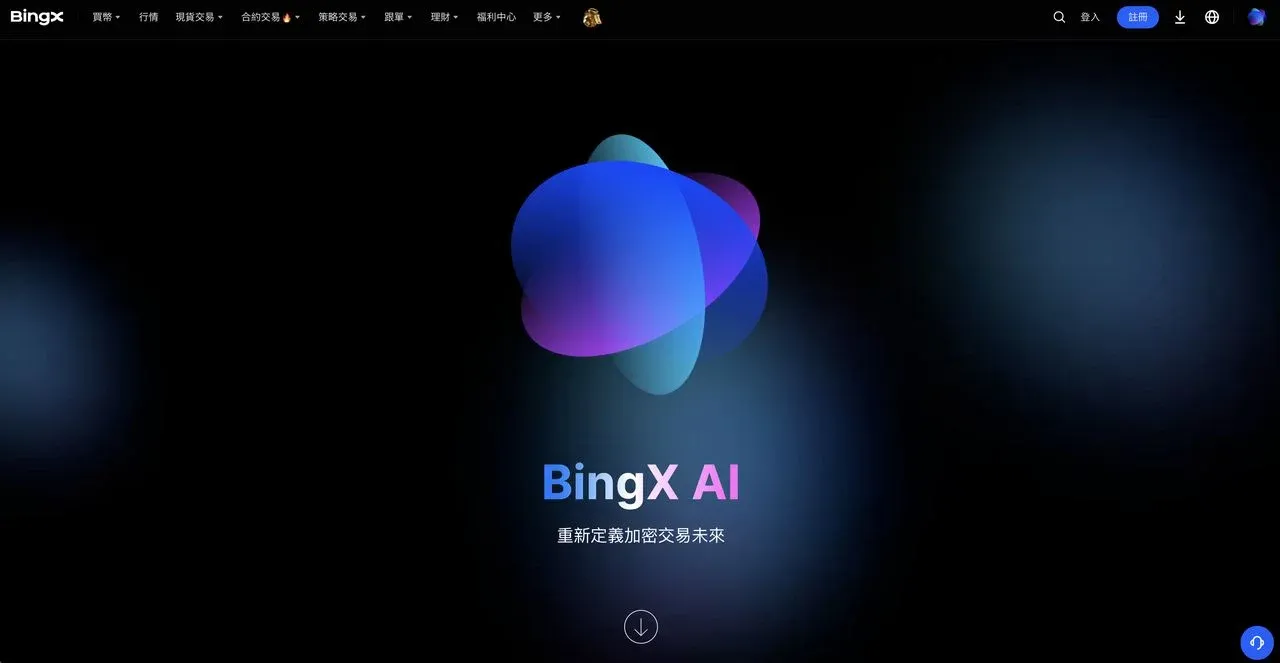
Positioning: A comprehensive platform offering USDT spot trading and a variety of asset‑utilization tools.
- Deposit methods: Accepts TWD credit‑card payments and third‑party e‑wallets for direct USDT purchase.
- Fees: Both maker and taker spot fees are 0.1 %, lower than many international competitors.
- Special features: Social copy‑trading, BingX AI market analysis, paper‑trading simulation.
- Security: Cold‑wallet segregation, multi‑signature architecture, a protection fund, and 100 % Proof‑of‑Reserves.
- Localization: Full Traditional Chinese UI, reducing language barriers.
2. Kraken Exchange
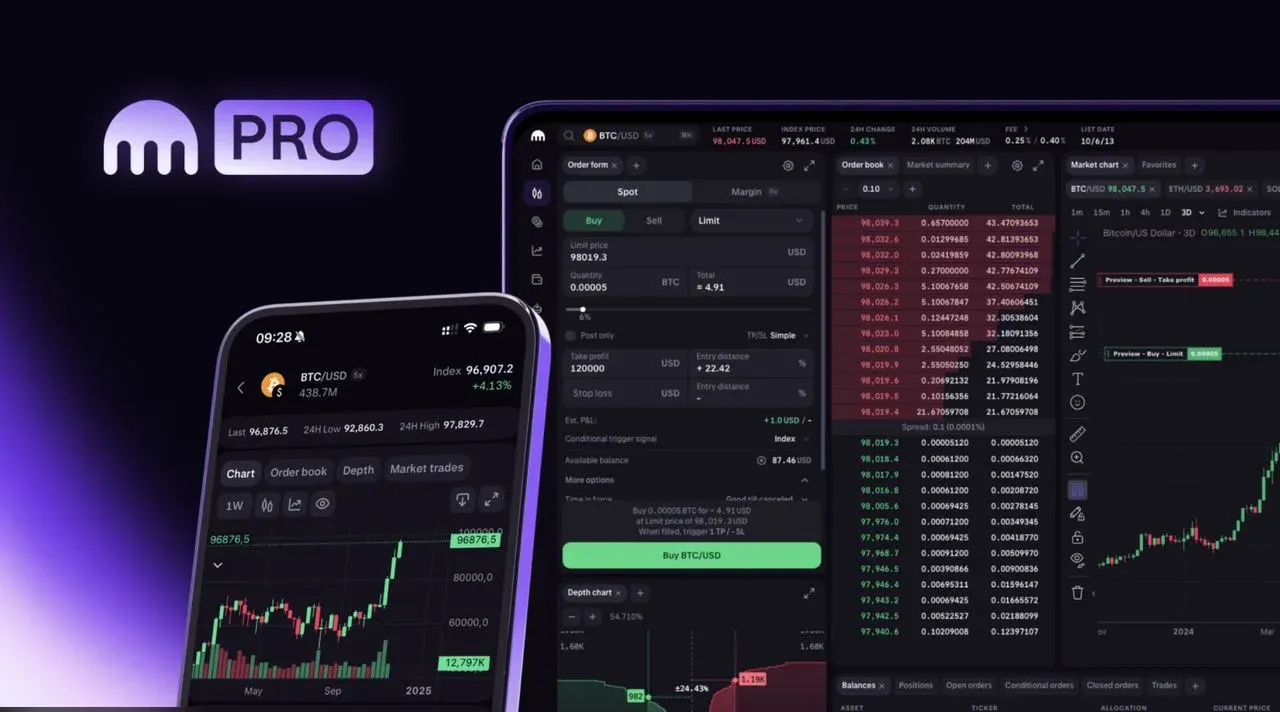
Positioning: An internationally recognized exchange known for regulatory compliance and robust fiat‑on‑ramp/off‑ramp infrastructure.
- Deposit methods: Supports TWD bank transfers (typically routed through an intermediate USD or EUR via SEPA/SWIFT) and a range of other fiat channels.
- Fees: Tiered fee schedule; overall slightly higher than some high‑frequency platforms but transparent.
- Security: Cold‑wallet custody, multi‑layer risk controls, industry‑acknowledged compliance.
- Target audience: Users who prefer deep integration with traditional finance and long‑term asset management.
3. Crypto.com Exchange
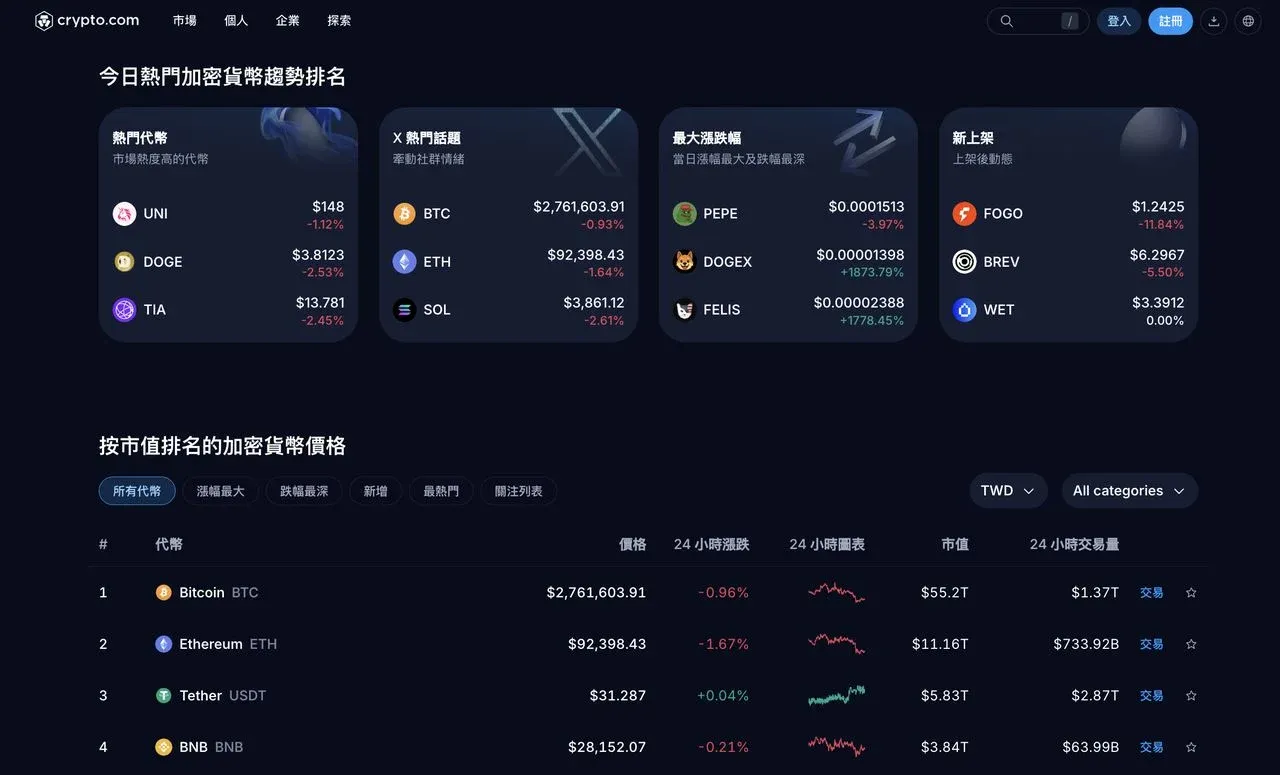
Positioning: An international platform that blends trading, payments, and card‑based consumption.
- Deposit methods: Accepts credit cards, bank transfers, and a wide array of fiat currencies.
- Fee structure: Base spot fee up to 0.4 %, with discounts for holding CRO tokens.
- Special features: Visa card can convert USDT for everyday purchases; supports LINE Pay linking.
- Cost note: Converting USDT back to TWD typically incurs about 0.8 % spread, representing a common hidden cost.
4. MAX Exchange (MaiCoin)
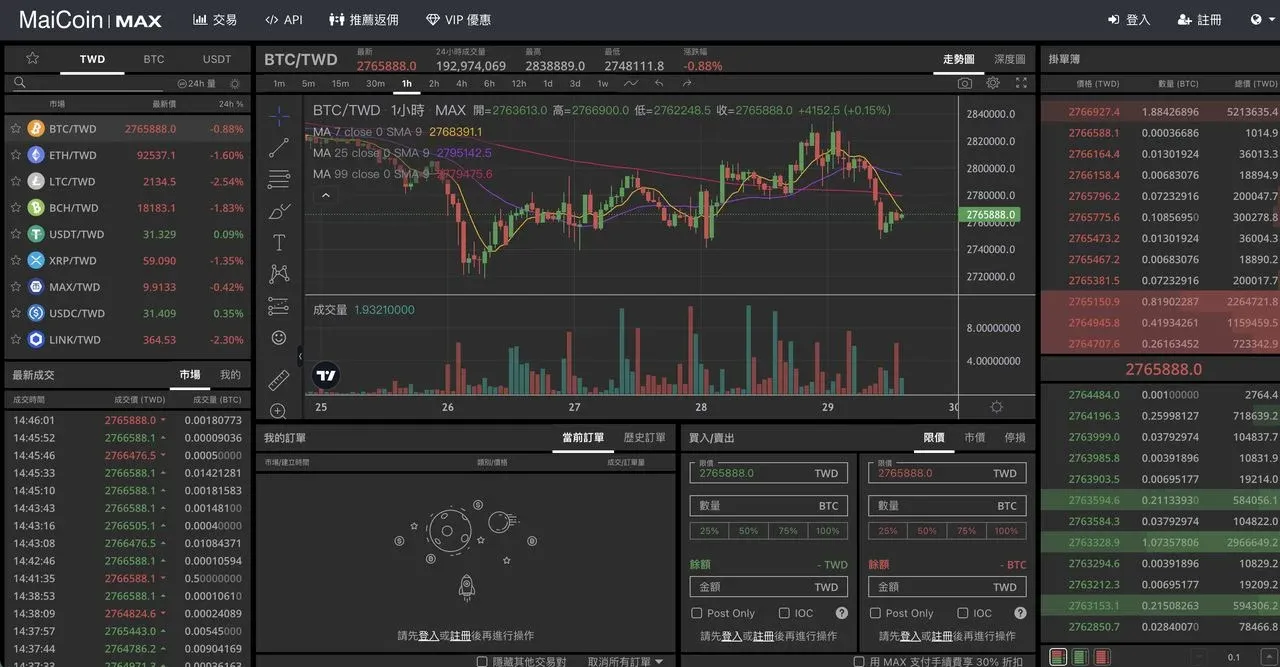
Positioning: A local platform centered on TWD deposits and USDT/TWD spot trading.
- Deposit methods: Direct local bank transfers into a trust‑accounted escrow.
- Liquidity: USDT/TWD spot pair offers sufficient depth for typical retail limits; large orders may experience a 0.5 %–1 % premium.
- Fees: Maker 0.05 %, taker 0.15 %; additional discounts for MAX token holders.
- Security: ISO 27001 information‑security certification, cold‑wallet segregation, multi‑chain withdrawal support (Ethereum, TRC‑20, BSC, Polygon, Arbitrum One).
5. BitoPro (Bito)
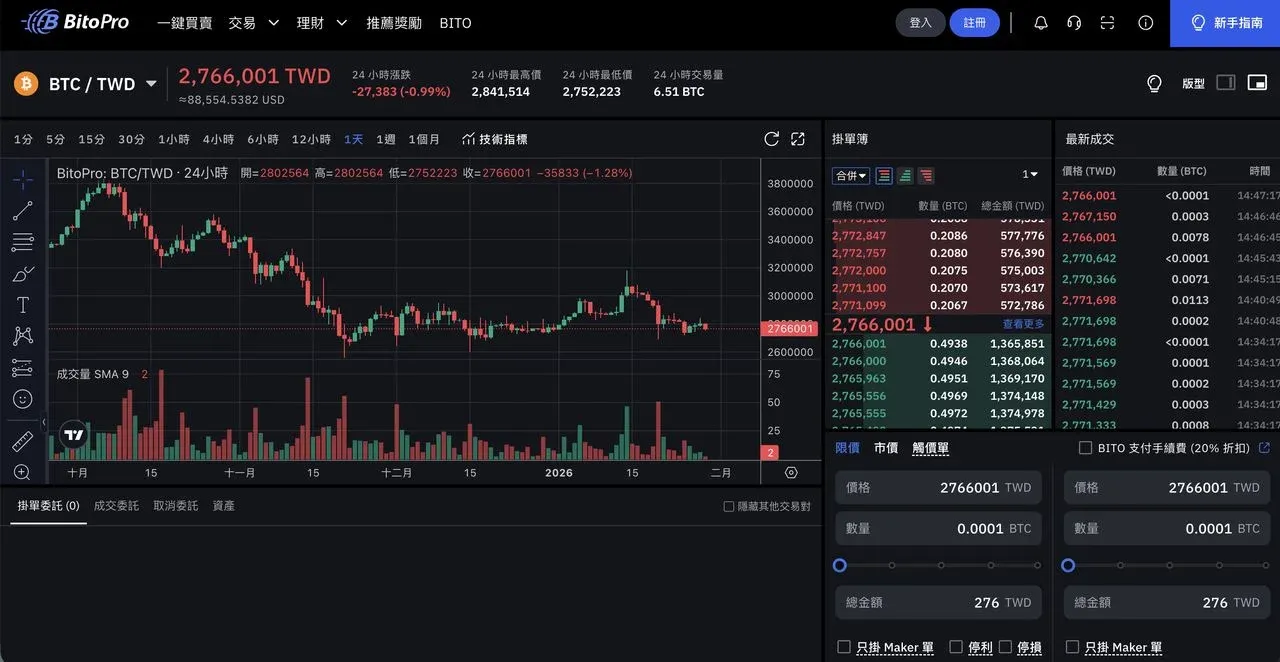
Positioning: A local platform offering TWD deposits and USDT/TWD spot trading, with an additional convenience‑store (convenience‑store) payment channel.
- Deposit methods: Bank transfers and convenience‑store (超商) payment options.
- Liquidity: Adequate depth for everyday volumes; large trades may encounter slippage.
- Fees: Maker ≈ 0.1 %, taker ≈ 0.2 %; convenience‑store deposits incur an extra ≈1 % fee.
- Product scope: Spot trading only; no futures or other derivatives are offered.
Exchange account opening incentives
Registering through the links on this page may grant you fee rebates and newcomer bonuses not otherwise advertised by the platforms. Identity verification can be completed using a Mainland China ID card; it is advisable to select an IP location in Taiwan or Mainland China to avoid regional restrictions.
Important reminder: You must complete registration before you can receive a 20 % commission rebate. Below is a snapshot of some exchange rebate codes (for reference only; please verify the latest terms on the official sites).
- OKX: Spot 0.1 %, Futures maker 0.02 %, taker 0.05 % – rebate code `B2345`
- Binance: Spot 0.1 %, Futures maker 0.02 %, taker 0.05 % – rebate code `B2345` (U.S. users should use Binance.US instead of the global Binance)
- HTX: Spot 0.2 %, Futures maker 0.02 %, taker 0.06 % – rebate code `b6yq8223`
- Gate.io: Spot 0.15 %, Futures maker 0.02 %, taker 0.15 % – rebate code `A1lBAVFW`
- Bybit: Spot 0.1 %, Futures maker 0.02 %, taker 0.055 % – rebate code `88946`
- Bitget: Spot 0.1 %, Futures maker 0.02 %, taker 0.06 % – rebate code `vxje`
- XT.COM: Spot 0
Related Reading
- Earn USDT on OKX: Registration, Trading & Savings Tutorial
- 2026 USDT Exchange Comparison: Top 9 Crypto Platforms
- OKX China 2026: Register, Download App, Buy USDT, Trade
💡 Register on Binance with referral code B2345 for the maximum trading fee discount. See Binance complete guide.



