
 Bitaigen Research
 OKX Metal Contract Grid is an automated trading tool that combines perpetual contracts for metals such as gold and silver with a grid‑trading strategy. It is suited for investors who already have experience with contracts, can tolerate risk, want to automate their trades, and do not have the time to monitor the market continuously.
In 2025, precious metals—especially gold and silver—experienced a strong upward trend, with silver’s cumulative annual gain even surpassing 100 %. News outlets repeatedly reported record‑high prices, community members debated whether the rally was exaggerated, and acquaintances began asking, “Is it still possible to chase now?” Yet even if an opportunity to invest in gold arises, can you be certain you will buy low and sell high?
Investing in precious metals is not limited to a single bullish or bearish strategy. Over longer periods, metal prices often oscillate within a range. Therefore, rather than trying to predict direction, some traders prefer to observe the price corridor and let a system automatically place buy and sell orders as the market fluctuates—this is grid trading. Metal Contract Grid merges perpetual contracts with grid trading into an automated strategy that allows you to pre‑define a price range and also employ leverage.
If you are an OKX user, you can participate in traditional financial market exposure to gold, silver and other metals through the Metal Contract Grid.
This article will provide a detailed overview of the Metal Contract Grid, covering:
- What are metal contract trades?
- How does a grid operate?
- How to set up a metal contract grid on OKX?
- Where are the risks?
In this article we systematically dissect the principles and use‑cases of OKX’s Metal Contract Grid, helping investors with contract experience who seek automation to get up to speed quickly. By delving into the grid mechanism, leverage configuration and key risk points, you can determine whether this tool matches your trading style and seize opportunities in the volatile metal markets.
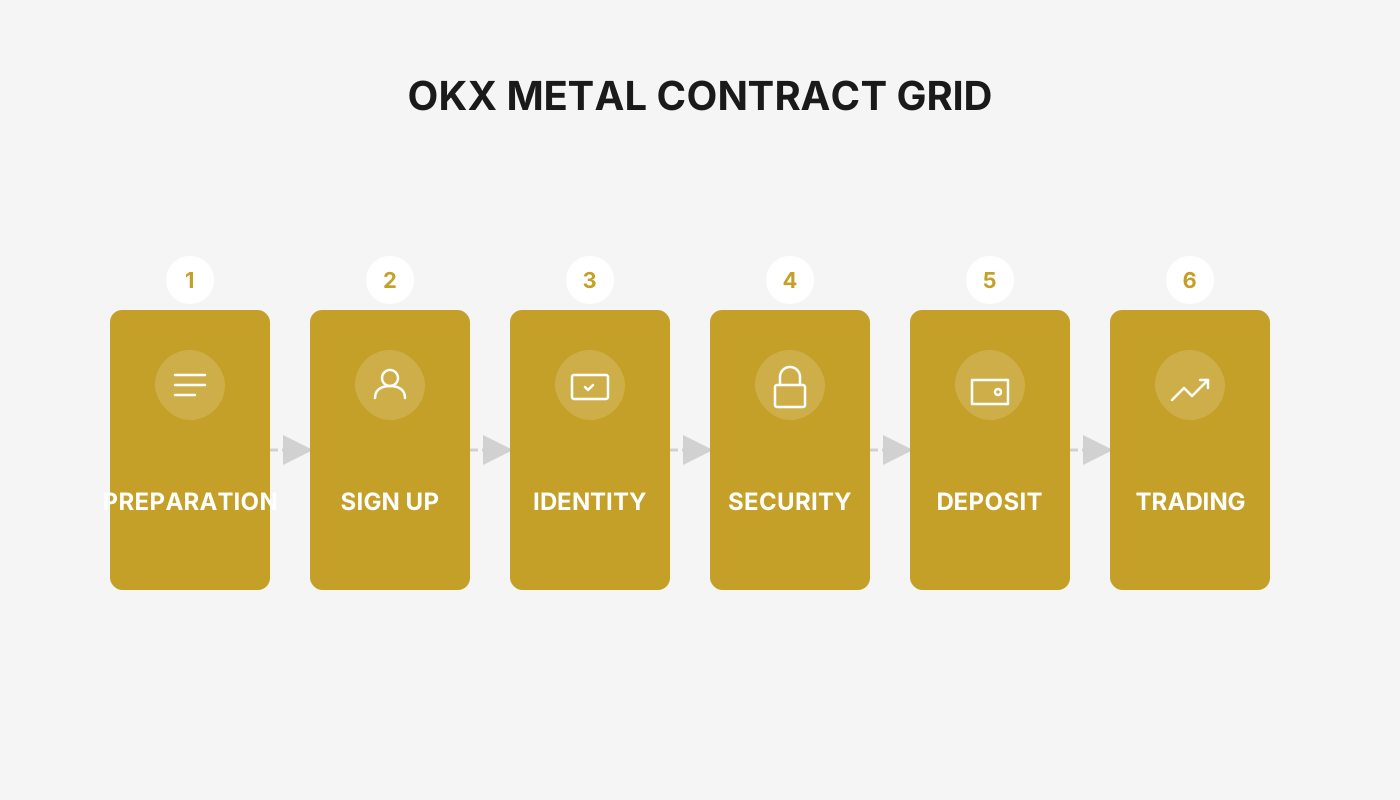
What Are Metal Contract Trades?
Before discussing metal contract trading, it is essential to understand what “precious metals” actually are.
What Are Precious Metals? Why Are Gold and Silver Prominent?
Precious metals refer to rare metal assets that retain value over time, with gold and silver being the most common examples. Their limited supply and long‑standing market recognition make them important global trading instruments.
- Gold: Often treated as a safe‑haven asset. When inflation rises, the U.S. dollar weakens, or markets become turbulent, capital tends to flow into gold.
- Silver: Serves both investment and industrial demand; its price typically swings more than gold, a pattern that was especially evident in 2025‑2026.
Since 2025, factors such as heightened geopolitical tension, central banks continuously increasing gold reserves, and inflows into gold‑and‑silver ETFs have propelled gold close to a 70 % gain and silver to more than a 130 % annual increase. By the end of January 2026, gold touched roughly $5,595 per ounce, while silver broke the $120 per ounce barrier. Subsequently, short‑term sentiment reversals and leverage amplification caused gold to drop about 12 % in a single day and silver to plunge 35‑37 %. In mid‑ to late‑February, renewed safe‑haven demand sparked another rebound. These movements illustrate how closely metal prices track macro‑economic events.
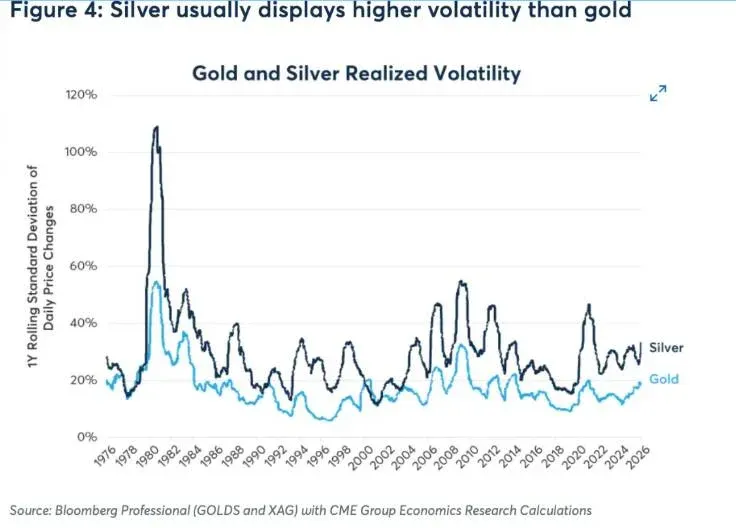
Gold vs Silver Price Volatility
Perpetual Contract Trading vs Spot Trading
- Spot: You purchase the underlying asset itself; its value rises with the price and falls when the price declines. Spot trading involves no leverage and no forced liquidation mechanism.
- Perpetual Contracts: You trade the price movement of the underlying, involving two core concepts—margin and leverage.
- Margin: Functions like a deposit; only a fraction of the contract’s notional value is required to open a position.
- Leverage: Multiplies both profit and loss. For example, with 5× leverage, a $1 million contract only needs $200,000 margin; a 1 % price move translates into a 5 % change in the account equity.
Perpetual contracts also provide short‑selling capabilities and a forced‑liquidation mechanism to prevent losses that exceed the margin.
| Feature | Spot | Perpetual Contract |
|---|---|---|
| Actual ownership of the asset | ✅ | ❌ |
| Availability of leverage | ❌ (you may use leveraged ETFs on your own) | ✅ (user‑defined) |
| Ability to short | ❌ | ✅ |
| Forced‑liquidation mechanism | ❌ | ✅ |
| Funding fees | May incur holding fees | May incur funding rate |
Why Choose Contracts Over Spot for Metals?
- Capital efficiency: With the same amount of capital, leveraged contracts let you control a larger position, enhancing profit potential during range‑bound swings.
- Short‑selling ability: Contracts let you profit from price declines, capturing bearish opportunities; spot positions can only wait for a rebound.
Why Metals Are Well‑Suited for Contract Grid Trading
The 2025‑2026 market pattern showed metals often surge rapidly after news catalysts and then enter a consolidation phase. Such range‑bound volatility creates an ideal environment for grid trading.
What Is Contract Grid Trading?
How a Grid Operates
A grid divides a trading range into multiple small “cells.” The system automatically places orders in each cell:
- A price decline triggers a buy order (building a position incrementally).
- A price rise triggers a sell order (reducing the position incrementally).
As long as the price stays within the predefined corridor, the bot can continuously execute trades. When applied to contracts, the grid inherits perpetual‑contract features: leverage, long/short, margin, forced liquidation.
Contract Grid vs Spot Grid
| Feature | Contract Grid | Spot Grid |
|---|---|---|
| Leverage | User‑defined | None |
| Shorting | ✅ | ❌ |
| Funding rate | May be paid or received | ❌ |
| Forced liquidation | ✅ | ❌ |
Spot grids can only buy on dips and sell on rallies, representing a one‑sided long strategy; contract grids can execute long, short, or neutral directions.
Three Operational Modes for Contract Grids
- Long Grid
- Only goes long, never short. Suited for markets that are slightly bullish with periodic pullbacks, or for a long‑term bullish outlook combined with short‑term consolidation. If the market trends sharply down, the accumulated long exposure could trigger liquidation, so leverage must be managed carefully.
- Short Grid
- Only goes short, never long. Appropriate for markets that are slightly bearish or range‑bound with a downward bias. A sudden bullish breakout can place heavy pressure on the short positions.
- Neutral Grid
- Simultaneously opens long positions on price drops and short positions on price rises. Ideal for a tight sideways range, theoretically capturing profit on both sides of the swing, but it carries the highest risk and requires a solid understanding of the underlying’s volatility and disciplined leverage control.
Target Audience: Traders who understand the asset’s volatility, can reliably assess range boundaries, and already have experience with contract trading. Beginners are discouraged from jumping straight into the neutral grid mode.
Risks and Precautions for Metal Contract Grids
Metal contract grids face two primary categories of risk: market‑direction risk and platform‑system risk.
Risk 1: Excessive Leverage Leading to Forced Liquidation
Gold has shown a gradual upward trend over the past decade, driven by inflation, accommodative monetary policy and geopolitical uncertainty. If you blindly apply high leverage to a long grid, a single‑day correction of more than 10 % can erode margin and trigger forced liquidation, wiping out the position even if the market later recovers.
Risk 2: Platform/System Risk
All contract grids depend on the exchange’s matching engine. During periods of extreme volatility, if the platform undergoes maintenance, experiences API latency, or its matching speed slows, pending orders might not be filled promptly or could be executed at prices far from the intended grid levels, adversely affecting expected returns.
Overview of OKX Metal Contract Grid
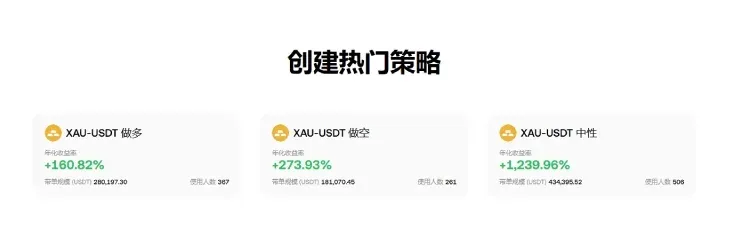
OKX bundles perpetual contracts for gold, silver, palladium and platinum with a grid strategy into a one‑click automated tool. Users simply set parameters, and the system handles order placement and execution.
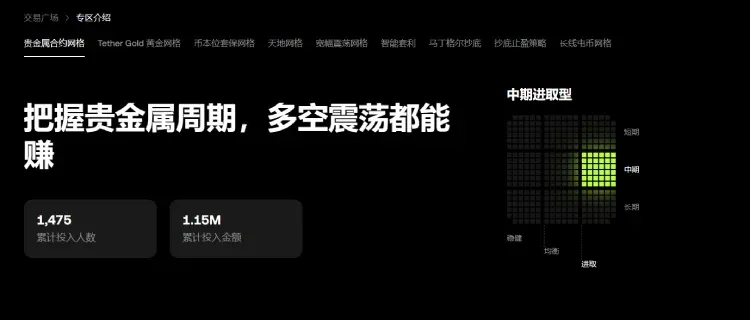
Supported Metal Instruments
- XAU/USDT (Gold)
- XAG/USDT (Silver)
- XPD/USDT (Palladium)
- XPT/USDT (Platinum)
Each instrument reacts to interest rates, U.S. dollar movements, and industrial demand, giving them distinct volatility profiles.
Strategy Mode Selection
- Long: Choose when you expect the price to drift higher.
- Short: Choose when you anticipate a downward bias.
- Neutral: Choose when you expect the price to oscillate within a range.
AI‑Assisted Strategy
OKX offers an AI strategy that analyzes recent volatility and proposes a price range, grid count, and leverage level. The AI output reflects historical patterns only and does not constitute a forward‑looking prediction. Users are encouraged to fine‑tune the AI‑suggested parameters based on their own market view.
Manual Configuration
If you prefer to set the grid yourself, you can input:
- Upper and lower price limits
- Number of grid levels
- Leverage multiplier
- Direction (Long / Short / Neutral)
After confirming, the system automatically places orders and executes trades. Whether you rely on AI or manual settings, risk management remains the user’s responsibility.
Who Is the OKX Metal Contract Grid Designed For?
- Time‑constrained individuals who cannot monitor markets constantly
The grid runs automatically once configured, making it suitable for salaried professionals or anyone lacking the ability to watch charts in real time.
- Traders with contract‑trading experience who can tolerate volatility
Understanding margin, leverage and forced liquidation allows you to intervene manually if needed.
- Those seeking automation to reduce emotional decision‑making
Fixed‑rule execution helps avoid the classic “buy the dip, sell the rally” impulse.
OKX Metal Contract Grid Walkthrough (App Example)
The desktop and mobile workflows are essentially identical; the steps below illustrate the mobile experience.
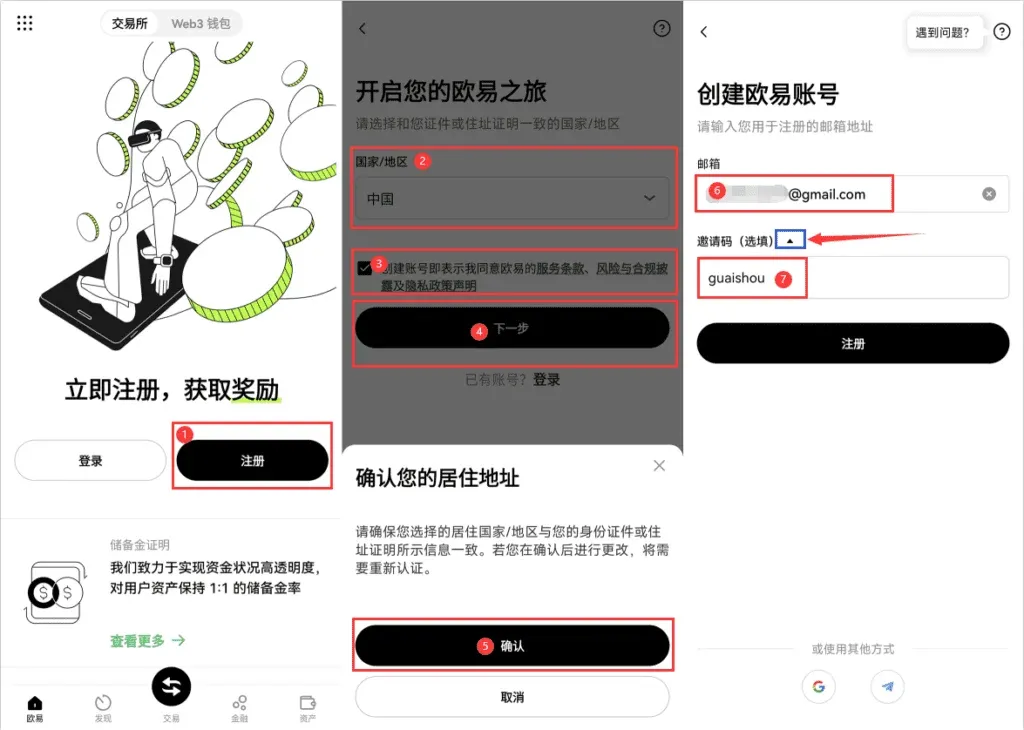
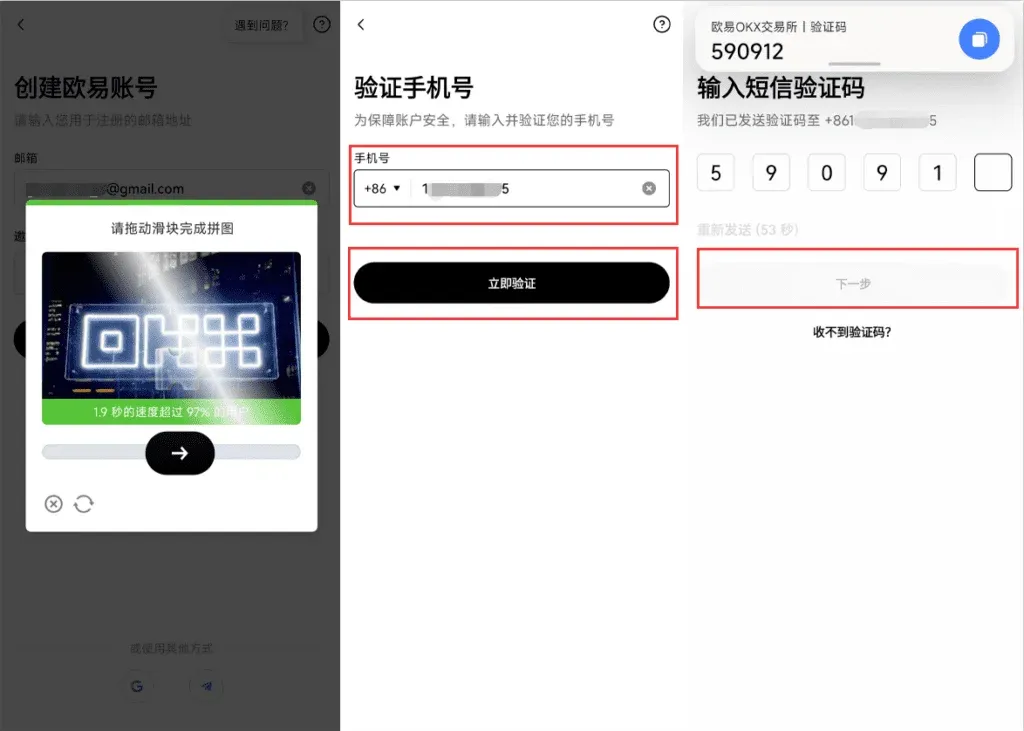
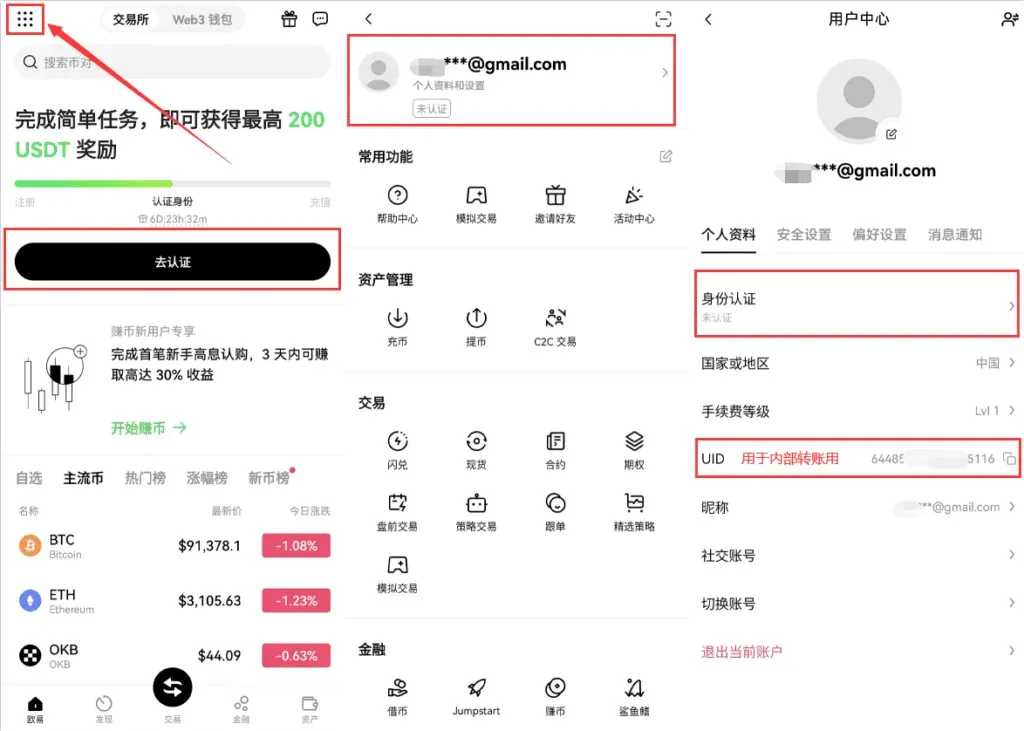
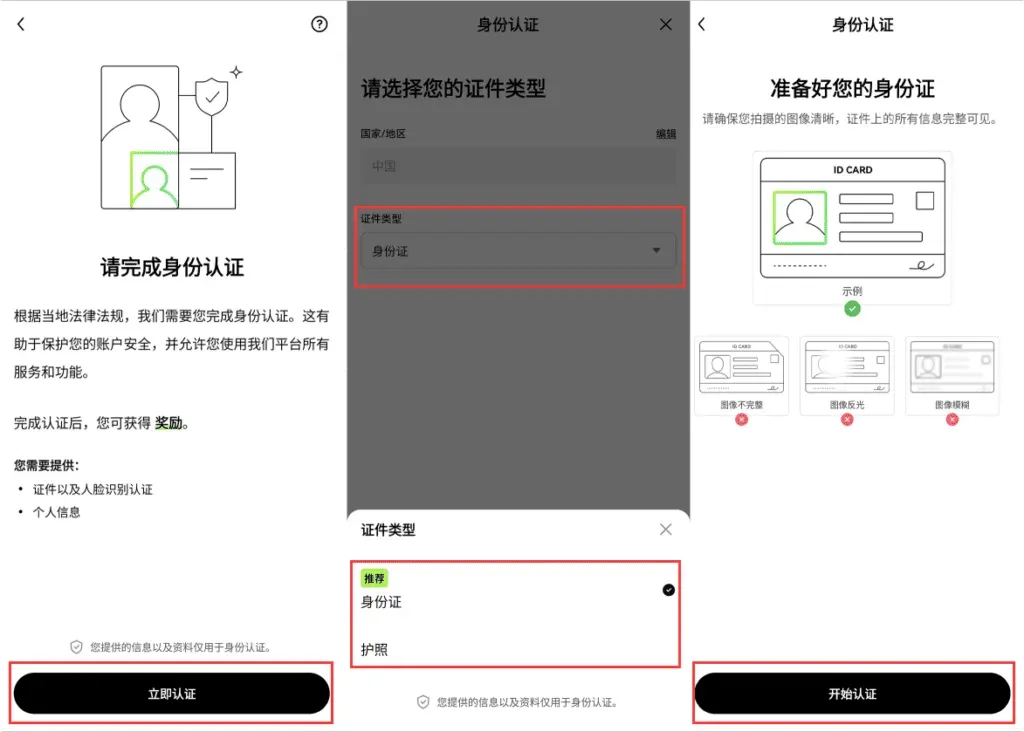
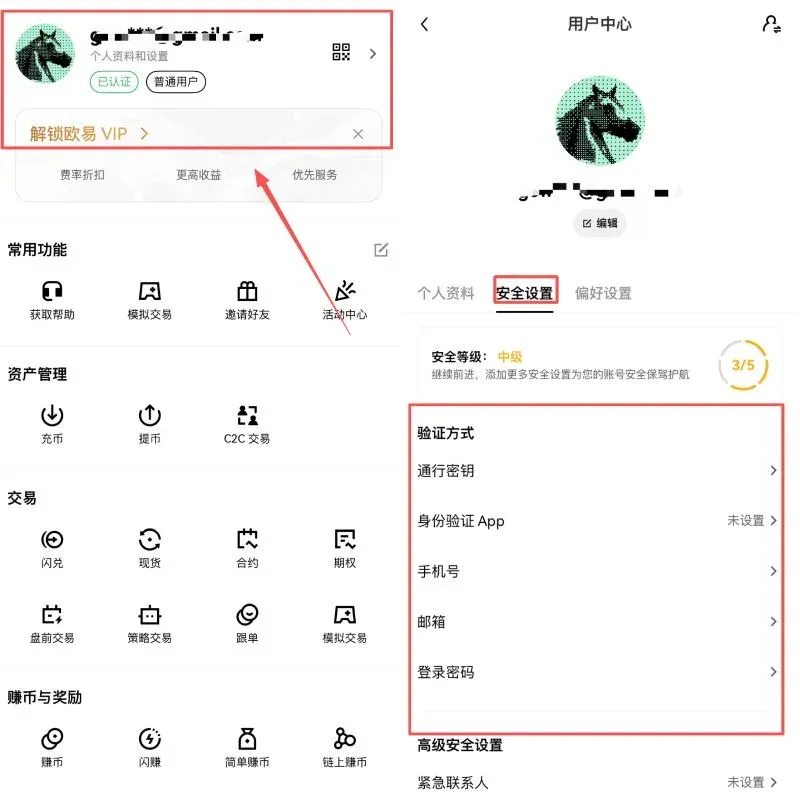
Step 1: Register an OKX Account and Complete KYC
- Visit the OKX official website or download the mobile app.
- Register using an email address or phone number.
- Complete identity verification by uploading a government‑issued ID and a selfie.
- It is recommended to enable two‑factor authentication (2FA) for enhanced security.
Step 2: Prepare USDT
OKX’s strategy‑trading products are denominated in USDT (a USD‑pegged stablecoin). You can purchase USDT directly with a credit or debit card, or convert existing holdings such as BTC or ETH into USDT. U.S. residents should use Binance.US rather than the global Binance platform when acquiring USDT, and transfers to OKX can be performed via SEPA, SWIFT or other supported fiat corridors.
Step 3: Access the Metal Contract Grid Page
- Open the app, tap Trade → Strategy Trading → Contract Grid.
- Choose Commodities, then select the desired instrument (XAU/USDT, XAG/USDT, XPD/USDT, or XPT/USDT).


