 Bitaigen Research
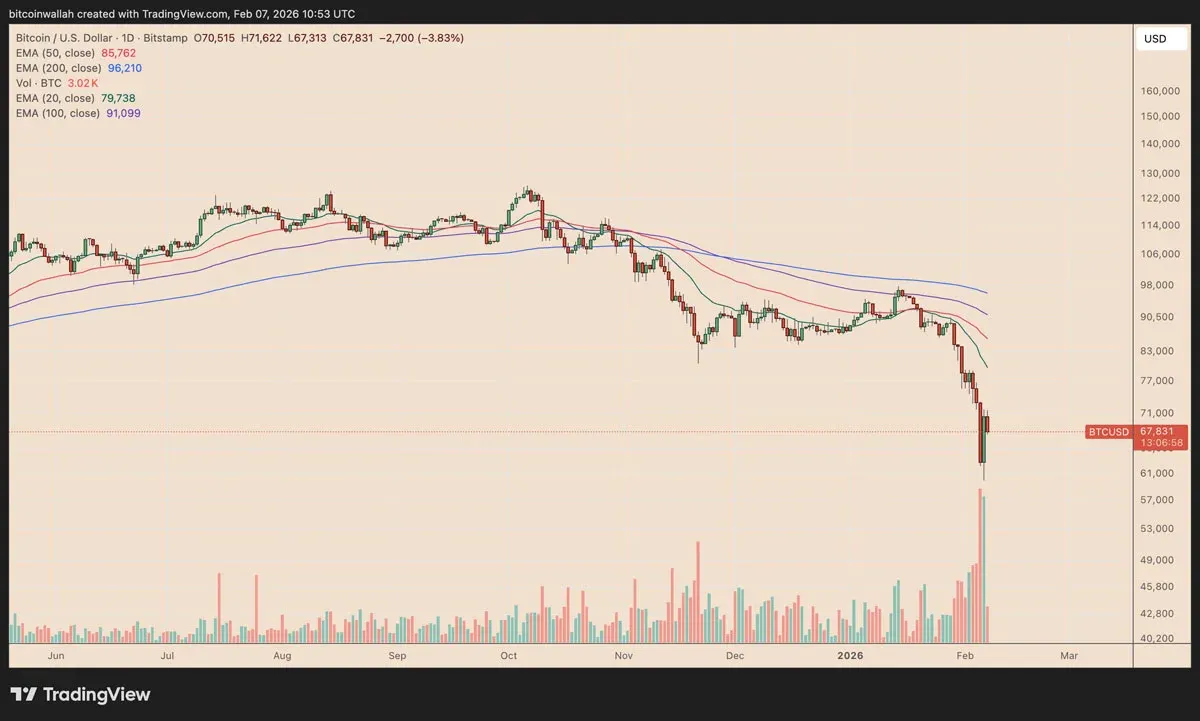
Bitcoin has undergone its most severe correction in the past four weeks since reaching the all‑time high of $126,200 in October 2025, shedding more than 40 % in total. On Friday it touched the year‑to‑date low of $59,930. Analysts argue that, beyond macro‑economic factors, three recent market dynamics may be the key drivers pushing the price lower.
In this article we systematically outline the core reasons behind Bitcoin’s recent sharp pull‑back, focusing on leveraged bets by Hong Kong hedge funds, exposure of mainstream banks to structured Bitcoin products, and the impact of mining companies shifting toward AI compute power. By breaking down the logic we aim to help readers understand the nature of the price swing; the details of each theory will be explored further in the sections that follow, making the piece worth a thorough read.
Key Takeaways
- Hong Kong hedge funds have placed large leveraged positions and options linked to Bitcoin ETFs, which are seen as a potential trigger for the current sell‑off.
- Large banks such as Morgan Stanley hold significant risk exposure in structured Bitcoin products, which may force them to execute hedging‑driven sell orders.
- Mining firms are reallocating resources to artificial‑intelligence data centers, reducing hashpower by 10 %–40 %, which pushes Bitcoin’s support level closer to miners’ breakeven point.
Miners Pivot to Artificial Intelligence
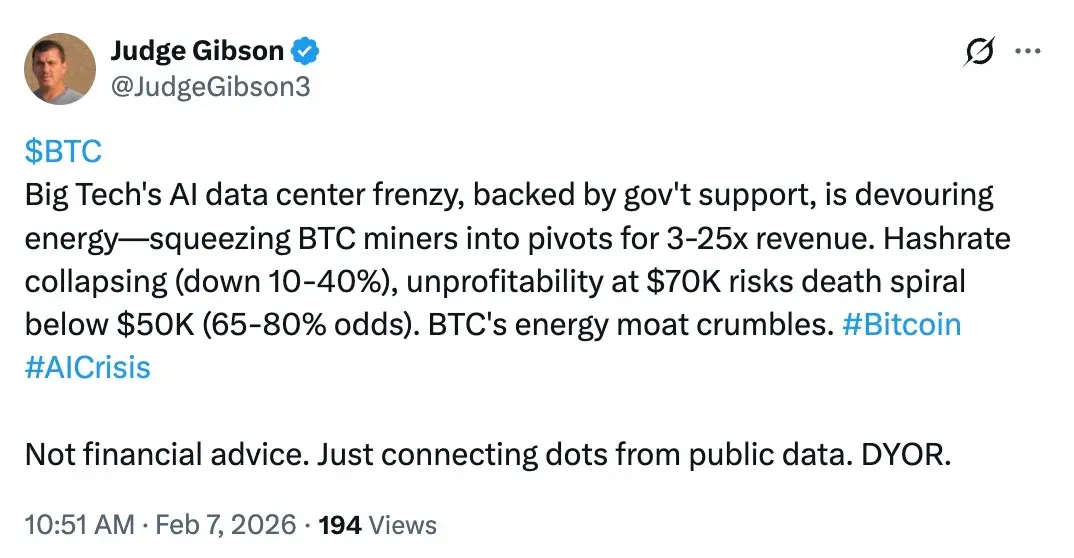
Analyst Jackie Gibson noted on X that, as demand for AI compute surges, a number of Bitcoin mining companies have begun to pivot toward data‑center operations, resulting in an overall hashpower decline of 10 %‑40 %.
In December 2025, Riot Platforms announced that it would refocus its business on broader cloud‑computing and AI use cases and simultaneously sold approximately $161 million worth of Bitcoin. Shortly thereafter, IREN disclosed that it would shift resources toward AI‑focused data centers.
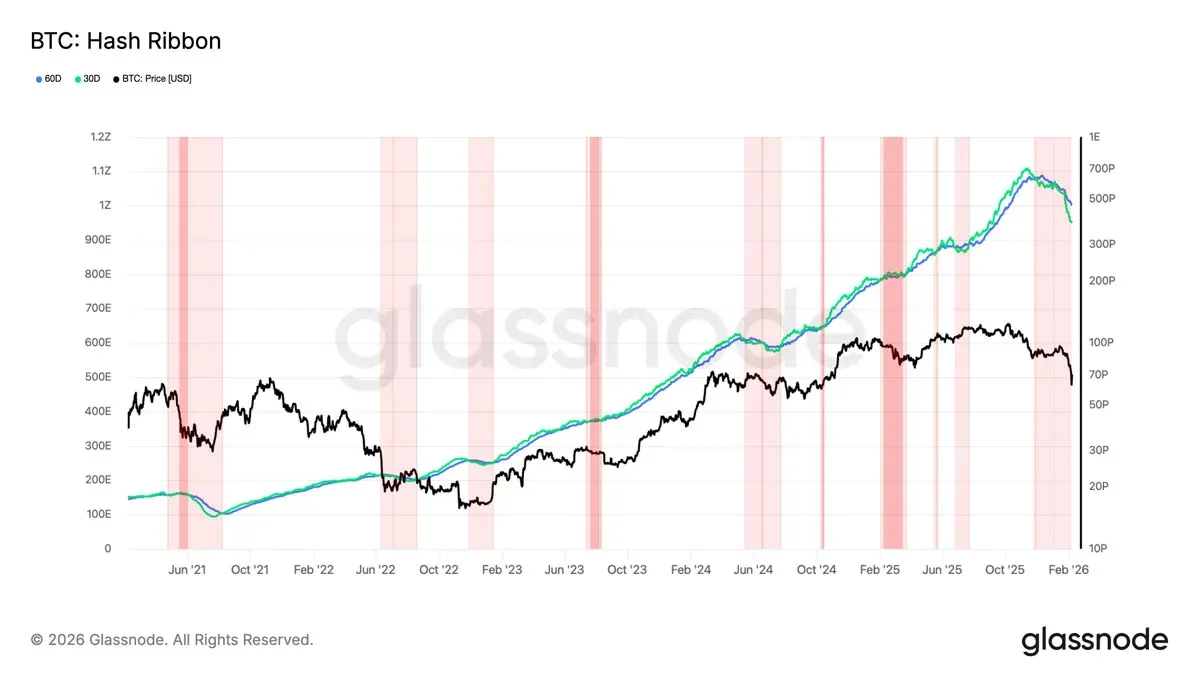
On‑chain metrics show that the 30‑day average hashrate has slipped below its 60‑day moving average; historically, such a negative crossover is often accompanied by tightening miner revenues and an elevated risk of “hashrate abandonment.” Glassnode’s hash‑rate‑vs‑price chart further illustrates a synchronized downward trajectory for both variables.
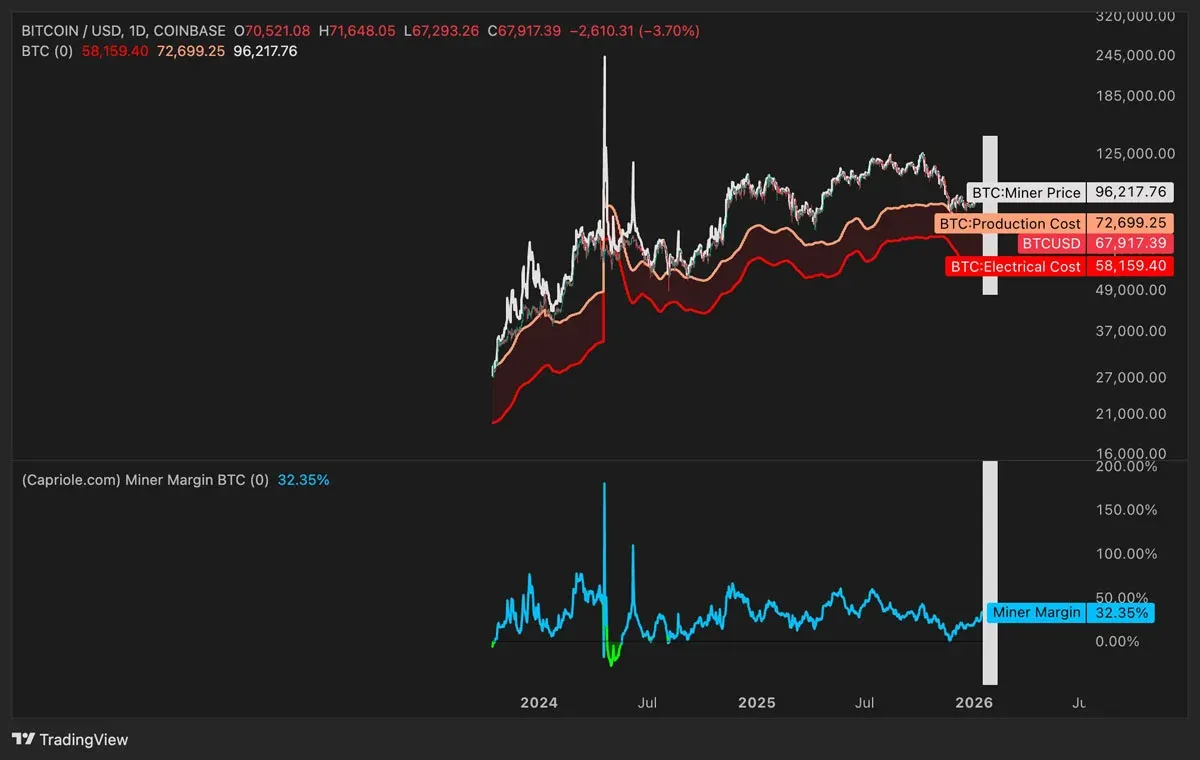
As of this Saturday, the estimated electricity cost to mine a single Bitcoin is about $58,160, while total production expenses are roughly $72,700. Should Bitcoin’s price fall below $60,000, miners’ cash flows would come under heightened pressure, and long‑term holders would likely adopt a more cautious stance. Data shows that wallets holding 10‑10,000 BTC now represent the lowest share in nine months, indicating that investors in this tier are reducing positions rather than adding to them.
Leveraged Bets by Hong Kong Hedge Funds
A widely circulated view holds that last week’s rapid Bitcoin drop originated in Asian markets, particularly from certain Hong Kong hedge funds that, expecting further price gains, executed massive leveraged trades.
Parker White, COO and CIO of DeFi development firm DFDV, explained that these funds employed options tied to Bitcoin ETFs (such as BlackRock’s IBIT) and financed their positions with low‑cost Japanese‑yen loans. The yen was then converted into other currencies before being deployed into crypto assets, under the expectation of an upward price move.
“Today IBIT’s trading volume hit a historic high, with turnover nearly double that of the previous day, reaching $10.7 billion; at the same time, option premium turnover was about $900 million, also a record.” — Parker White (2026‑02‑06)
When Bitcoin’s rally stalled and yen‑funding costs rose, the leveraged positions quickly became cash‑strained. Lenders demanded additional margin, forcing the funds to sell Bitcoin and other risk assets in a passive manner, thereby amplifying the price decline.
Morgan Stanley and the Ripple Effect of Structured Bitcoin Products
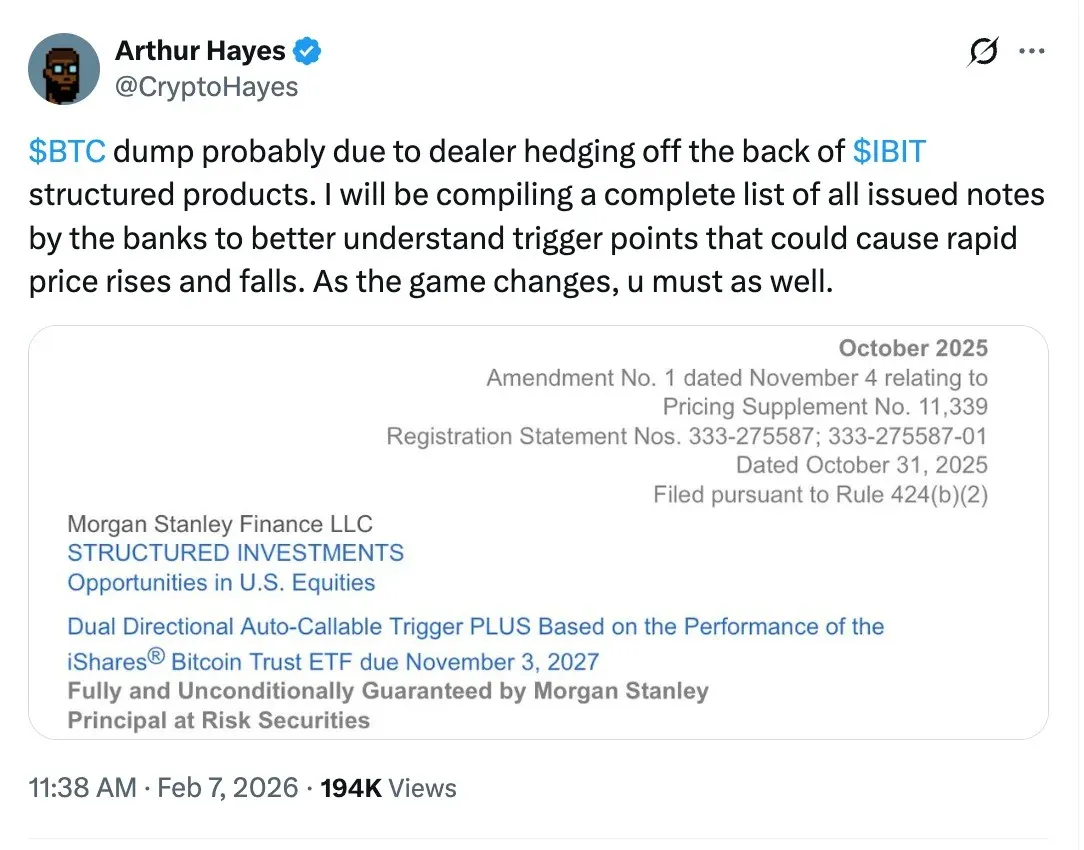
Former BitMEX CEO Arthur Hayes suggested that, beyond Asian capital, Western financial institutions may also have contributed to the current sell‑off.
He pointed out that banks such as Morgan Stanley, when offering structured notes linked to spot Bitcoin ETFs (e.g., IBIT) to clients, assume a sizable price exposure. When Bitcoin slips below key thresholds—around $78,700 in this case—these products require the banks to hedge their delta by selling the underlying BTC or futures contracts.
Such hedging creates a “negative‑gamma” effect: the lower the price, the greater the banks’ selling pressure, leading to a self‑reinforcing cycle of accelerated sell‑offs. Liquidity providers thus become forced sellers, pushing market prices down further.
Price Action and Outlook
The daily Bitcoin‑USD chart shows that, under the combined strain of production costs and electricity expenses, the price is nearing the critical $60,000 support level. A break below this mark would further compress miners’ profitability, likely triggering heightened market volatility.
In summary, leveraged sell‑offs by Hong Kong hedge funds, structured‑product hedging by institutions such as Morgan Stanley, and the shift of mining firms toward AI‑related business collectively form the three primary drivers of Bitcoin’s deep correction. For further analysis of the underlying causes of Bitcoin’s decline, stay tuned to Bitaigen (比特根) for upcoming special reports.
Related Reading
- Bitcoin Stock‑to‑Flow vs Rainbow Chart: 2025 Investor Guide
- Bitcoin's 2025 FOMC Impact: Consistent Post‑Meeting Volatility
- Bitcoin Hits $107K Resistance: Key Support Levels
💡 Register on Binance with referral code B2345 for the maximum trading fee discount. See Binance complete guide.
⚠️ Risk Disclaimer: Crypto prices are highly volatile. This is not investment advice.



