
 Bitaigen Research
 Starting from Bitcoin’s latest post‑halving closing pattern, we dissect whether the four‑year cycle has reached its end and explore the possible market logic behind it. The article combines historical cases with current on‑chain data to help readers capture the key clues of a trend turning point. Subsequent sections will further reveal potential impacts and the signals investors should watch.

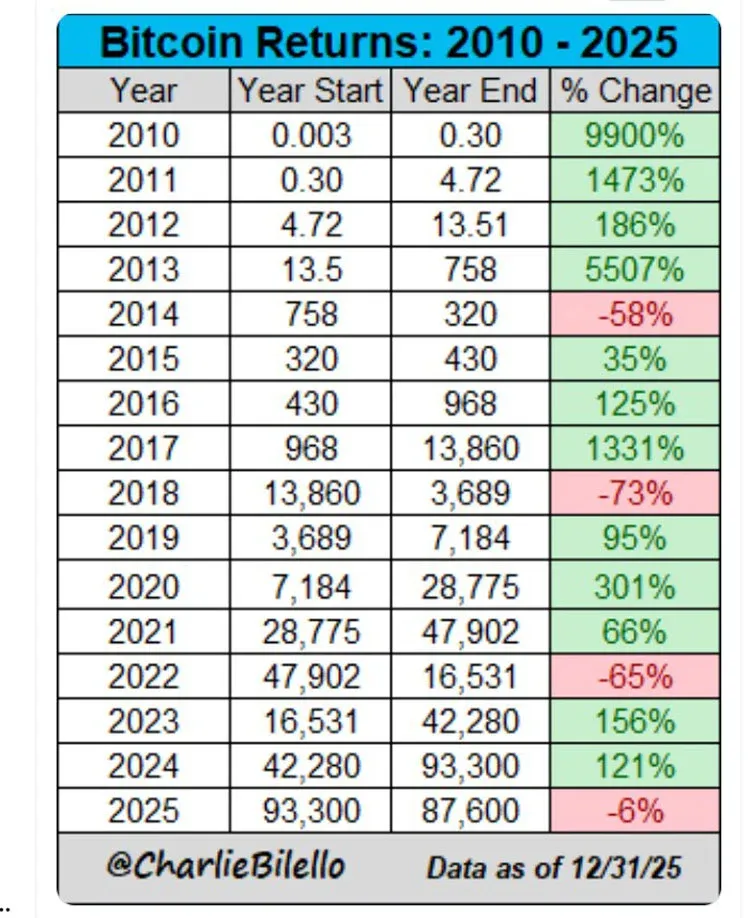
Bitcoin’s April 2024 halving finished the year with a bearish candle, closing below the price level at the start of the year. This is the first time the asset has ended the year in the red, suggesting that the four‑year cycle may be over and that the alternating bull‑bear pattern of the past four years could be entering a new phase.
Bitcoin (BTC) undergoes a halving roughly every four years, whereby the block‑reward for miners is cut in half and the supply of newly minted coins slows down. Historically, each halving has been followed by a bull‑market peak, after which the price corrected sharply and entered a multi‑year bear market. The halvings of 2012, 2016 and 2020 all adhered to this template: price surged rapidly after the event and set new all‑time highs by the end of the following year.
However, the most recent halving in April 2024 did not continue this pattern. According to data from CoinGecko, the current trading price is more than 30 % below the $126,080 high recorded on October 6, and the year‑end price sits beneath the level at the beginning of the year—marking the first down‑year close since the halving mechanism was introduced.
Forecasts and Controversies Around the Four‑Year Cycle
- Analyst Opinions
- Vivek Sen, founder of Bitgrow Lab, wrote on X that Bitcoin will finish the year in the red and that the four‑year cycle is now “officially terminated.”
- Investor Amando Pantoja argues that massive inflows from institutions and professional traders have altered market structure, making Bitcoin’s price more sensitive to macro‑level factors such as liquidity, interest rates, regulation and geopolitics rather than the simple supply‑reduction effect of a halving.
“New participants have entered the market; crypto is no longer what it was in 2016 or 2020. ETFs, institutional asset allocation, and corporate balance‑sheet strategies differ fundamentally from the retail‑driven speculation of the past.” — Pantoja
Pantoja further notes that while halvings remain significant, supply lock‑up and the diversification of miners’ financing channels mean that price dynamics no longer automatically follow historical patterns.
Divergent Views from Industry Executives
- Those Who Agree the Cycle Has Ended
- Cathie Wood, CEO of ARK Invest
- Arthur Hayes, co‑founder of BitMEX
- Matt Hogan and Hunter Hosley, partners at Bitwise
These leaders publicly stated throughout 2025 that the traditional four‑year cycle belongs to history.
- Those Who Believe the Cycle Persists, Though Its Shape Has Changed
- Marcus Tirlen, head of research at 10x Research, highlighted on the “Wall Street Wolf” podcast that the cycle is still present, but it is no longer driven primarily by scheduled supply cuts; macro‑financial forces now dominate.
Conclusion
- Halvings remain pivotal events, yet their direct price‑boosting power has been diluted by a broader set of market participants.
- The classic four‑year template—halving → bull‑market peak → sharp correction → prolonged bear market—has fractured after the latest halving.
- Investors should monitor macro‑economic variables (e.g., interest‑rate policy, regulatory developments) and institutional positioning rather than relying solely on historical halving trends.
The above provides a full analysis of “Bitcoin closing bearish after the halving—Is this the final nail of the four‑year cycle?” For deeper dives into halvings and cyclical dynamics, follow additional articles on Bitaigen (比特根).

*Note for global readers:* All fiat references are expressed in USD; if you need to move funds via traditional banking, consider SEPA (for Euro‑zone transfers) or SWIFT for international wires. U.S. users should use Binance.US rather than the global Binance platform.
*Tax disclaimer:* Cryptocurrency gains may be taxable in your jurisdiction; consult a tax professional to understand local obligations.
Related Reading
- Bitcoin tests key support, repositioning targets $101.5K
- Bitcoin Breaks $84,000 Support: Can BTC Drop to $50,000?
- Bitcoin Analysis: Trump Media's $2B BTC Purchase Shows Loss
💡 Register on Binance with referral code B2345 for the maximum trading fee discount. See Binance complete guide.



