
 Bitaigen Research
 Have you heard of “asset tokenization”?
Tokenized stocks use blockchain technology to convert traditional equities into on‑chain tokens, creating a financial product that brings the asset onto the blockchain and enables on‑chain trading while preserving price exposure and a portion of dividend income, and offering 24 × 7 continuous trading.
Putting physical assets on‑chain—*Tokenizing Real‑World Assets on blockchain*—corresponds to the RWA (Real‑World Assets) track in the crypto space.
According to various estimates, the size of the tokenized‑asset market at the end of 2024 is projected to be between $24 billion and $50 billion. A McKinsey analysis suggests the market could reach $2 trillion by 2030, and a latest study by Standard Chartered forecasts a breakthrough of $30 trillion by 2034.
The RWA market is expected to grow dozens to hundreds of times within the next five to ten years.
The advantages of bringing assets onto the blockchain include composability with smart contracts and other protocols, increased transparency, and 24/7 accessibility across borders and time zones. A growing variety of physical assets—gold, sovereign bonds, mutual funds, equities, and more—are gradually being tokenized.
Recently, tokenized stocks have become especially hot: heavyweight financial platforms such as Kraken and Robinhood have launched related products, allowing users to trade hundreds of U.S. stocks and ETFs on‑chain at any time, and even to access shares of private companies like OpenAI and SpaceX. This rapid expansion has also sparked debate.
In this article we will systematically analyze the core models and practical differences of tokenized stocks from multiple angles—including technical implementation, regulatory frameworks, and investor rights—to help readers understand the opportunities and risks of this emerging financial form. The piece also compares implementation paths across different platforms, revealing specific impacts on liquidity, regulatory compliance, and dividend distribution.
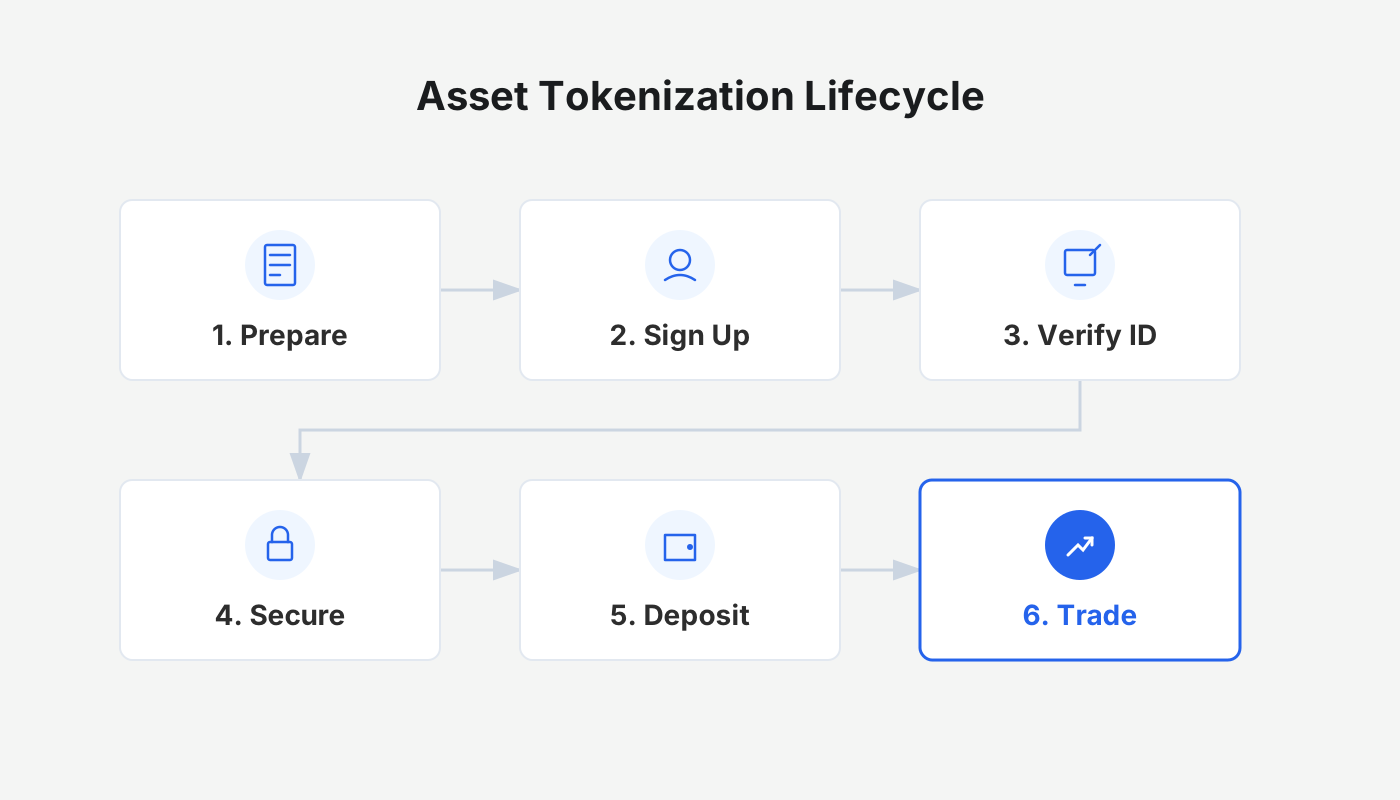
What are Tokenized Stocks?
Tokenized stocks (Tokenized Stocks) refer to the conversion of traditional equities into cryptocurrency‑style financial products through blockchain technology. In simple terms, it means turning a stock into a “token that can be operated on the blockchain.” Investors can buy and sell shares of companies like Apple or Tesla on a blockchain in the same way they trade cryptocurrencies.
Each stock token is backed by one real share, tracks its price, and provides a portion of the associated rights. While details vary depending on the issuance model, the common denominator is that the stock is placed on‑chain, inheriting the characteristics and advantages of blockchain assets.
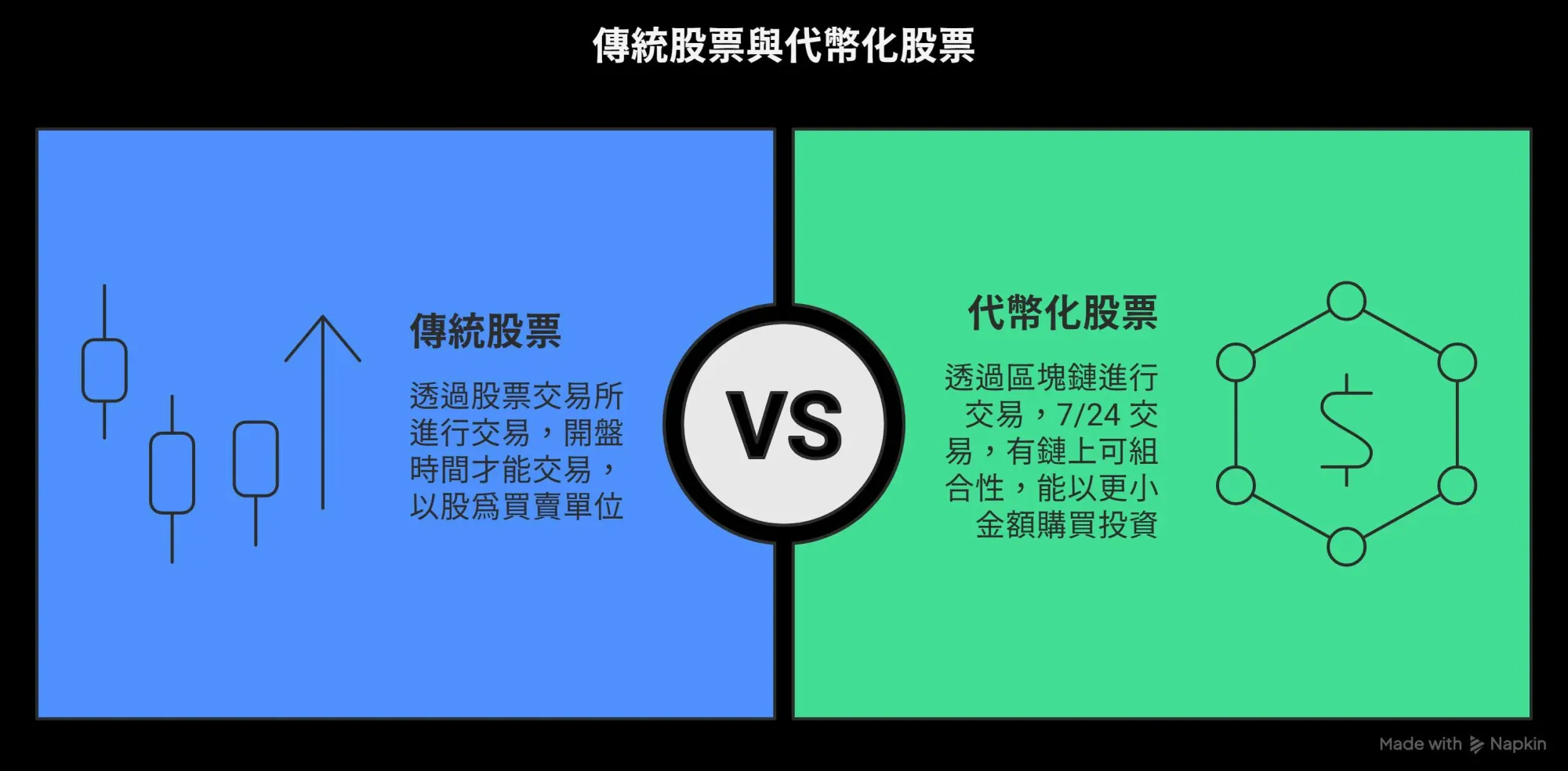
Three Issuance Models for Tokenized Stocks
Tokenized stocks can be broadly classified into three categories:
- Derivative‑Contract Tracking Model
- Definition: A contract is designed to track the price of the underlying stock and does not necessarily hold the physical share.
- Features: Closer to a derivative financial instrument; can simulate dividend payouts.
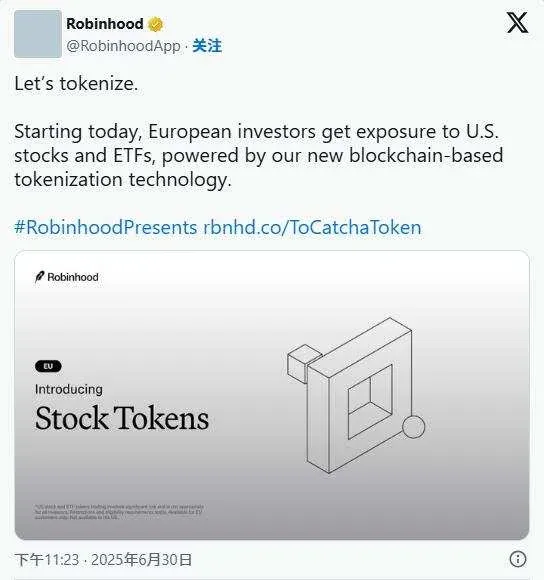
- Example: Robinhood’s *Stock Tokens* fall into this category.
- Explanation: Buyers are not acquiring the actual share, but a price‑tracking contract recorded on the blockchain.
- Quote: “When buying stock tokens, you are not buying the actual stocks—you are buying tokenized contracts that follow their price, recorded on a blockchain.”
- Physical‑Trust‑Backed Model
- Definition: The platform holds a 1:1 ratio of physical shares, which are custodialized by a third‑party trust.
- Features: Tokens are backed by real‑share reserves; the trust ensures asset safety.
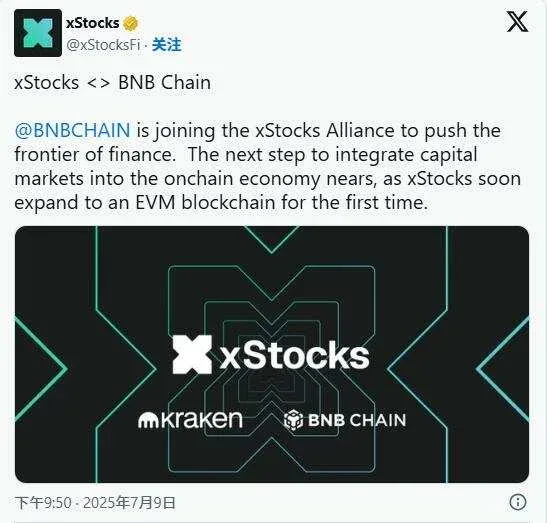
- Example: Kraken, Bybit, and the Solana DeFi protocol’s *xStocks* product.
- Dividend Handling: xStocks does not distribute cash dividends directly; instead, dividend income is automatically used to purchase additional stock tokens.
- Rights: Economic outcomes are similar to owning the underlying share, but voting rights are generally not provided at this time.
- Update: xStocks recently announced an expansion onto the BNB Chain.
- On‑Chain Issuance Model
- Definition: The issuing entity creates native stock tokens directly on the blockchain, with equity information recorded on‑chain, eliminating the need for traditional securities settlement and trust mechanisms.
- Status: Still in the conceptual exploration stage; regarded as a potential future development direction.
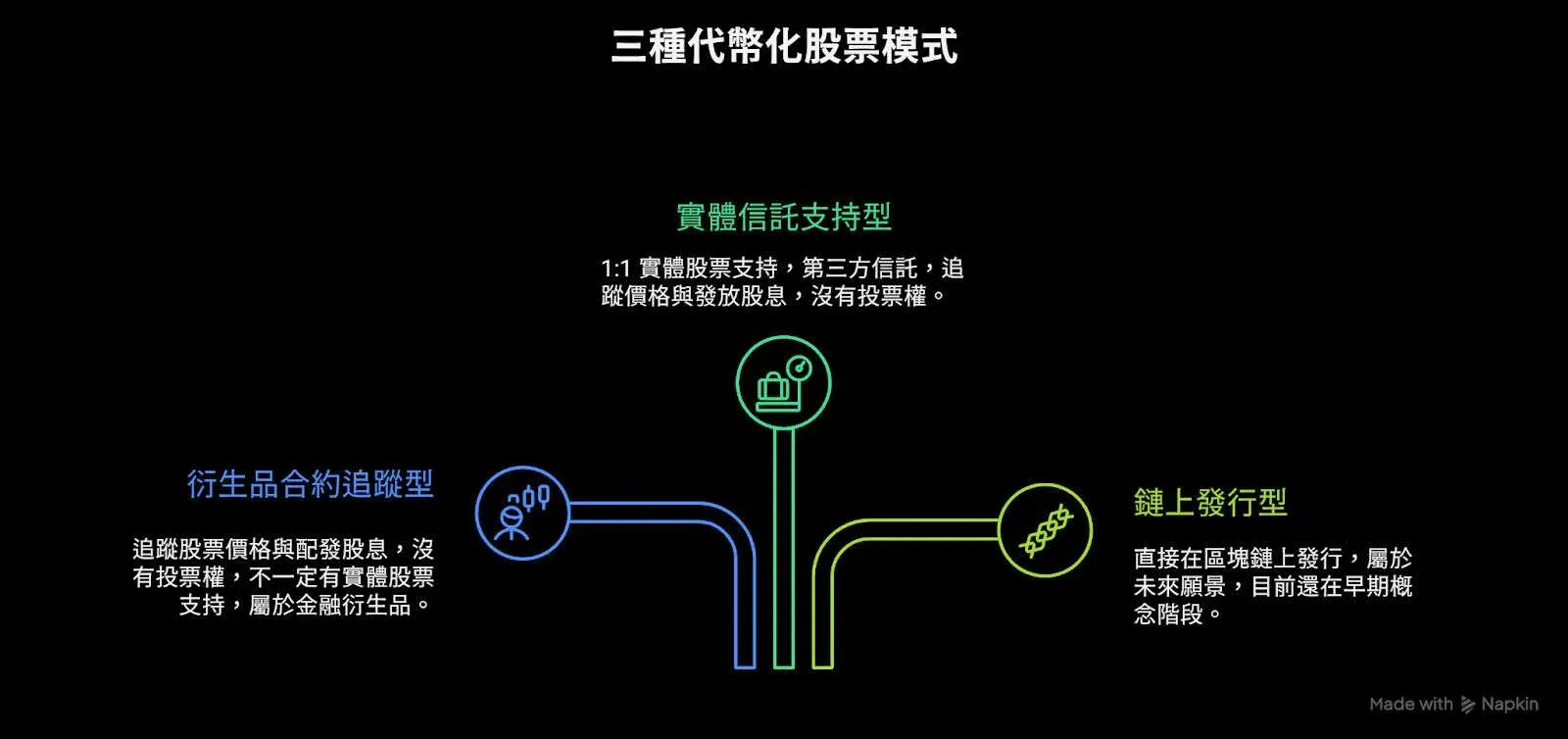
For investors, models 1 and 2 feel similar in practice: both track stock prices and distribute dividends (either cash or automatically reinvested). However, the underlying mechanisms differ, leading to variations in claim priority and other protections if a platform were to cease operations.
Tokenized Stocks vs. Physical Stocks: Rights Differences
In terms of price and dividend—the primary economic benefits—tokenized stocks are already very close to their physical counterparts. Nonetheless, a clear gap remains in legal shareholder rights. Token holders are not listed on the company’s shareholder register and have no voting rights.
- Derivative‑Contract Tracking Model: Since the model does not hold the underlying share, the absence of voting rights is logically consistent.
- Physical‑Trust‑Backed Model: The nominal shareholder is the trust institution; shareholder rights are difficult to split or transfer. Token holders enjoy price exposure and dividend receipts but cannot claim true shareholder status.
- Technical & Regulatory Hurdles: To have token‑holder information entered into the official shareholder register, both technical solutions and regulatory/compliance barriers must be overcome.
Regulatory Trends for Tokenized Stocks
Stocks are fundamentally securities, and tokenized stocks fall under securities regulations as well. Reuters quoted SEC commissioner Hester Peirce, often nicknamed “Crypto Mom,” stating:
“Blockchain technology is powerful, but it does not possess a magic wand that changes the nature of an asset; tokenized securities remain securities.”
Current mainstream regulatory directions include:
- Treating tokenized stocks as securities and applying existing securities‑law frameworks.
- Enforcing KYC/AML procedures, investor‑protection rules, and related compliance requirements.
- Requiring issuance, trading, and custodial platforms to obtain appropriate licenses.
- Gradually filling regulatory gaps through new legislation and sandbox pilots in certain jurisdictions.
In practice, regulatory constraints remain stringent. For example, Robinhood’s tokenized stocks are under investigation by European Union regulators, and Kraken’s xStocks are only available to users outside the United States, Canada, the United Kingdom, the European Union, and Australia.
At the same time, there are positive developments:
- Dinari became the first U.S. platform to receive a broker‑dealer license for tokenized stocks.
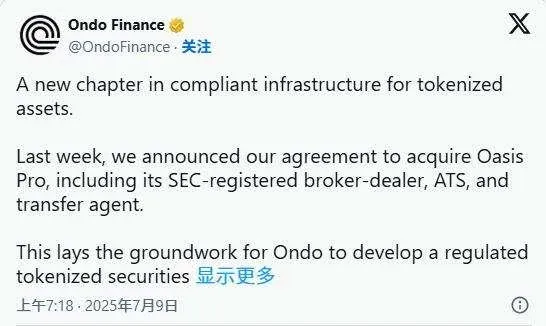
- Ondo completed the acquisition of Oasis Pro, securing U.S. broker‑dealer, alternative trading system (ATS), and transfer agent licenses.
Summary
Tokenized stocks now mirror physical stocks closely in terms of price tracking and dividend distribution, yet they still lack shareholder voting rights and other legal entitlements. Platforms typically state that tokenized stocks are not equivalent to equity ownership. As on‑chain assets, they enjoy composability with DeFi protocols, the ability to generate additional value through smart‑contract interactions, and the advantage of 24 × 7 cross‑time‑zone trading without market‑hour restrictions.
Based on the forecasts cited at the beginning of this piece, asset tokenization is expected to grow dozens to hundreds of times over the next five to ten years. Stocks, as a long‑standing mainstream financial instrument, are poised to occupy a pivotal role within the RWA track.
For crypto investors, beyond directly trading tokenized stocks, it is worthwhile to monitor the broader growth opportunities across the entire RWA ecosystem.
*Note: Crypto‑related gains may be taxable in your jurisdiction. Be sure to consult local tax regulations and consider using SEPA or SWIFT for fiat transfers where applicable.*
This concludes the article. To learn more about tokenized stocks, search for previous pieces by Bitaigen or continue browsing the related links below. Thank you for supporting Bitaigen!
Important for U.S. users: When accessing cryptocurrency services, use Binance.US rather than the global Binance platform to remain compliant with U.S. regulations.
Related Reading
- Stock Tokenization on Blockchain: Liquidity & Transparency
- Tokenized Stocks: Unlock US Equity Access with Stablecoins
- How to Trade Tokenized U.S. Stocks on Binance: Complete Guide
💡 Register on Binance with referral code B2345 for the maximum trading fee discount. See Binance complete guide.



