
 Bitaigen Research
 We conducted a hands‑on copy‑trading test on the Binance platform for several weeks, systematically identified the key metrics for selecting a reliable signal provider, and used real data to illustrate the risk‑and‑return profile of copy‑trading. This article will help newcomers quickly spot trustworthy traders, avoid blind following, and improve operational efficiency. It is worth a careful read.
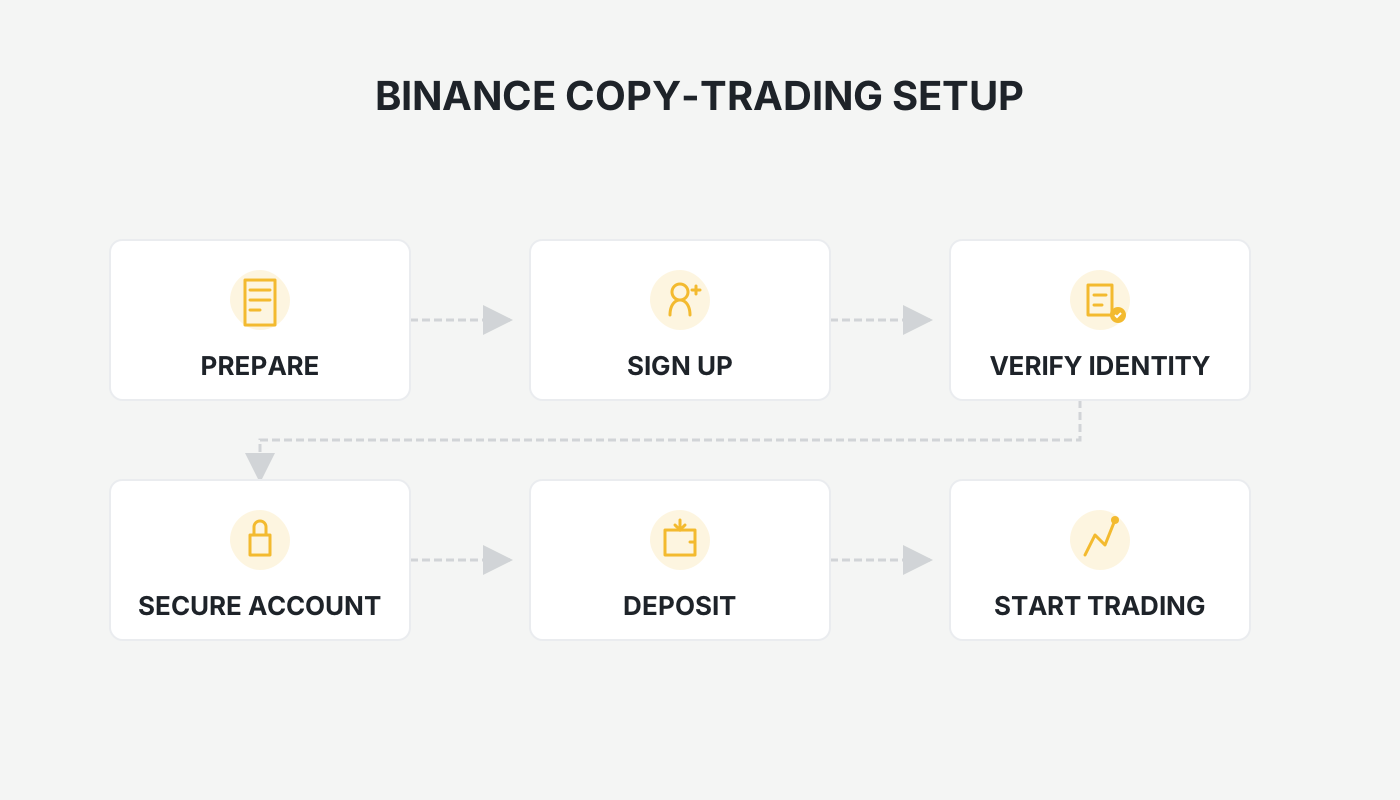
Overview of Binance Copy‑Trading and Test Report
Binance’s copy‑trading feature allows ordinary investors to “one‑click copy” the actions of experienced signal providers, saving the time needed for independent analysis. However, the platform hosts a large number of providers, and selecting a reliable one is an art. This article first introduces the critical dimensions for screening, then presents the results of our 23‑day simulated copy‑trading experiment, giving you a data‑driven reference for real‑world execution.

Friendly reminder: Readers who have not yet registered on Binance can complete the registration and app download via the links below, then follow the video tutorial to get started quickly.
- Binance official registration: `https://accounts.binance.com/register?ref=B2345` (copy into your browser) – *U.S. residents should use Binance.US instead of the global site.*
- Android app download: `https://www.bitaigen.com/binance/download`
Tax note: Crypto gains may be taxable in your jurisdiction. Please consult a tax professional regarding SEPA/SWIFT or other fiat‑to‑crypto transactions.
---
1. Core Metrics for Choosing a Signal Provider
On Binance’s copy‑trading page, each provider displays a range of performance data, including return rate, profit & loss (P&L), win rate, Sharpe ratio, etc. These figures allow a preliminary assessment of historical performance. While past results do not guarantee future outcomes, they are sufficient to help avoid reckless copying. The following five dimensions were the focus of our testing:
- Short‑, medium‑, and long‑term performance
- Number of days since the provider joined
- Composite performance indicators
- Popularity measured by follower count
- Current profit & loss of the followers
1. Short‑, Medium‑, and Long‑Term Performance
Examine the provider’s return and P&L over the most recent 7‑day, 30‑day, and 90‑day windows to quickly gauge stability across different horizons. The chart below shows two providers’ 90‑day return curves:
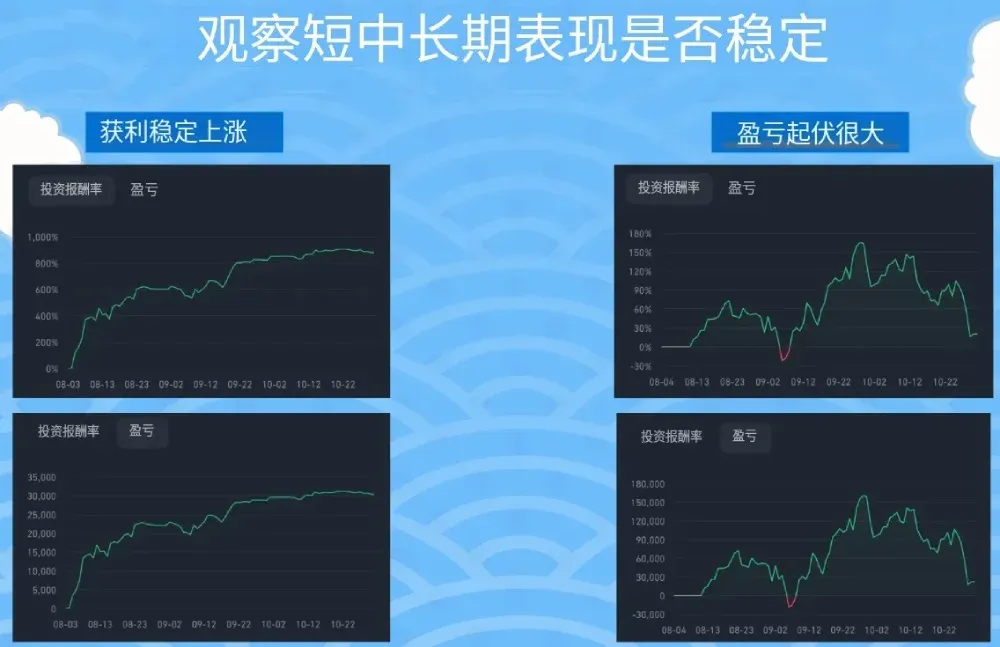
- The left‑hand curve rises steadily with low volatility, suitable for risk‑averse followers.
- The right‑hand curve resembles a roller coaster: overall positive but with sharp swings; if you happen to be copied during a drawdown phase, significant losses may occur.
2. Provider Tenure
A provider who has been active for ≥ 90 days possesses a more complete trading record, making it easier to determine whether their success stems from luck or a systematic edge. Newer providers are not necessarily inferior, but the lack of long‑term data makes risk‑control assessment harder. Prioritising providers with longer tenure lets you observe how they navigate various market conditions.

3. Performance Indicator Details
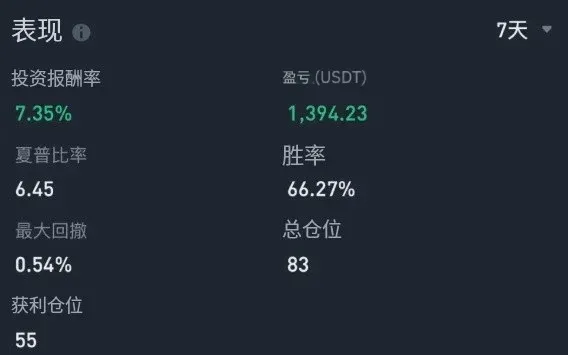
Binance supplies the following key metrics for reference:
- Return Rate: Total return over the selected period; positive means profit, negative means loss.
- Profit & Loss (P&L): Absolute profit or loss expressed in USDT, directly reflecting the amount of money earned or lost.
- Sharpe Ratio: Excess return per unit of risk; higher values indicate a more efficient strategy.
- Maximum Drawdown (MDD): Largest peak‑to‑trough decline; a smaller drawdown signals a steadier strategy.
- Win Rate: Ratio of winning trades to total trades; a high win rate does not automatically equal high profit but is a useful success‑rate gauge.
- Total Positions / Winning Positions: Number of trades opened versus number of profitable trades.
In general, providers whose return rate and P&L are positive, Sharpe ratio is high, MDD is low, and win rate is relatively high merit closer attention.
4. Follower Count
Follower count can be viewed as a proxy for a provider’s “popularity.” A large number often indicates community approval of past performance. However, beware of artificially inflated numbers (e.g., through follower‑boosting schemes). It is advisable to evaluate follower count together with current follower P&L.
5. Current Followers’ Profit & Loss
Each provider’s page displays cumulative follower P&L, number of copying days, and margin balance. These figures reveal whether the majority of followers are overall profitable. Note that return rate can be distorted by withdrawal activity, leading to situations where return rate is negative but P&L is positive. Therefore, cumulative P&L is a more reliable reference.
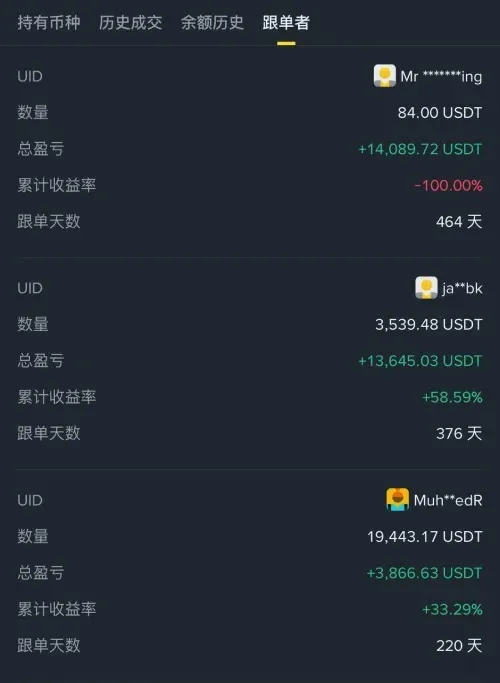
Additionally, you can view the total P&L of all followers (realized + unrealized) from inception to the present. A positive number indicates the provider has helped followers generate profit overall; a negative number suggests the opposite. Be aware that large‑volume followers can disproportionately affect this metric.
---
2. Experiment Design: Simulated Copy‑Trading of 5 Contract Providers
1. Selection Criteria
- Positive return and P&L over the past 7/30/90 days.
- Overall follower cumulative P&L is positive, meaning the provider has been generating profit for their copiers.
- Preference for providers with tenure ≥ 90 days to ensure sufficient historical data.
After meeting these baseline conditions, we further ranked candidates by follower count, provider P&L, return rate, and Sharpe ratio, selecting the five contract providers that displayed relatively strong performance.
2. Experiment Parameters
| Parameter | Details |
|---|---|
| Test period | 2024‑10‑08 to 2024‑10‑30 |
| Simulated copy‑trading capital | 10,000 USDT |
| Trading instrument | Binance Futures (USDT‑margined contracts) |
| Copy‑trading mode | Full replication of each provider’s orders, including entry, stop‑loss, and take‑profit settings |
| Evaluation metrics | End‑of‑period net P&L, maximum drawdown, Sharpe ratio, win rate, and realized fees |
The following sections will present the step‑by‑step execution, observed outcomes, and key takeaways for traders considering copy‑trading on Binance (or Binance.US for U.S. residents).
Related Reading
- Binance Copy Trading Guide: How to Replicate Top Traders
- Binance Copy Trading: Mirror Top Traders & Control Risk
- Isolated Margin Leveraged Trading on Binance: BTC Borrowing
💡 Register on Binance with referral code B2345 for the maximum trading fee discount. See Binance complete guide.



